

Jump to:
- About This Cathead Biscuit Recipe
- What Is a Cathead Biscuit?
- Why Are They Called Cathead Biscuits?
- What Makes Southern Biscuits Different?
- What Do Southern Cathead Biscuits Taste Like?
- Cathead Biscuit Recipe Ingredients
- Why is Self-Rising Flour Best for Southern Biscuits?
- How to Make Cathead Biscuits
- Useful Tips for Homemade Cathead Buttermilk Biscuits
- Recipe Variations
- You Might Enjoy
- Recipe
About This Cathead Biscuit Recipe
These easy old fashioned buttermilk biscuits are symbolic of Southern cooking with a homemade, cozy character. They are delicious on their own or as a side to a number of meals ranging from breakfast through dinner and everything in between.
The process of making them is so simple that you only need to prepare them once to become an expert. Be sure to consider the variations of the core recipe.
What Is a Cathead Biscuit?
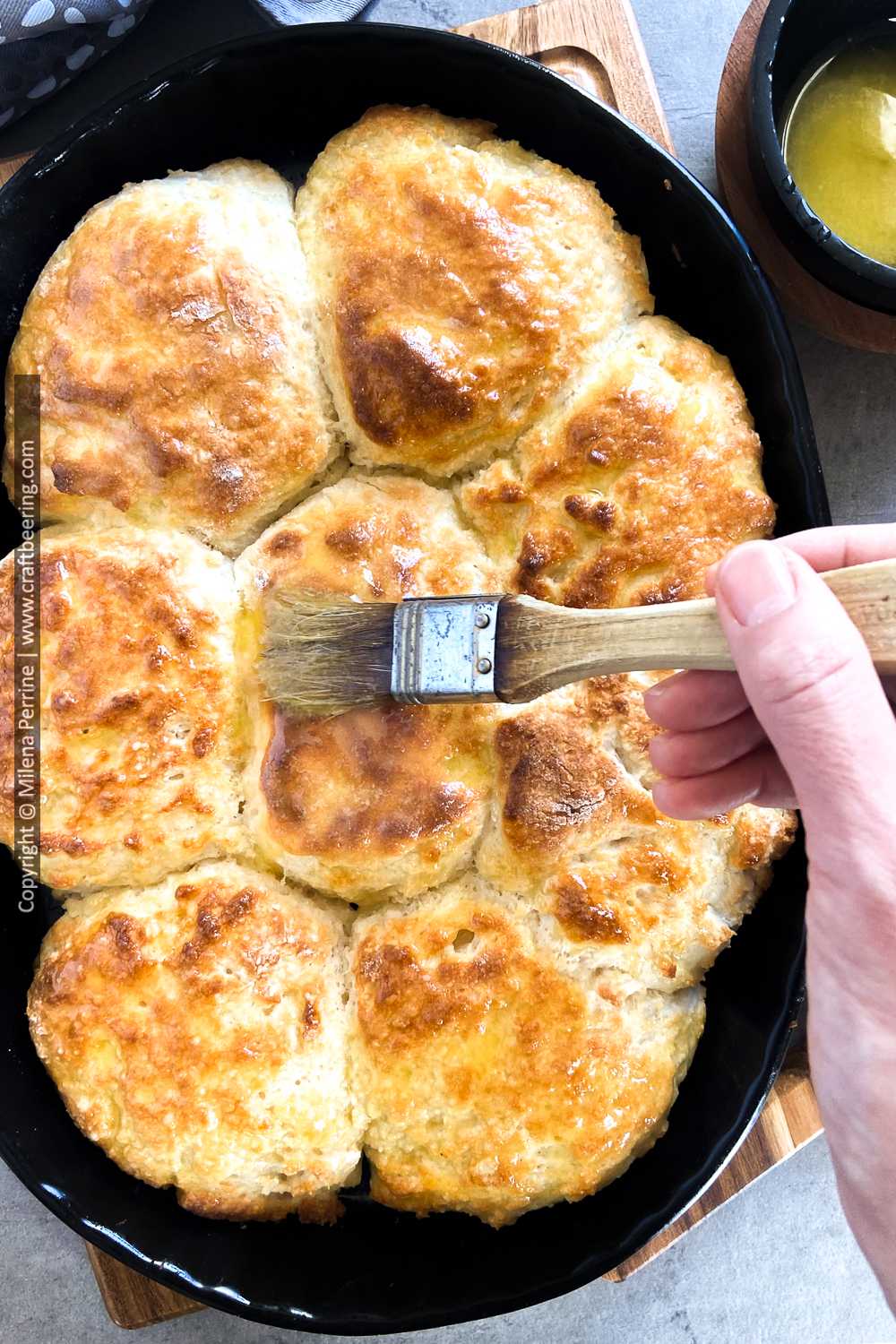
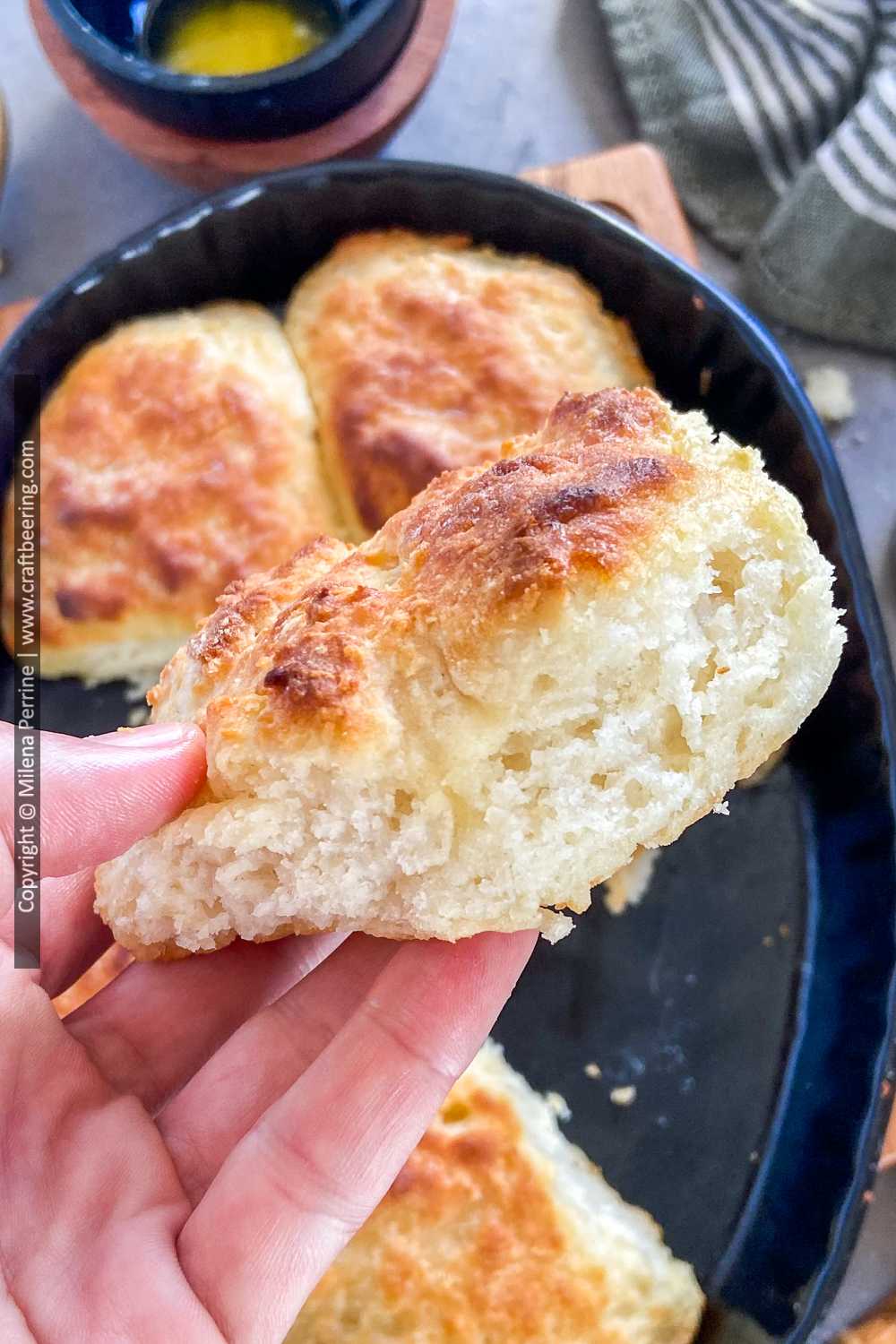
A cathhead biscuit is a large, fluffy buttermilk biscuit with a distinctly homemade feel.
Different households have their own approaches in terms of how they shape the biscuits, how much fat they mix into the batter, what type of baking dish they use, etc.
Why Are They Called Cathead Biscuits?
These filling Southern style biscuits are intentionally shaped quite large - as large as a cat's head. Hence the iconic name.
In reality they are about as big as the palm of an average female hand.
What Makes Southern Biscuits Different?
Southern biscuits use three distinct ingredients that differentiate them from how biscuits are made in the rest of the country. The combination of these also accounts for the wonderfully light texture and unique flavor of cathead biscuits.
- vegetable shortening or lard instead of butter
- buttermilk instead of milk or water
- self-rising flour instead of all-purpose flour (read the section below on why this is so important)
What Do Southern Cathead Biscuits Taste Like?
Between the signature tangy buttermilk flavor, the vegetable shortening and the salt in the self-rising flour cathead biscuits develop a slightly cheese like flavor. It is more of a nuance than a strong presence but it is definitely at the forefront.
You can absolutely pair them with all manner of sweet toppings - honey, jams, preserves, marmalades and more. They are even better as a support act to soul food savory dishes.
Cathead Biscuit Recipe Ingredients
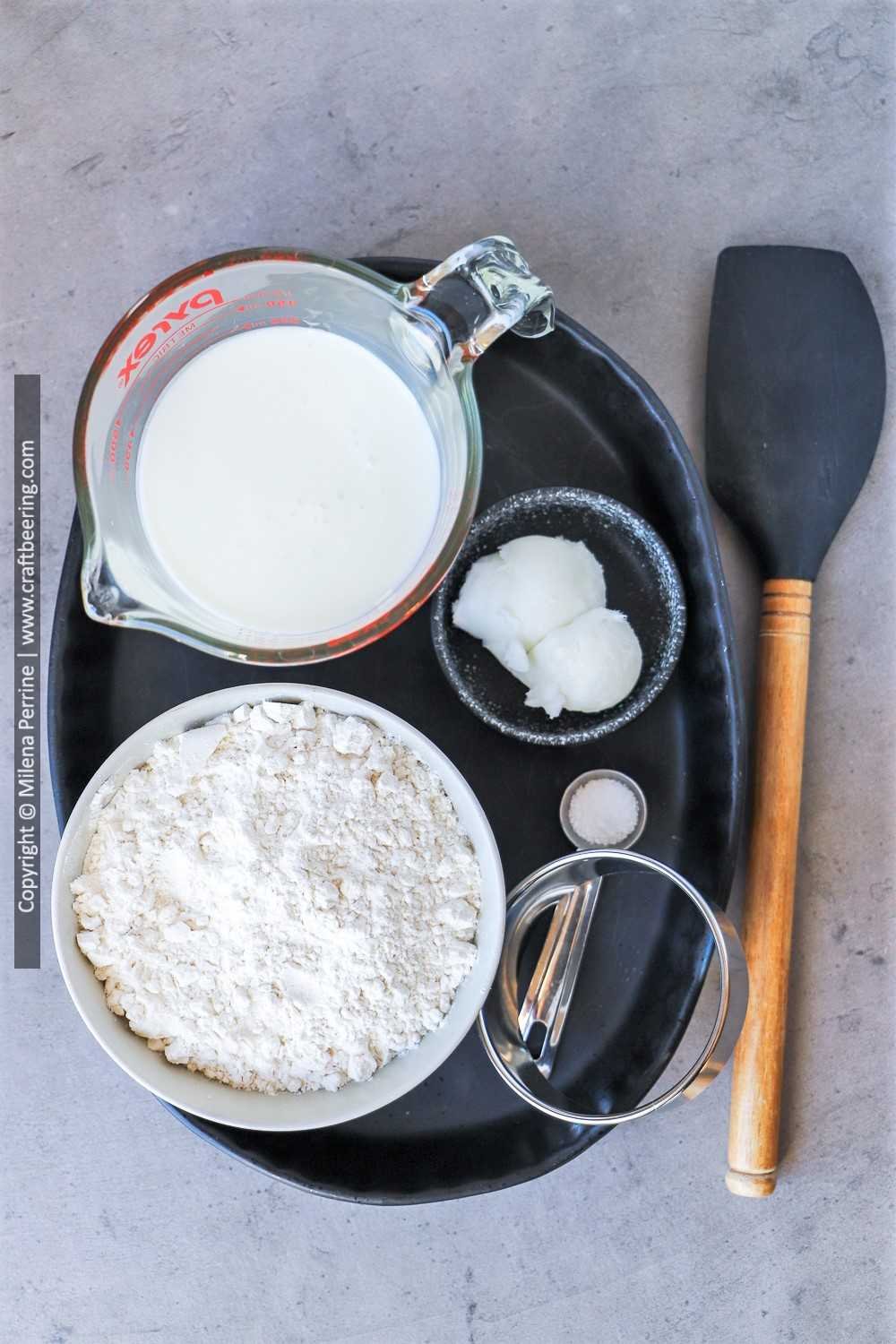
At their core these are 3 ingredient buttermilk biscuits, but if you so choose you can add some salt to the flour to make them extra savory (we always do) and brush the tops of the biscuits with some melted butter once they are baked.
Self-rising flour. This classic Southern ingredient is perfect for biscuit making - see the section below.
Vegetable shortening. At room temperature. Does not matter what brand, Crisco or other.
Buttermilk. The liquid of choice to create the classic taste of home made buttermilk biscuits. For very near substitutes refer to the Useful Tips section below.
Salt and melted butter to brush. Again, both are optional. The salt enhances the cheese-like flavor of the biscuits and the butter adds richness (we use unsalted).
TIP: A ratio of 1 cup self-rising flour to ½ cup buttermilk is the standard for cathead biscuits. However, depending on the brand of flour and buttermilk as well as altitude a tad bit less buttermilk might be needed so add it in increments - you may not need a couple of tablespoons.
Why is Self-Rising Flour Best for Southern Biscuits?
Self-rising flour has salt and baking powder already added to it, but more importantly it is milled from soft winter wheat. This is a variety of wheat that has a low glutenin and gliadin protein content and hence lower gluten formation.
When soft wheat flour is mixed with a liquid and worked it develops less elasticity than all-purpose flour and the biscuits have a softer, lighter texture.
An iconic self-rising flour brand is White Lily, milled from soft red winter wheat grown in the South. It is known as the best flour for biscuits and other quick breads.
How to Make Cathead Biscuits
You can make them as buttermilk drop biscuits (if the dough ended up a bit on the wet side) or you can turn out the sticky dough and cut them into round shapes.
The first method is easy enough - you mix the batter and then use a ⅓ cup measure to scoop up and drop eight heaps of batter. Then bake.
Below we demonstrate the cut biscuit variant.
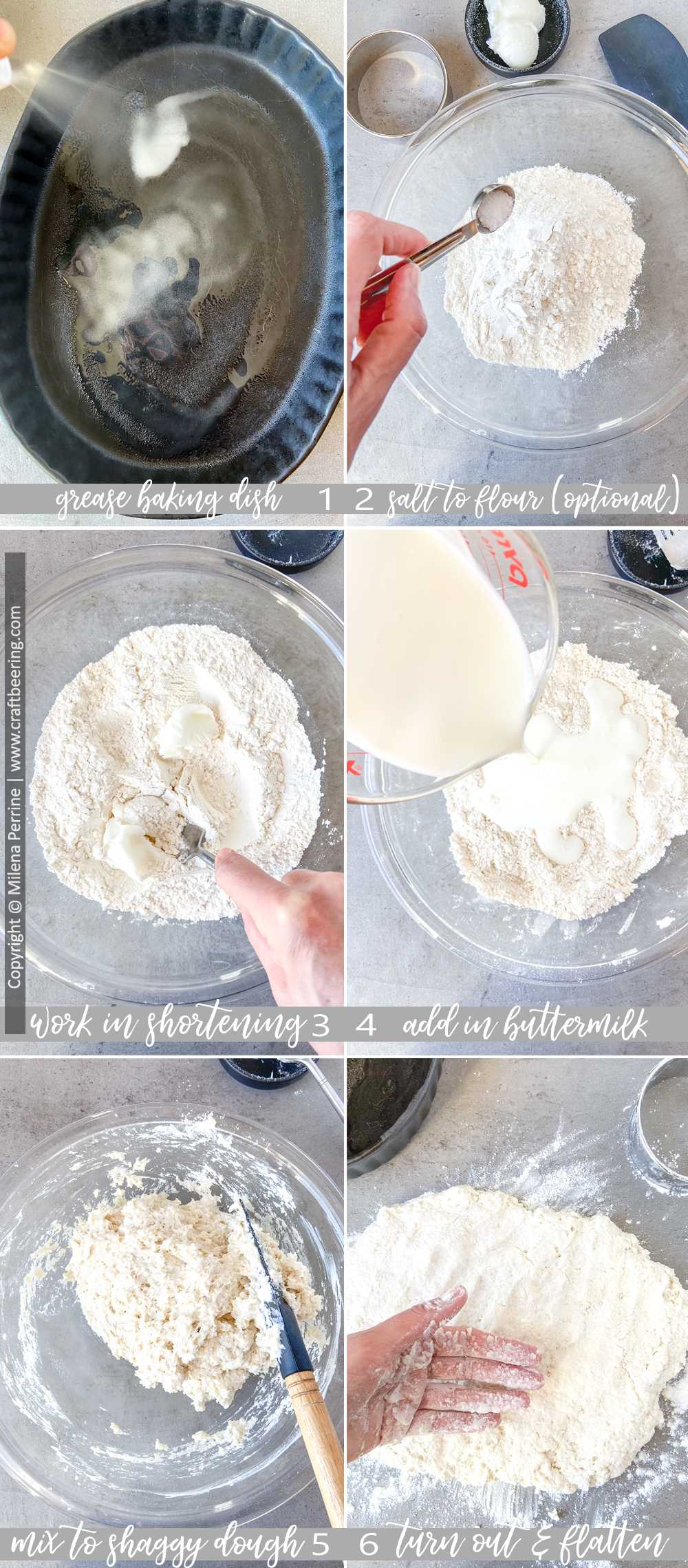
- Grease a suitable baking dish such as a cake pan, ceramic dish or cast iron skillet and set aside. Preheat oven to 450 F.
- Add the salt (if using) to the self-rising flour, mix then slowly stir in the buttermilk (you may not use it all) until a sticky, shaggy dough forms.
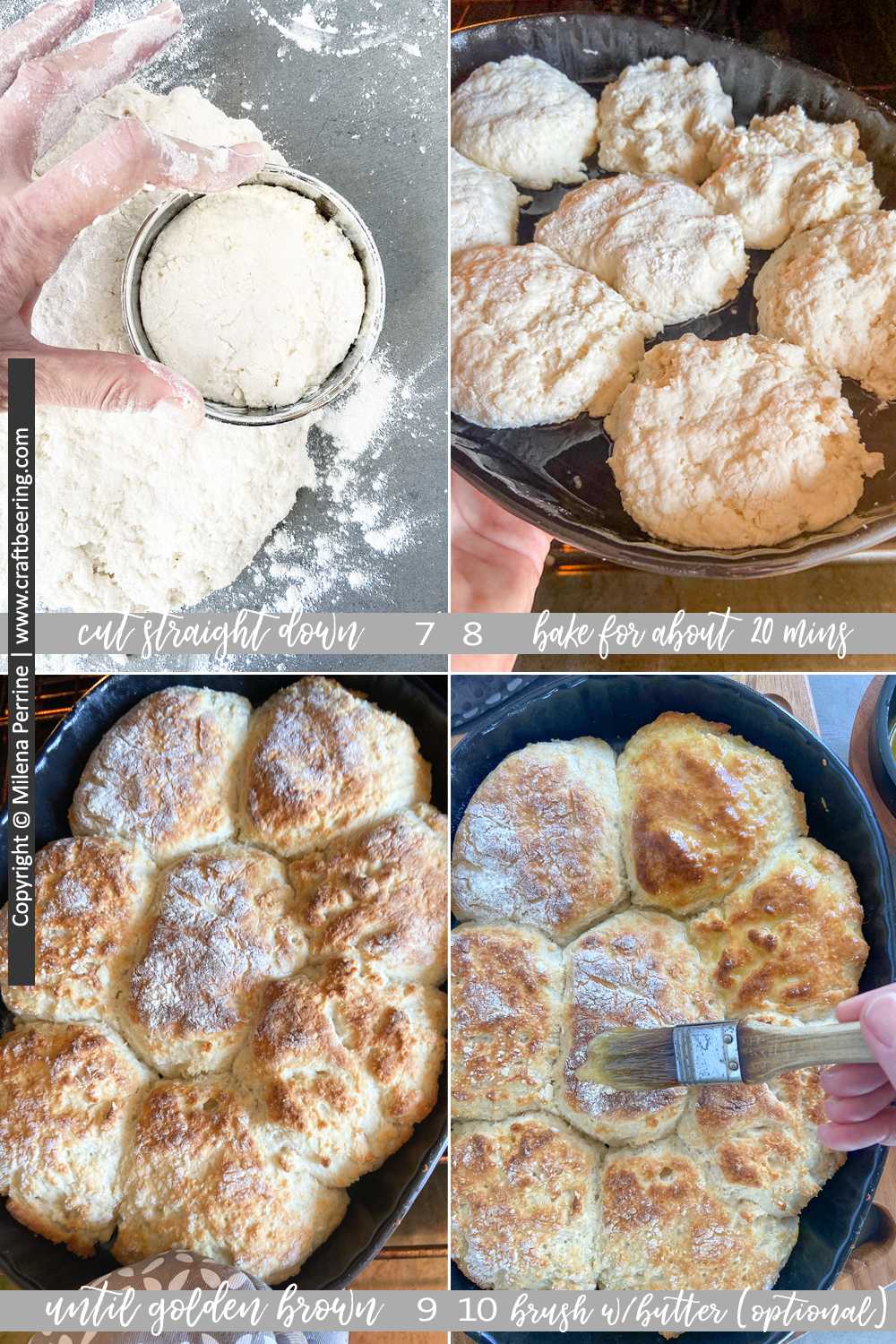
- Turn out the biscuit batter onto a floured surface and with your hand apply gentle pressure to spread it out. With a floured cookie cutter with 3.5 inch diameter cut stright down to make eight biscuits. Do not fret over the shape.
- Arrange the biscuits in the baking dish or skillet and bake until risen and golden brown on top, about 20 minutes.
- Allow to cool down a bit before you separate them to serve. You may brush them with a bit of melted butter (optional).
Useful Tips for Homemade Cathead Buttermilk Biscuits
These are easy ways to make your biscuits happen even when you are missing one of the essential ingredients.
- If you do not have buttermilk handy you can substitute with one of these:
- milk + acid - fill a one cup measure with 1 tablespoon vinegar or lemon juice, top with whole milk until full, stir and let sit 10 minutes, scale accordingly.
- kefir - susbstitute with plain kefir 1 for 1.
- yogurt cultured in the cup - mix ¾ cup of the yogurt with ¼ cup water until it resembles buttermilk, scale accordingly.
- If you do not have self-rising flour handy make your own: add 1 ½ teaspoons of baking powder and ¼ teaspoon salt to 1 cup of cake flour; scale accordingly. Cake flour is made from soft wheat too.
- For fluffier biscuits sift the flour before you add the buttermilk.
- You can bake these spaced apart on a baking sheet so each cathhead biscuit will have a more traditional shape. In result the sides will get crispier and the biscuits may not rise as much.
Recipe Variations
Now that you know how to bake a cathead biscuit, here are some ideas for decadent variations.
- use bacon fat in the batter instead of vegetable shortening (we save the fat rendered from cooked bacon and store it in the fridge for just such uses)
- fold in chopped cooked bacon into the batter (those little salty bursts of pork goodness!)
- fold in grated cheddar cheese into the batter - this takes the already cheesy flavor into proper real cheese teritory, it is a delectable variation
- add finely chopped scallion or other herbs to the batter for fragrant Southern biscuits
You Might Enjoy
Easy Drop Beer Biscuits | Classic Beer Bread | Butter Swim Biscuits | Savory Scones with Bacon and Cheddar
Recipe

Cathead Biscuits (Old Fashioned Buttermilk Biscuits)
Ingredients
- 3 cups self-rising flour
- 2 tablespoon vegetable shortening such as Crisco
- 1 ½ cups buttermilk
- ½ teaspoon salt or to taste, optional
- 3 tablespoon butter melted (optional, to brush tops of baked biscuits)
Instructions
- Preheat oven to 450 F. Grease a baking dish or skillet (about 9 inch diameter) and set aside.
- In a mixing bowl add the self-rising flour (you can sift it for even lighter biscuits) and if using stir in the salt.
- Add the vegetable shortening and work it in with a fork or simply pinch it in with your fingers.
- Add the buttermilk slowly and stir it in gently (you may not need all the buttermilk) to form a shaggy mass like dough.
- Either use a ⅓ cup measure to scoop up and drop eight heaps of batter onto greased dish OR, recommended, turn out the dough onto a clean, floured surface and gently apply pressure with your hand to flatten it. Use a 3.5 inch cutter, pressing straight down*. Make 8 large biscuits.
- Bake for about 18-20 minutes or until the biscuits have risen and their tops are golden brown. Take them out of the oven and brush the tops with melted butter (optional but really delicious). Allow to cool before separating and serving.
Notes
- milk + acid – fill a one cup measure with 1 tablespoon vinegar or lemon juice, top with whole milk until full, stir and let sit 10 minutes, scale accordingly.
- kefir – susbstitute with plain kefir 1 for 1.
- yogurt cultured in the cup – mix ¾ cup of the yogurt with ¼ cup water until it resembles buttermilk, scale accordingly.


Anna
They were delightful! Easy recipe, no fuss and everyone enjoyed.