
Jump to:
- Why You Will LOVE This Couscous Recipe
- What is The Difference Between Couscous and Israeli Couscous?
- Ingredients for Herbed Couscous with Nuts
- Couscous to Water Ratio
- How to Cook Couscous with Moroccan Flair
- Serving Ideas
- Couscous Nutrition Notes
- Storage and Reheating
- You Might Enjoy
- Recipe
- How is Couscous Made?
- How Is Israeli Couscous Made?
Why You Will LOVE This Couscous Recipe
With just a few tweaks you can go far beyond simply cooking Moroccan couscous the regular way.
Traditionally, couscous is soaked and steamed in hot water for a few minutes and once rehydrated it is seasoned with a bit of olive oil, salt and pepper. A quick fluffing with a fork is applied and voila!
Our Moroccan couscous recipe works because:
- it uses butter and vegetable broth to produce extra flavorful and fluffy couscous
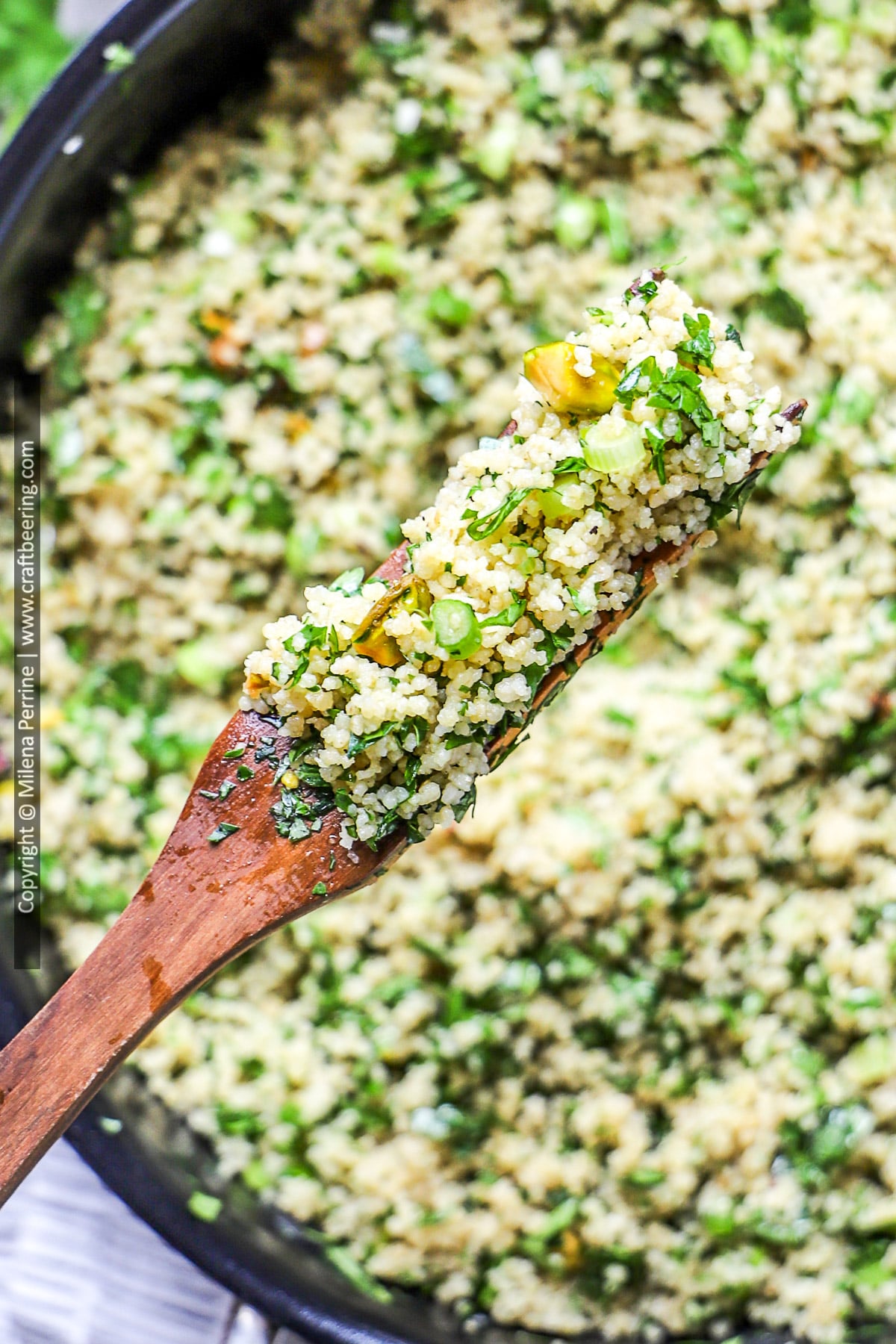
- incorporates your favorite herbs for a fresh tasting highlight in each bite
- incorporates the full-bodied crunch of chopped nuts like pistachios or almonds and/ or seeds like pine nuts or sunflower
- includes flavors typical of Moroccan cooking (both the herbs and the pistachios)
- the couscous looks extra vibrant and appetizing
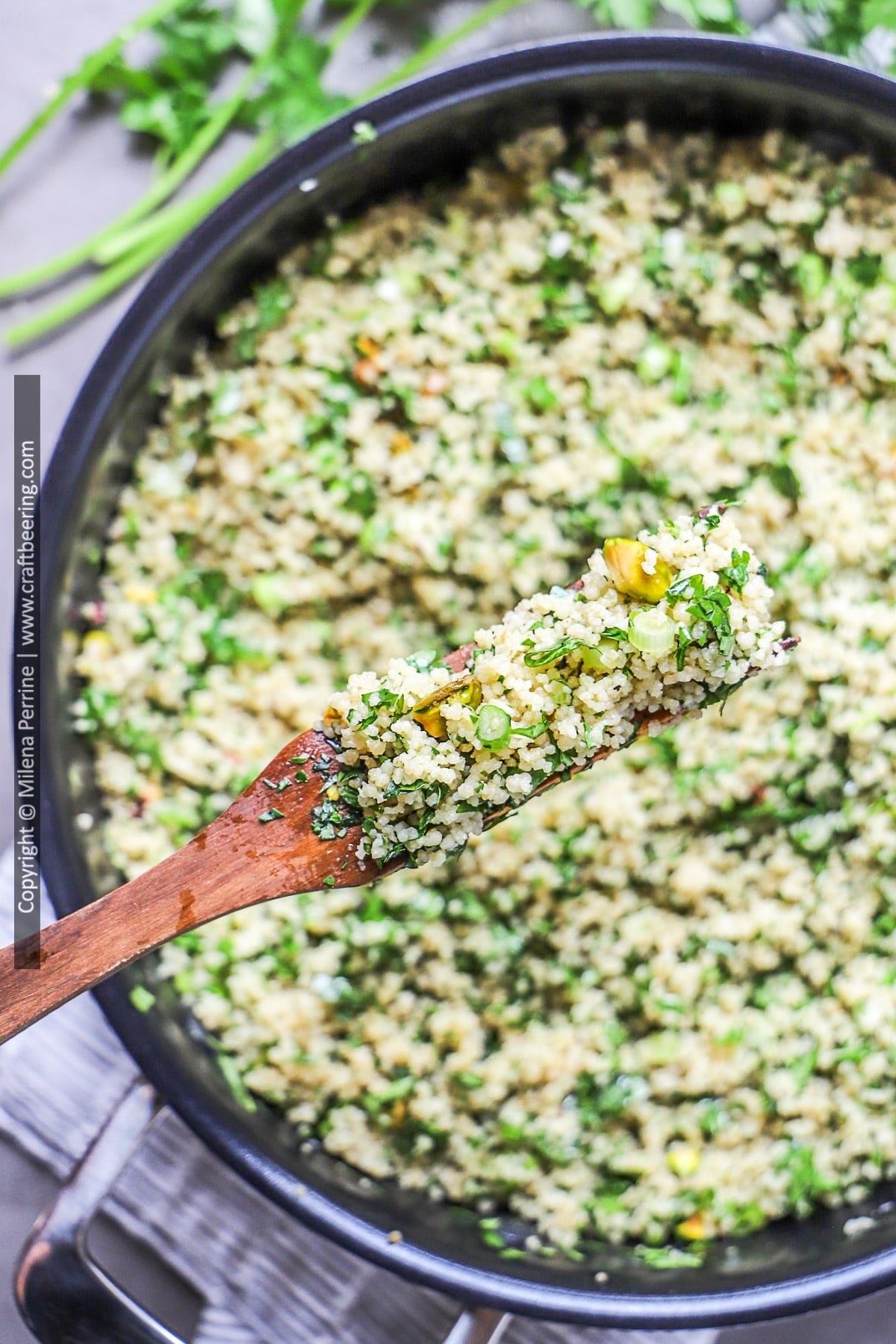
The couscous dish you are about to make is packed with rich tastes, fresh notes and contrasting textures. You can serve it with pride!
What is The Difference Between Couscous and Israeli Couscous?
Moroccan couscous is the name used in the United States to reference the original couscous pasta. Moroccan couscous is THE couscous. It has been in existence since at least the thirteenth century, possibly the eleventh, its roots traced to the Berber people of North Africa.
The larger in size pearl couscous, also called Israeli couscous, was named this way after the original, much smaller couscous described above. Pearl couscous originated as a designed food, sort of like cornflakes. It was literally 'engineered' in Israel to serve as a pretend rice made from wheat. Eventually the rice grain shape was modified into more round 'pearls', much like real couscous but bigger, which elicited the name.
If you are interested in more information on couscous, the real deal one, and pearl couscous, the Israeli kind, read the relevant section below the Recipe Card. There I have outlined the background of each type and highlighted the differences.
Ingredients for Herbed Couscous with Nuts
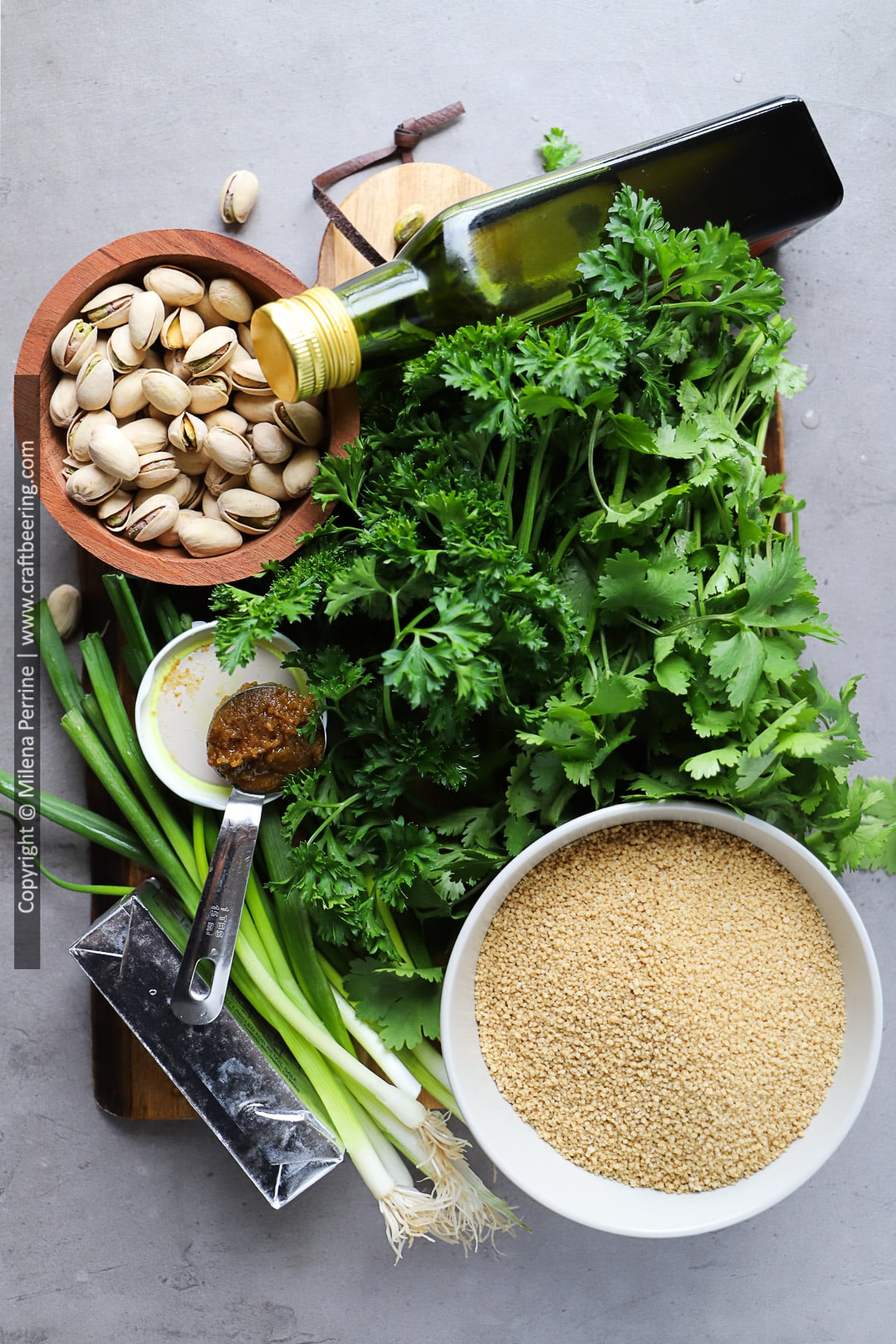
Line up these ingredients to prepare our decadent herbed couscous with nuts:
- Butter. Melted butter adds richness.
- Vegetable broth of chicken broth. Use it instead of water to infuse each couscous grain with flavor. We like to use concentrated broth paste which we dilute with water.
- Chopped herbs. Fresh cilantro, flat leaf parsley, green onions, and chives add heaps of herbal zest. You can also use basil, garlic chives, thyme etc.
- Chopped nuts. Nuts like pistachios and almonds or seeds like pine nuts and sunflower seeds are the pefect crunchy additions. Chop the nuts smallish - leaving them whole defeats the premise of using them as an accent.
- Olive oil, kosher salt and black pepper. To season the couscous to taste. Extra virgin oil is especially well received with its robust flavor.
Couscous to Water Ratio
A ratio of 1:1 of Moroccan couscous to boiling water is the norm. If substituting the water with broth the ratio is not affected.
High Altitude Note: We live at high altitude and based on experience we find that additional two tablespoons of water produce more fluffy couscous. The brands we buy always cook better with the extra water. Aditionally, the couscous needs a bit longer to rehydrate, about to 10 minutes.
How to Cook Couscous with Moroccan Flair
The process of making our Moroccan couscous includes three steps:
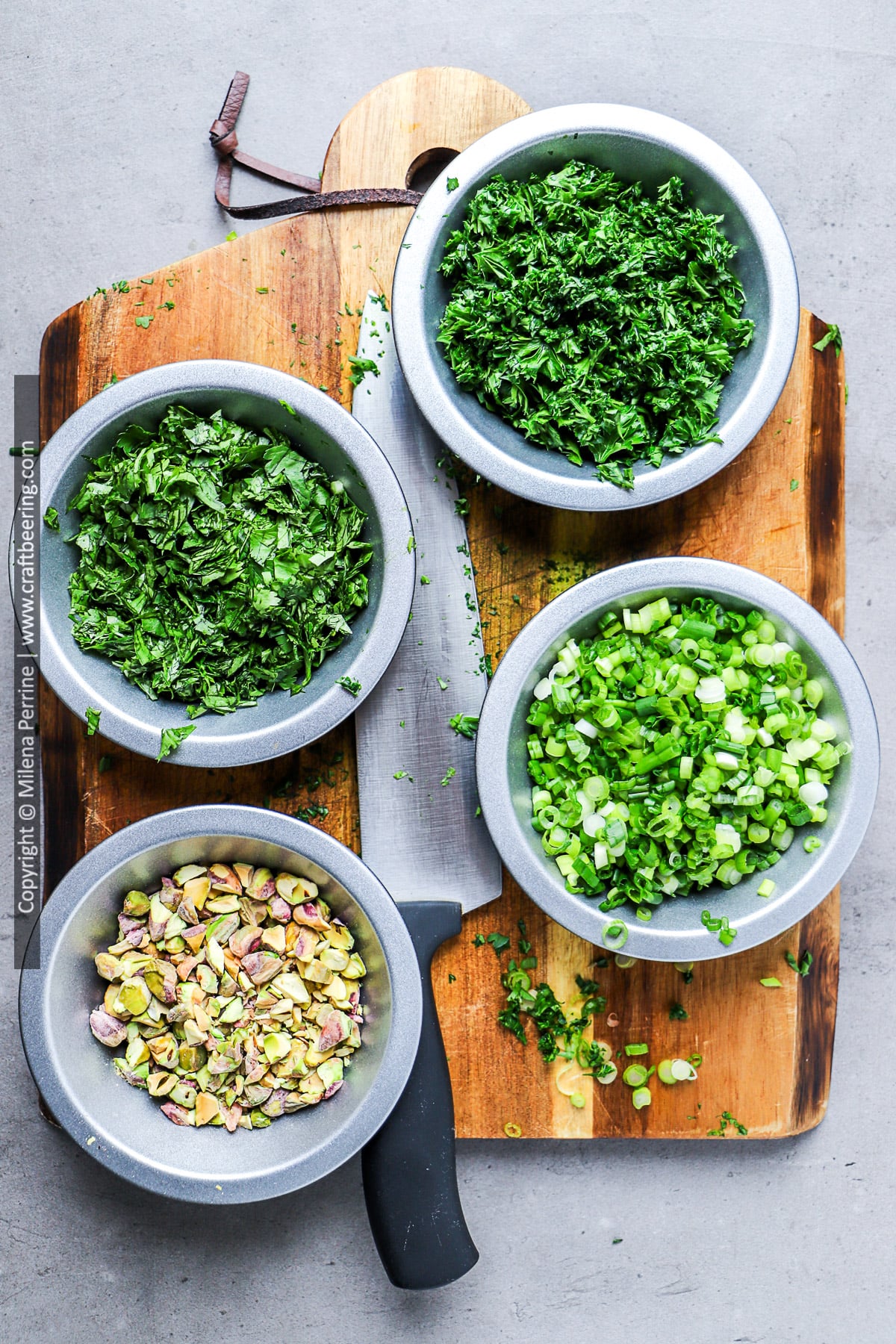
- Prepare all the ingredients you are going to use. Chop the herbs and nuts, measure out the butter, the couscous and the broth (or mix broth base and water).
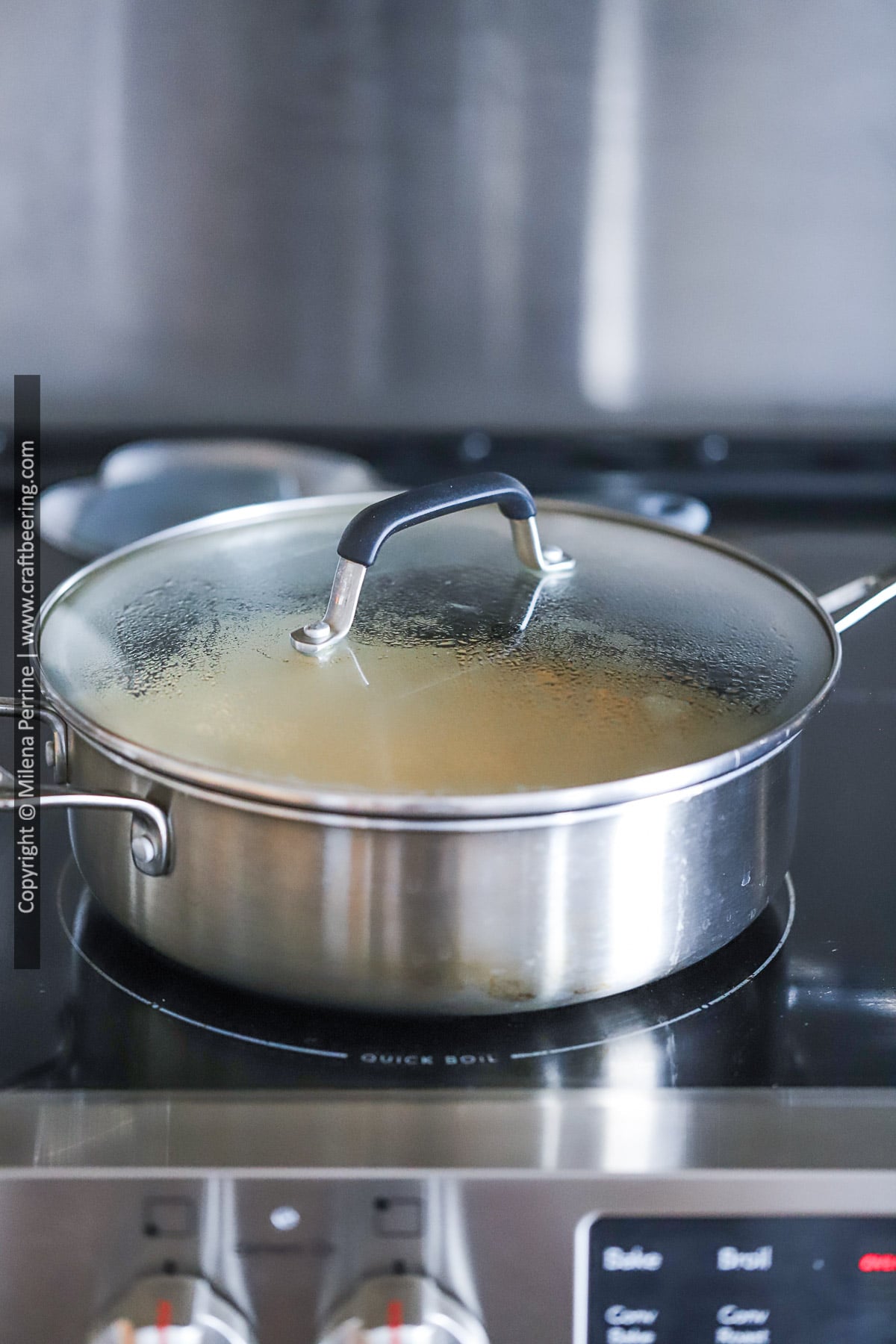
- In a deep pot melt the butter and add the broth. Bring to a boil and turn off. Add the couscous, stir, cover with a lid and allow to steam and rehydrate.
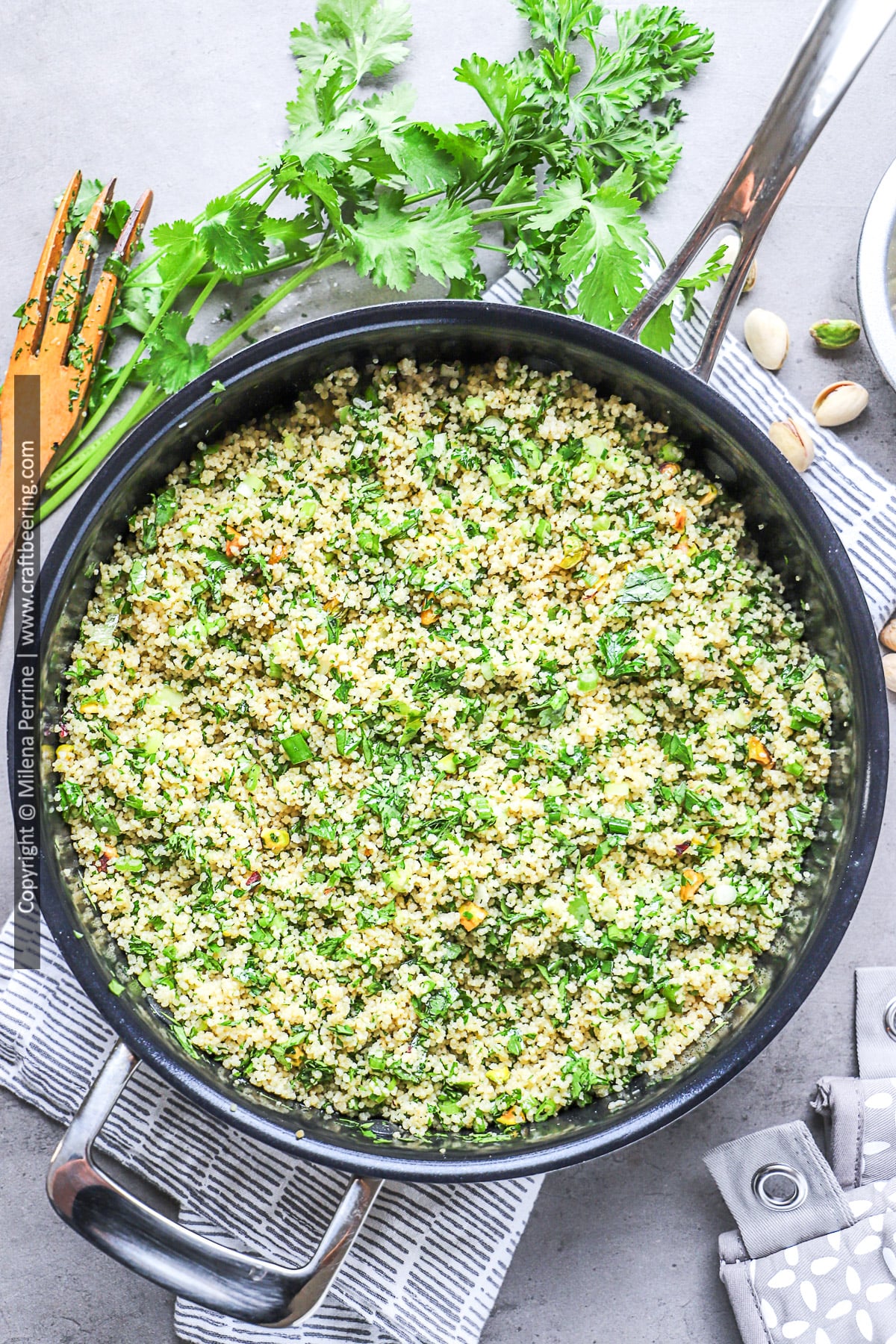
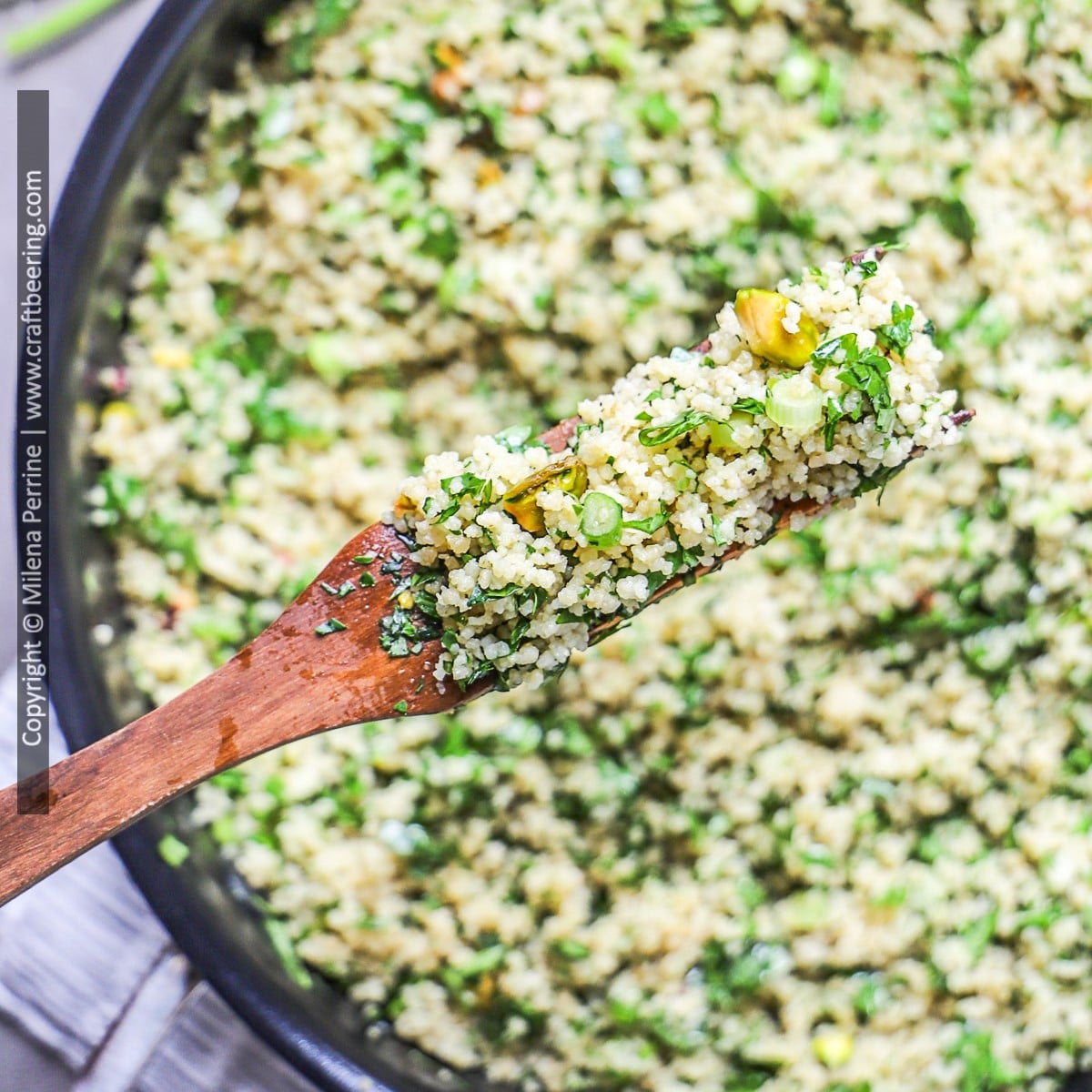
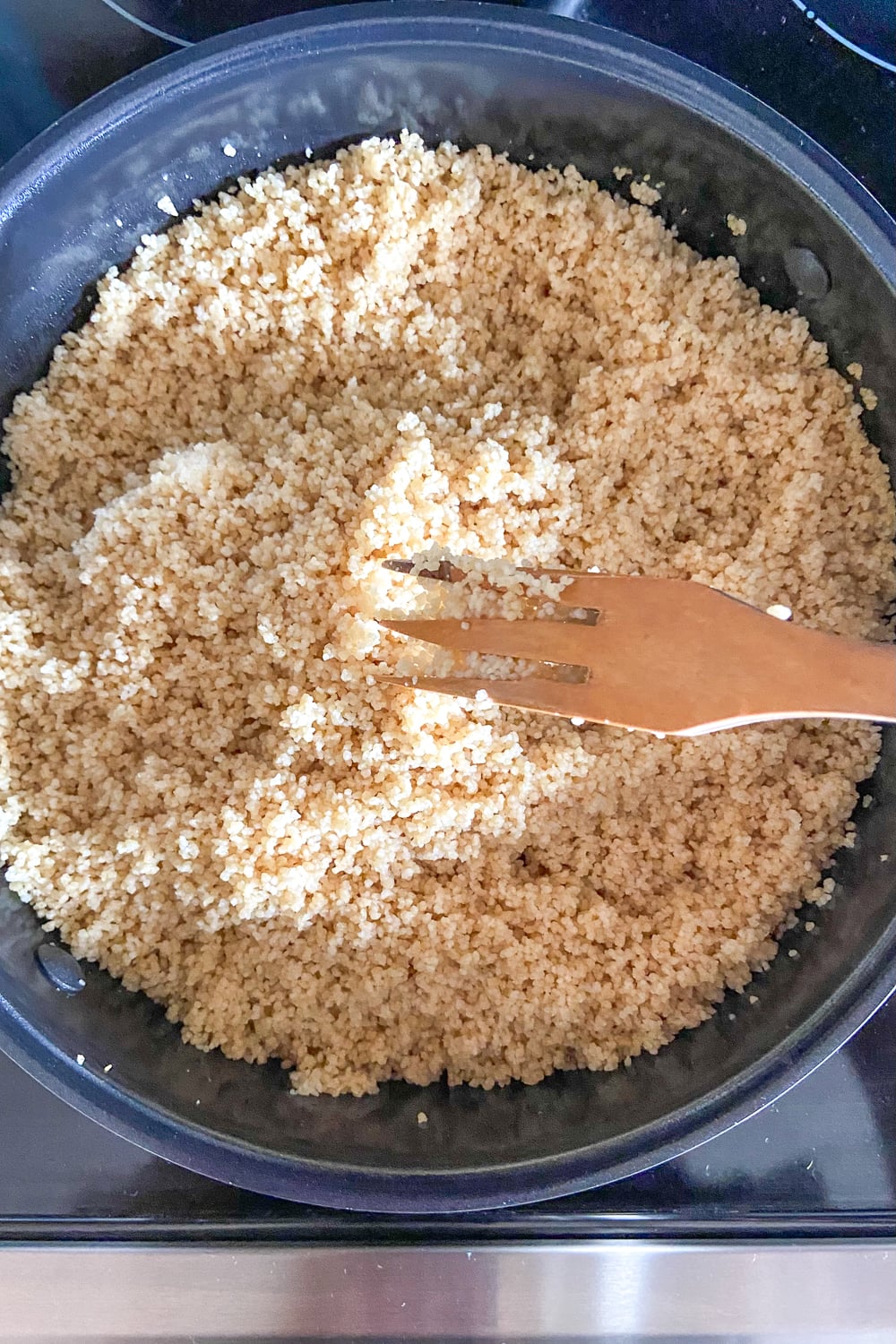
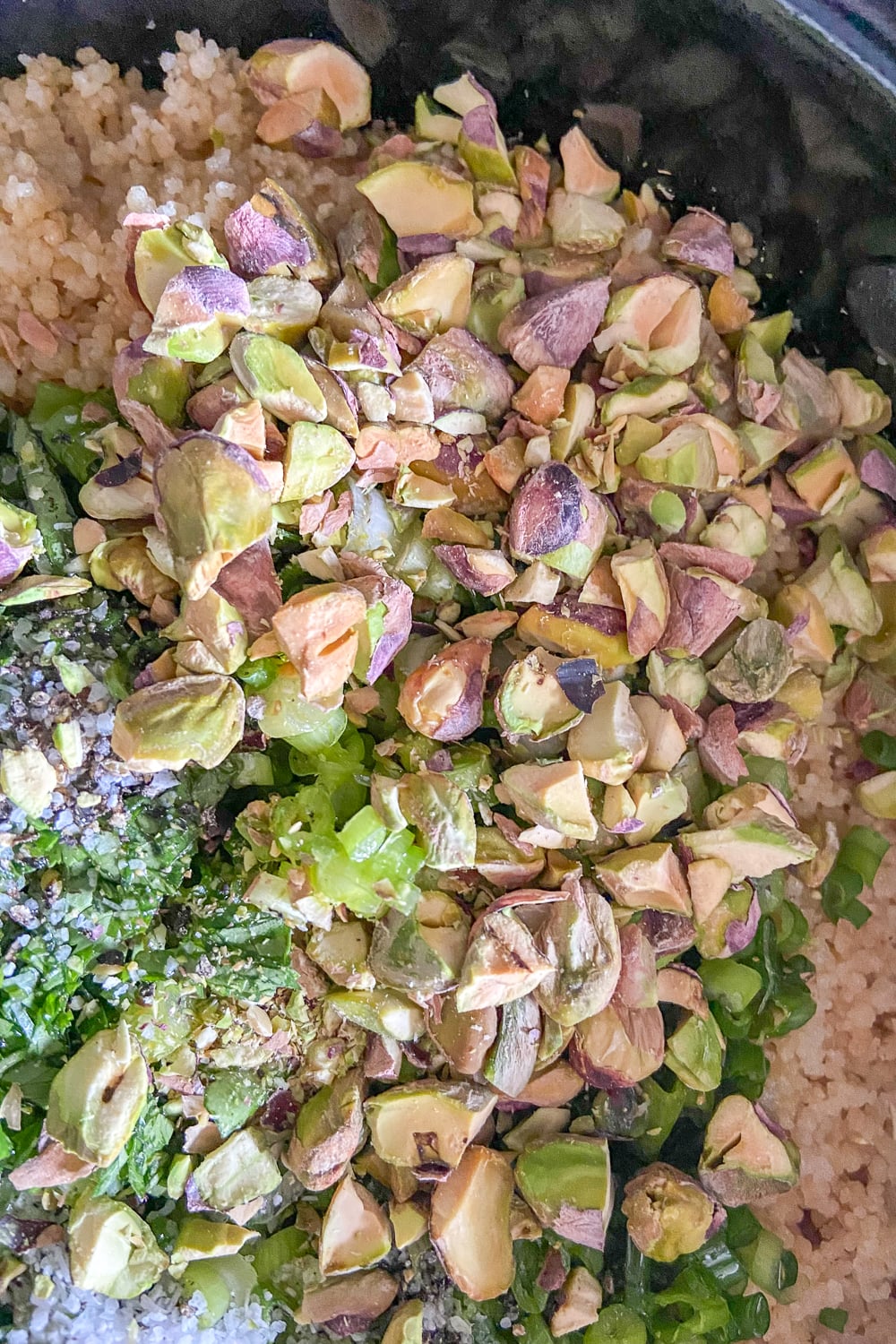
- After a few minutes when all the liquid has been absorbed, fluff the couscous with a fork. Then work in the chopped herbs, nuts or seeds and salt and pepper. Drizzle with a bit of olive oil, fluff again and done!
You can find step-by-step pictures in the Recipe Card below.
Serving Ideas
You can serve the prepared herbed couscous right away (we recommend it) or keep it warm in the pot for a little while. If you must keep it warm cover the pot with a lid and place it near a heat source on the stove top, not directly over heat.
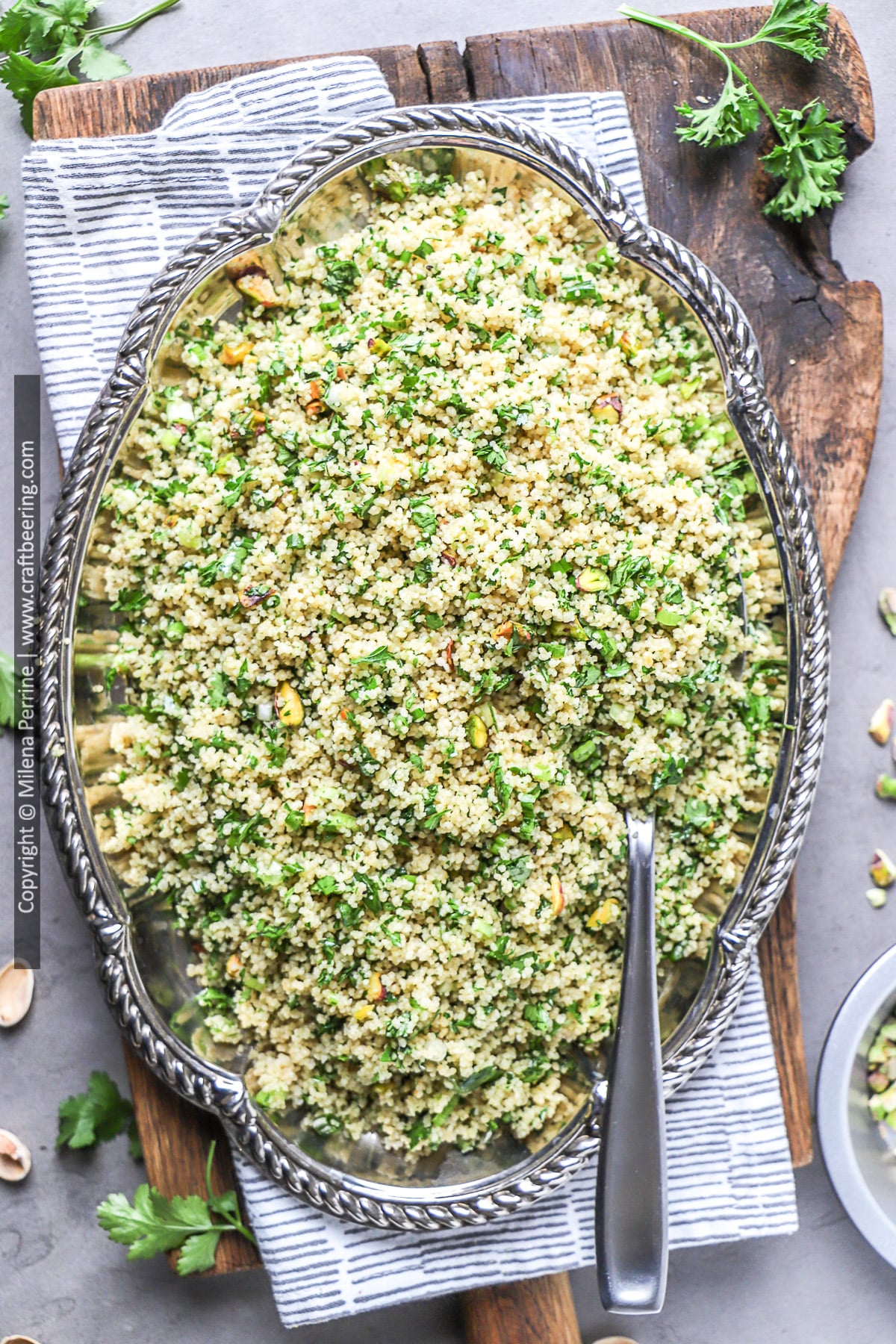
Herbed couscous also tastes good at room temperature or cold and you can serve it spread out over a platter which you will later top with grilled vegetables. skewers, grilled meat etc.
- You can serve Moroccan couscous as a side to a variety of proteins, of which most notably - lamb. Various lamb cuts cooked in various ways pair well with it. Try traditional Turkish grilled lamb skewers, lamb loin chops or braised lamb leg.
- You can use the herbed couscous as the base for salads - add diced or sliced onions, cucumber, tomatoes, feta cheese or goat cheese crumbles, olives, artichokes and more.
- Serve as the main dish - work in bite-size cut grilled vegetables, sauteed mushrooms of cooked chicken, maybe even mini lamb meatballs.
Couscous Nutrition Notes
- Couscous is not gluten free. In fact, it is quite high in gluten forming proteins. Read about how it is made under the Recipe Card to gain better understanding.
- Couscous is high in selenium which is an essential anti-oxidant.
- Couscous is relatively high in fiber content and low in calories.
Storage and Reheating
To store leftover herbed couscous place it in an airtight container and refrigerate.
You do not necessarily need to reheat the couscous - it tastes good at room temperature and you can simply allow it to reach that by leaving it on the counter. Leftover couscous is great in salads.
To reheat the couscous place in a bowl, sprinkle with a bit of water and microwave for about forty-five seconds.
Recipe
Herbed Moroccan Couscous with Pistachios
Equipment
- 1 sauce pot, 8 to 10 inch diameter
Ingredients
- 4 tablespoon butter
- 1 tablespoon vegetable or chicken broth base + 2 cups water (OR 2 cups broth)*
- 2 cups dry couscous, Moroccan
- 1 small bunch flat leaf parsley, or to taste
- 1 small bunch cilantro, or to taste
- 1 small bunch green onions, or to taste
- ⅓ cup roasted pistachio meats, or to taste
- 1 tbsp extra virgin olive oil
- 1 teaspoon kosher salt, or to taste
- ½ teaspoon black pepper, or to taste
Instructions
- Chop the herbs and the pistachios and set aside. Prepare your other ingredients as necessary.

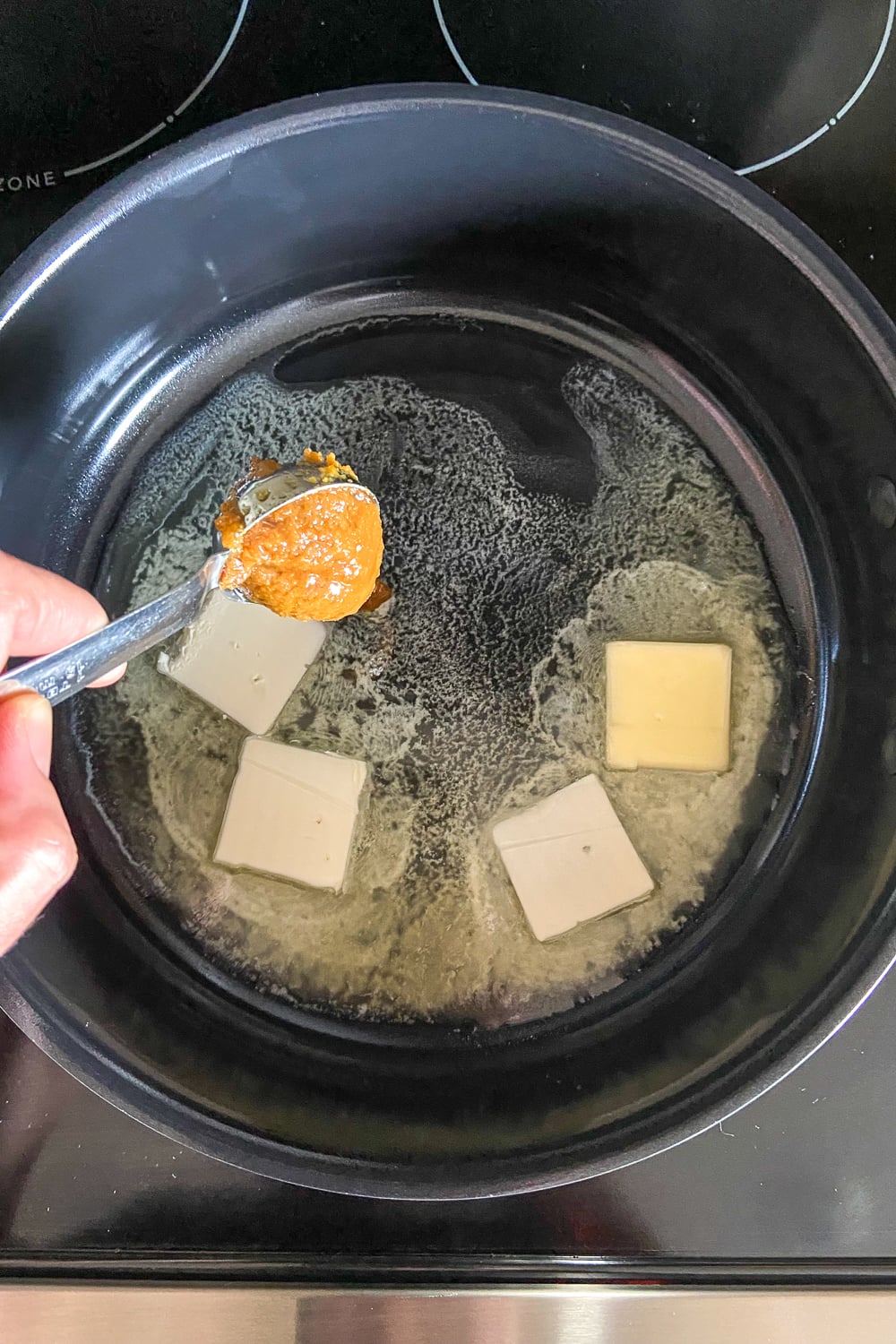
- Over medium heat melt the butter in the sauce pot.

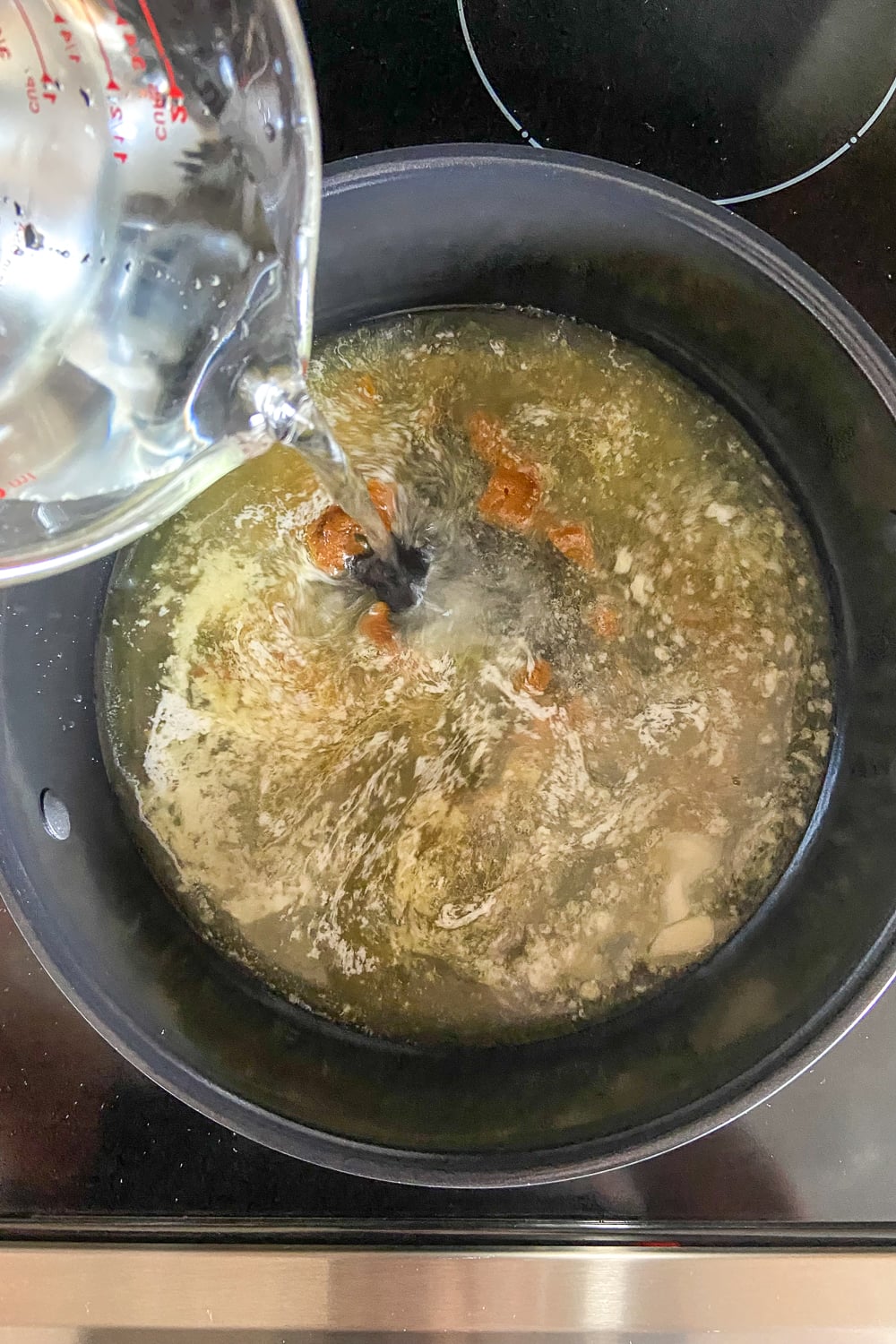
- Add the broth base + 2 cups water OR the 2 cups of broth.
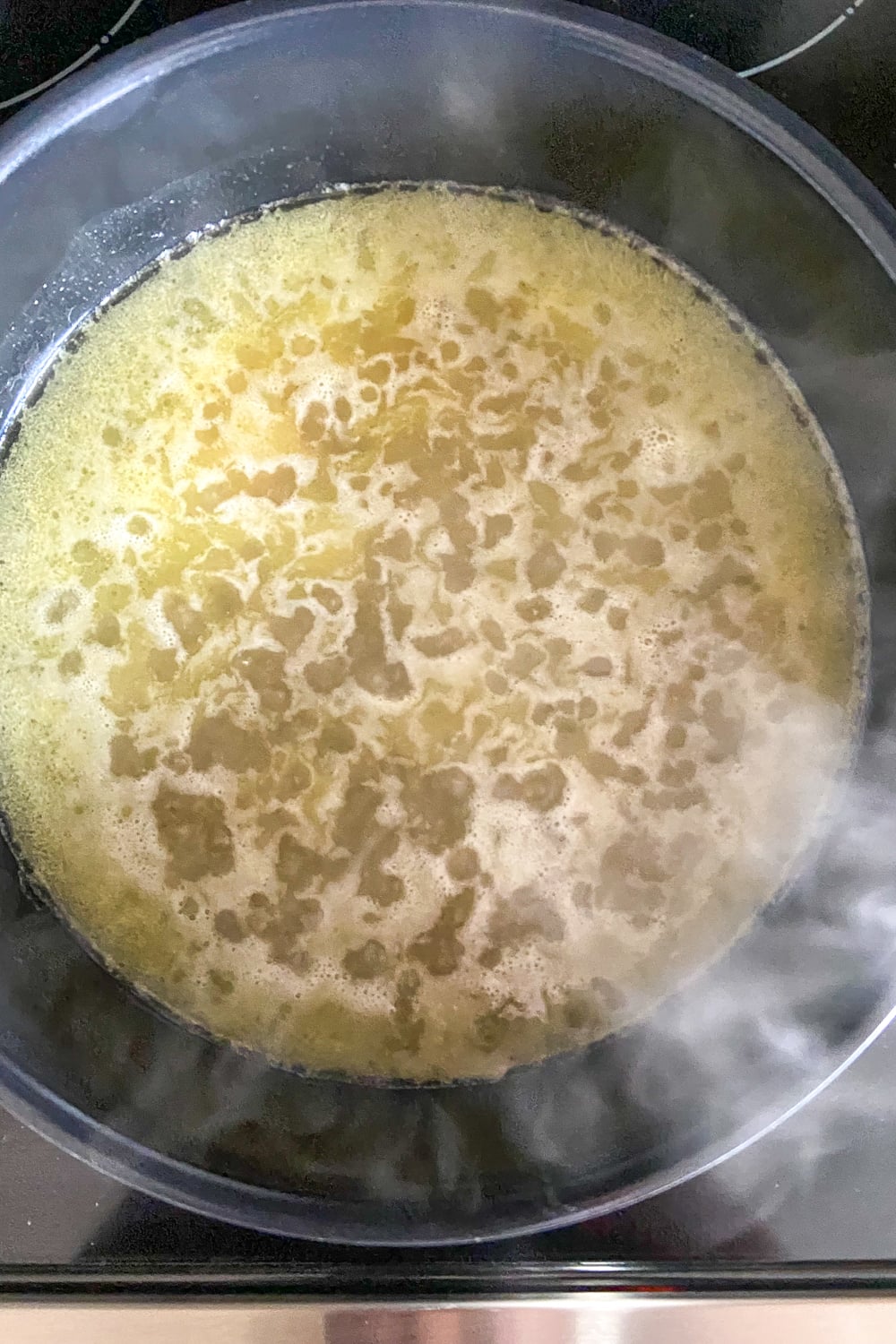
- Stir and allow to reach a boil.
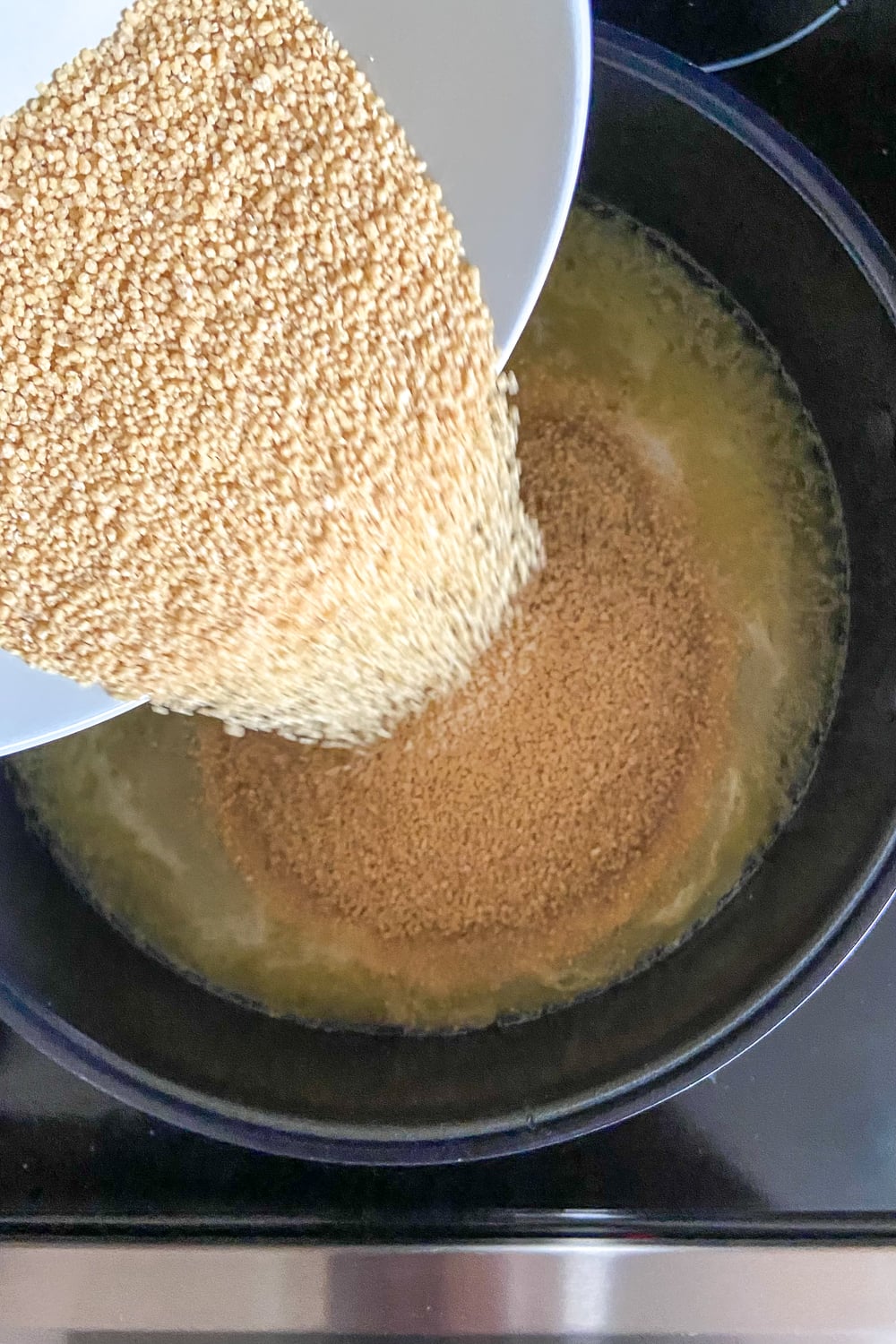
- Remove the pot from the heat and add the couscous.
- Stir, cover with a lid and allow to steam for just over 5 minutes. Then fluff with a fork.
- Season with salt and pepper, add the chopped herbs and pistachios and drizzle with olive oil
- Stir well and fluff again. Serve.
Notes
Nutrition
How is Couscous Made?
In the picture below, notice how the tiny balls of uncooked Moroccan couscous (the original, real couscous) are not uniformly shaped or sized. This is because even though couscous is technically considered a pasta, it is made in a different way than most pasta is. It is, in fact, truly unique.
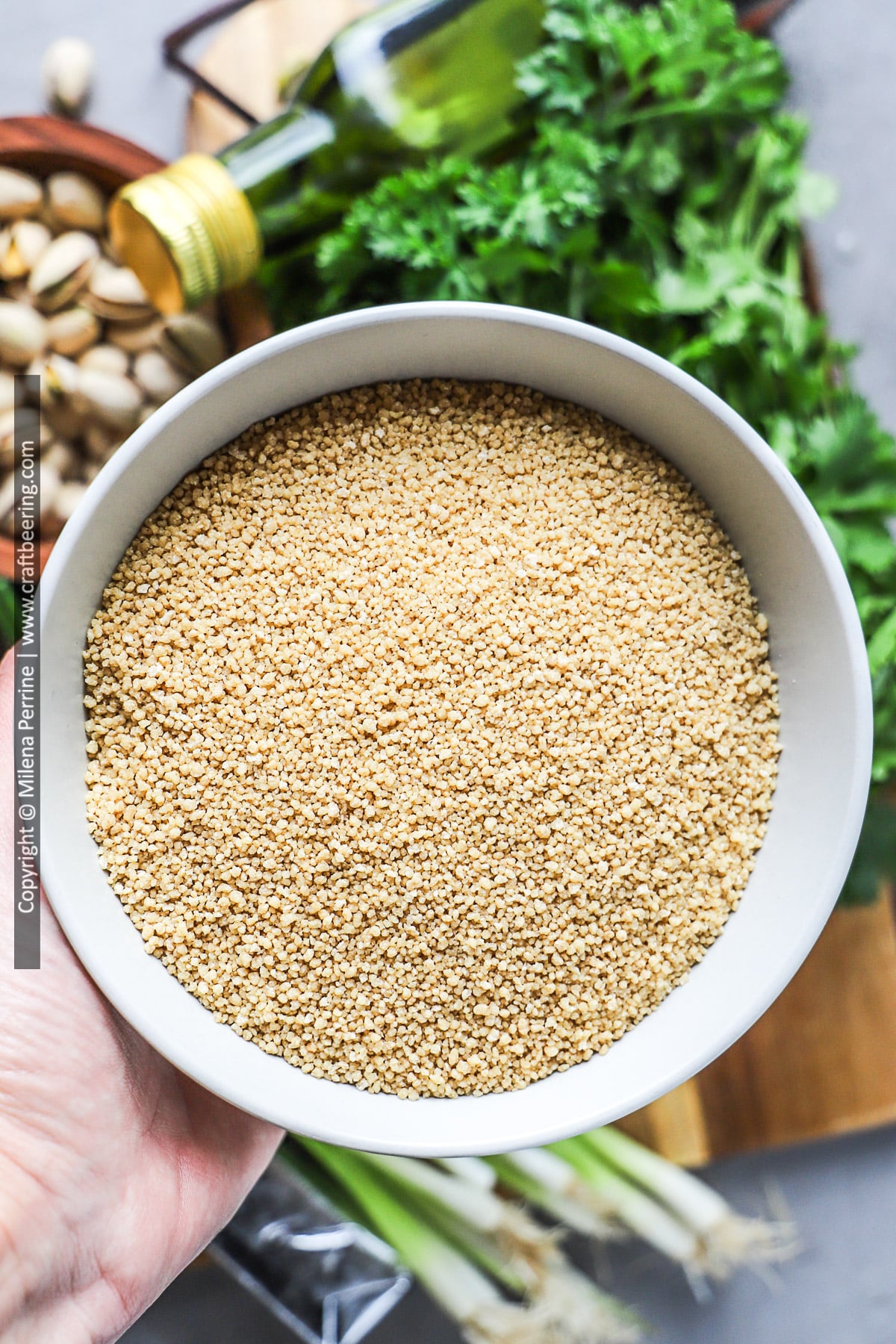
Moroccan couscous is in fact the semolina or coarsely ground inner core (endosperm) of the durum wheat kernel.
What does this mean? Once durum wheat has been milled, its innermost, very dense and protein-rich endosperm remains. This is because durum wheat is the hardest variety of wheat and its coarse endosperm, known as the semolina, resists the grinding of the mill. It remains whole, resembling fine sand grains.
Semolina is processed to become couscous. Originally this was achieved by sprinkling the semolina with water and rolling it by hand to form small pellets. These were sprinkled with dry flour to keep them separate and rolled more after which they were sieved. The pellets that were too small fell through the sieve and were rolled again. Those that stayed on top of the sieve were dried and became couscous. Very labor intensive. Nowadays, couscous production is mechanized. You can watch the process in this video: How Its Made: Couscous.
How Is Israeli Couscous Made?
Pearl couscous, known as Israeli couscous and in Hebrew called ptitim, is a ball-shaped pasta product with origins in 1950s Israel. At that time the country was experiencing rice shortages and the prime minister requested that a product be food engineered that resembled rice grains but was made from wheat.
The resulting hard-wheat based rice food-substitute was ptitim. It was received well by the population and quickly became popular. This lead to the production of a ball-shaped variety of ptitim, modeled after the shape of North African couscous. The ball-shaped ptitim is what we know as pearl couscous.
Israeli couscous pasta is factory made in the traditional way - with a dough that is extruded through a round mold and is then cut and toasted. It is notably bigger than regular couscous.

Mary
Such a beautiful and vibrant dish! I received many compliments for bringing the couscous from this recipe to a summer party last night.
Jojo
This was a fantastic side dish for grilled chicken. I completely left out the nuts because I didn’t have any on hand. The herbs and good olive oil were more than enough to create a vibrant and fresh layer over the chicken infused couscous.
Kelly
This was the perfect side for grilled lamb leg. I have made couscous before but never so flavorful. Steaming it with broth and butter and adding all the herbs puts couscous at a whole new level.