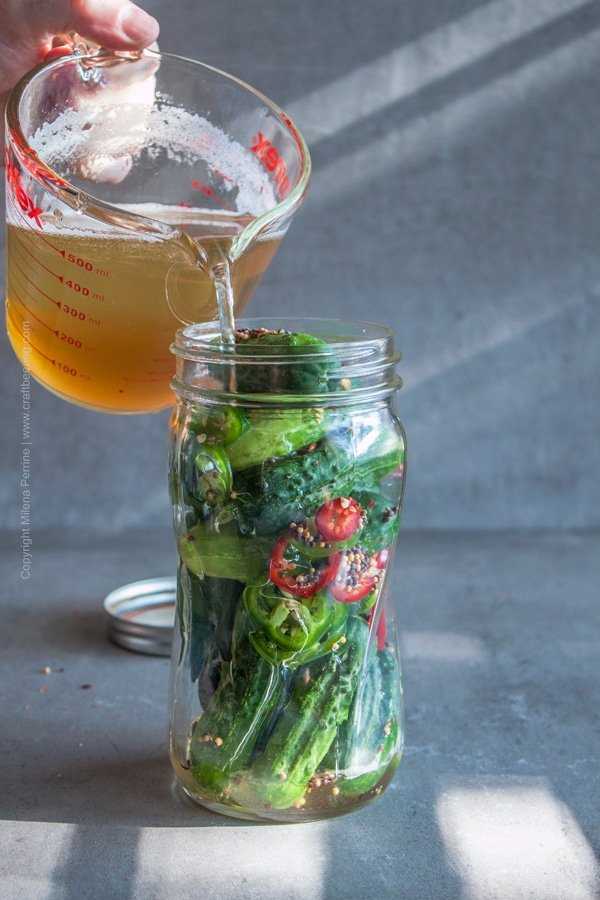
Beer Pickles (Two Ways)
Beer pickles are characterized by a delicious lively edge courtesy of the hops and malts in the beer. This recipe lists two pickling approaches - with acetic acid from vinegar and with lactic acid from naturally occurring lactobacillus as the souring agents. Each method yields 2 quart jars of pickles.
Print
Pin
Servings: 2 jars
Calories: 67kcal
Ingredients
For Refrigerator Beer Pickles
- 1 lb fresh cucumbers smaller sized, fresh from market, unwaxed, (recommend Kirby)
- 12 oz IPA or pale ale
- ¼ cup water
- 2 cups vinegar (apple cider or wine)
- 1 cup sugar
- 1 ½ tablespoon salt
- ¼ teaspoon peppercorns
- ¼ teaspoon yellow mustard seed
- ¼ teaspoon black mustard seed
- 2 cloves garlic peeled, lightly smashed, quartered
- ½ teaspoon chili flakes
- ¼ teaspoon pickling spice (optional)
- 1 jalapeno thinly sliced
- 1 Fresno chile thinly sliced
For Naturally Fermented Beer Pickles
- 1 lb fresh cucumbers smaller sized, fresh from market, unwaxed, (recommend Kirby)
- 2 ½ tablespoon salt
- 2 cups beer low ABV and not aggressively hopped
- 2 ½ cups water
- 6 sprigs dill
- 3 cloves garlic large, peeled, lightly smashed, quartered
- ½ teaspoon peppercorns
Instructions
- Clean and dry the cucumbers.
For Refrigerator Beer Pickles
- Combine the water, beer, vinegar, salt and sugar in a small pot and bring to simmer. Stir to dissolve sugar and salt and let cool down completely.
- In sterilized mason jars arrange the cucumbers and the sliced peppers, add the peppercorns, mustard seed, garlic, chili flakes and optional pickling spice.
- Fill the jars with the cooled down pickling brine and make sure the pickles are submerged, use pickle weights if you have them. Close the lids and store refrigerated. Turn jars upside down and back up every day. Pickles should be ready in about 7 days.
For Naturally Fermented Beer Pickles
- Combine the water, beer and salt in a small pot and bring to simmer. Stir to dissolve the salt and let cool down completely.
- In sterilized mason jars arrange the cucumbers and the dill, add the garlic and the peppercorns.
- Fill the jars with the cooled down pickling brine and make sure the pickles are completely submerged, use pickle weights if you have them. Close the lids and let sit in a cool spot to ferment for 5-7 days. Be sure the temperature does not exceed 75 F as this may encourage bacteria other than lactobacillus to grow even in the presence of the beer.
- Taste in a few days - they should have a very mild sour taste followed by a flavorful sweetness. If you want deeper taste, let ferment for another day or so. After that store refrigerated and consume relatively fast.
Notes
Choose only the highest quality, freshest vegetables for best results. Pickle when the vegetables are in season and abundant.
See the text of the post for this recipe card for other beer styles and seasonings suggestions.
Nutrition
Serving: 2jars | Calories: 67kcal | Carbohydrates: 12g | Protein: 1g | Sodium: 1168mg | Sugar: 9g
