

Jump to:
- What is Teres Major Steak?
- What Does Teres Major Steak Taste Like?
- Teres Major Steak Other Names
- What Teres Major Beef Cut is Not
- How Does Teres Major Steak Compare to Other Popular Beef Cuts
- How to Cook Teres Major Steak
- Pan-seared Teres Major Beef
- Grilled Teres Major Steak
- Temperature Chart for Petite Filet
- Lean Meat Welcomes Rich Sauces and Compound Butters
- Storing and Reheating Chuck Petite Tender Filet
- You Might Enjoy
- Recipe
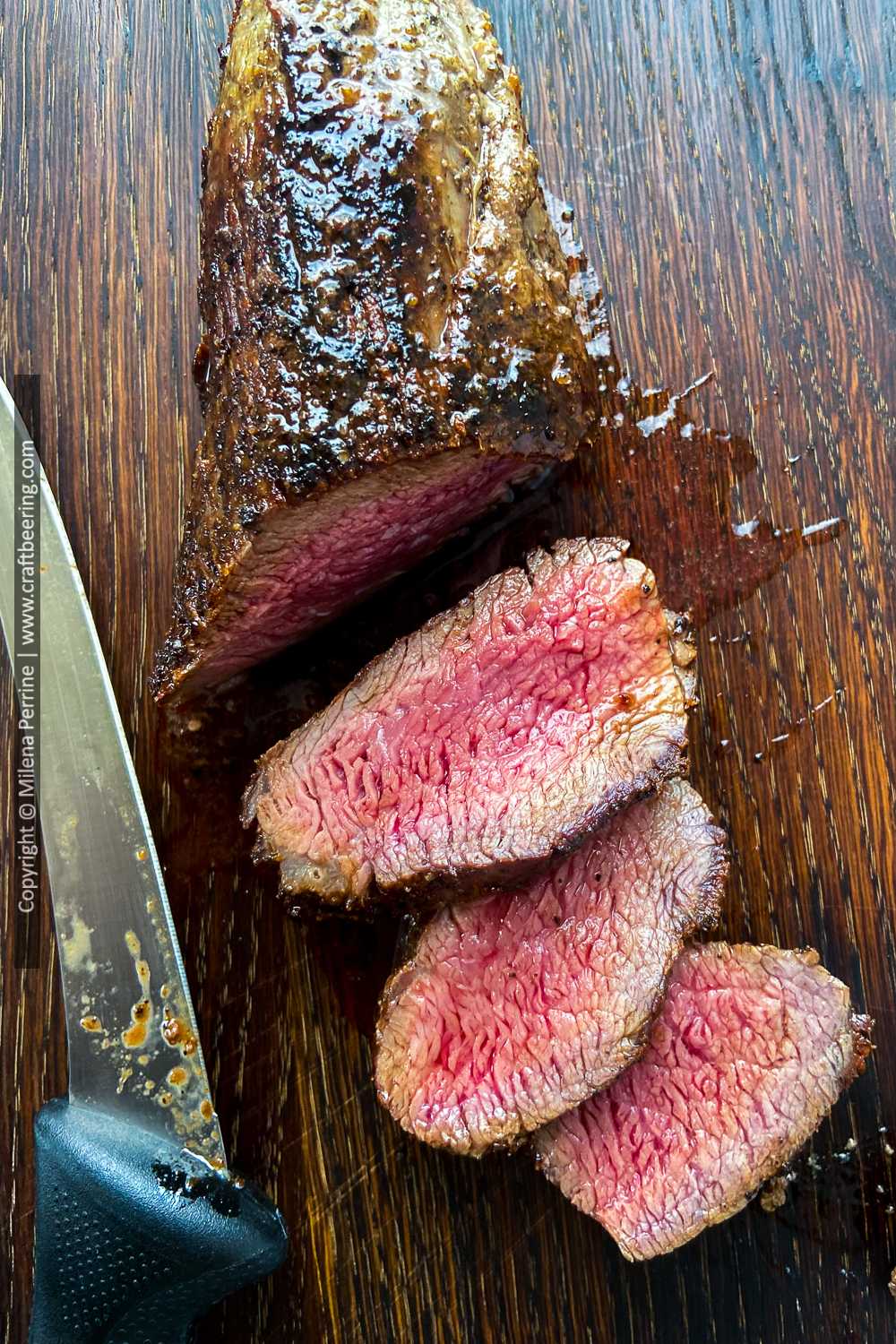
The teres major steak is often called the second most tender cut of beef after the tenderloin. And for a good reason. In this post we review what part of the animal the lesser known teres major beef filet comes from, how it compares to other popular steaks and how to cook it.
What is Teres Major Steak?
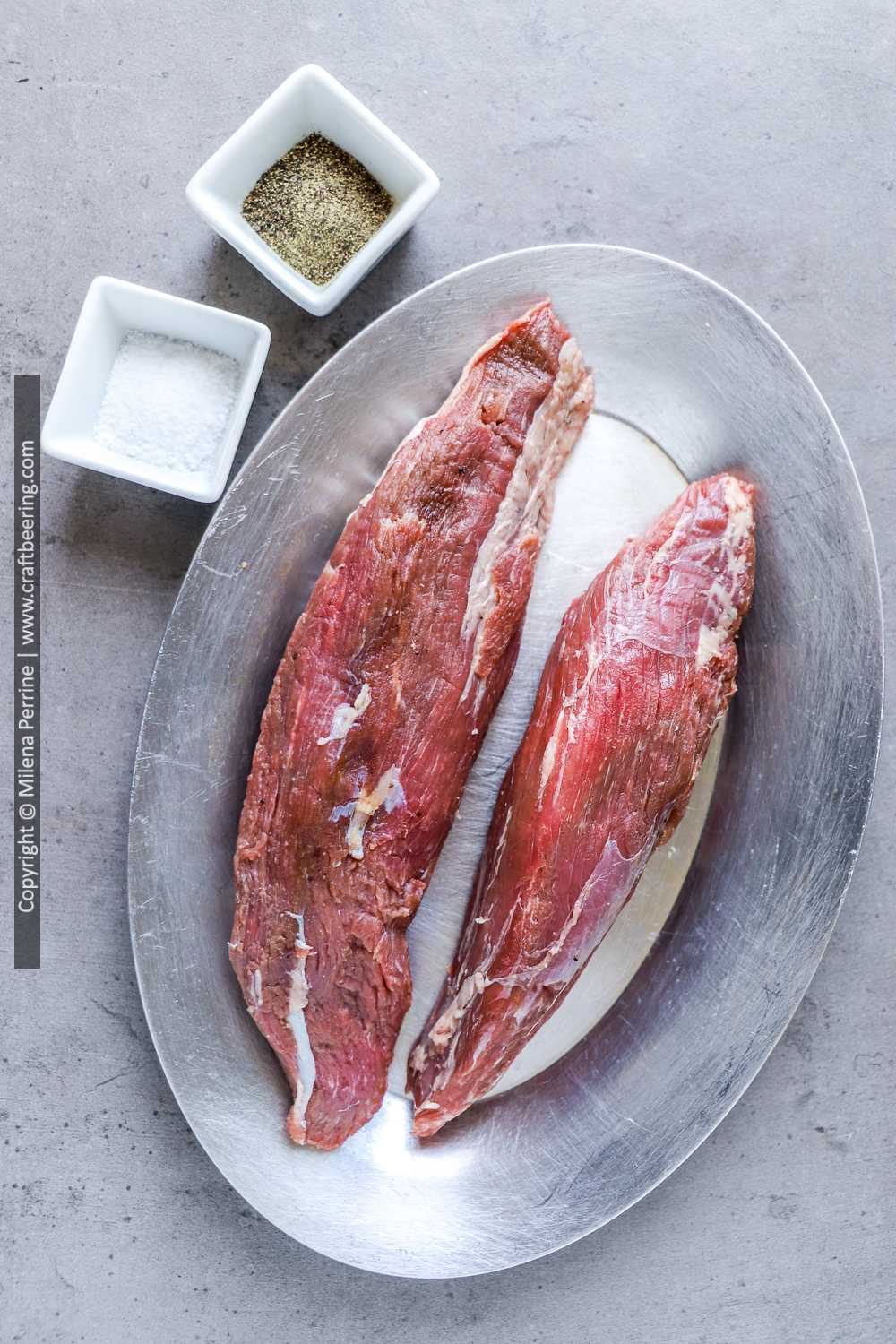
Teres major beef steak is a single muscle from deep within the chuck primal, wrapped inside the chuck shoulder clod. It is relatively small - just shy of the size of a pork tenderloin, with an average weight of less than one pound.
Its shape is at the root if its name - teres means rounded in Latin.
The muscle performs a short range of motion between the scapula and humerus bone, helping to turn the shoulder inward. Due to this relatively low amount of work it is very tender.
It takes a skilled butcher to access this steak and naturally only two filets per animal can be harvested. Although not a common retail beef cut teres major steak is well-known in the food service industry. It costs much less than beef tenderloin but delivers meat that is almost as tender and far more flavorful.
What Does Teres Major Steak Taste Like?
Teres major has a rich beefy flavor and on account of that requires minimal seasoning. At the same time it is lean and welcomes various steak sauces post cooking.
Rumour Has It: Sometimes, when in a pinch, steakhouses or other restaurants with filet mignon on their menus will utilize teres major beef as a substitute when patrons order the cut cooked medium or medium-well. They can safely do so because when cooked that much the teres major is EXTREMELY difficult (if not impossible) to distinguish from beef tenderloin.
Teres Major Steak Other Names
The name teres major is actually the scientific term for the muscle which has gained popularity over the other names for the specialty butcher's cut which include:
- Shoulder tender
- Petite filet
- Petite tender steak
- Chuck petite tender steak
What Teres Major Beef Cut is Not
The teres major steak is definitely NOT a mock tender steak. This is a major misunderstanding and anyone competent in butchering beef will confirm it.
The mock tender, although very similarly shaped once isolated from the chuck, is an entirely different muscle. One that works hard as part of the shoulder complex.
Therefore the mock tender is not nearly as tender as the proper tenderloin or the teres major. In fact it is quite a bit tougher (perhaps the word mock offers a clue) and hence lends itself better to different cooking methods. Other names for mock tender are chuck tender, chuck filet and Scotch tender. It is incorrect to apply any of these to the teres major muscle.
Read more about mock tender here.
Another term causing confusion is beef clod (aka beef clod steak or beef shoulder clod). It is incorrect to apply these names to the teres major steak. The shoulder clod is a subprimal cut within the chuck primal. It consists of a group of muscles one of which is the teres major.
How Does Teres Major Steak Compare to Other Popular Beef Cuts
When ranking the top five most tender steaks the buttery beef tenderloin (especially the filet mignon cut from its narrow end) is always first.
Then comes the teres major and the third place goes to flat iron steak which sits near it within the top blade.
(Some argue that flat iron deserves the second position but having cooked and tasted quite a few flat iron steaks and petite tenders we feel that the order outlined above is accurate.)
In fourth position we would place outside skirt steak (entrana) and in fifth picanha (aka top sirloin cap or coulotte steak). We issue these two rankings also based on cooking the cuts often and nurturing a great affection for both.
TOP 5 MOST TENDER BEEF STEAKS
- Beef tenderloin/filet mignon
- Shoulder tender (teres major steak)
- Flat iron steak
- Outside skirt steak
- Picanha steak
How to Cook Teres Major Steak
The top ways for cooking this bistro filet steak are pan-searing and grilling. The surface gets a nice crust and the tender piece of meat cooks just enough to remain juicy and retain its buttery texture.
Because teres major beef cooks quickly with each method a sequence of direct and indirect heat is typical but often times the strong direct heat does the job all by itself.
Depending on how large the actual filet you procured is you may or may not have to split the cooking into a direct heating step and indirect heat finishing step.
THE KEYS TO COOKING THE DELICATE TERES MAJOR BEEF ARE:
- measure the internal temperature very dilligently - it is so easy to overcook
- be mindful of the rounded shape - you need to turn a teres major steak over at regular intervals to achieve an even distribution of heat toward the center and to not overcook one side
- pull it off the heat a bit earlier than the desired doneness temperature because the residual heat will cook it further
NOTE: You will observe, as the meat cooks, that the teres major steak becomes shorter. Shrinkage is common for meat as it cooks, up to 25% of its weight can be lost depending on how long the thermal treatment lasts and the type of cut. Teres major, just like filet mignon, loses some of its water content during cooking.
Pan-seared Teres Major Beef
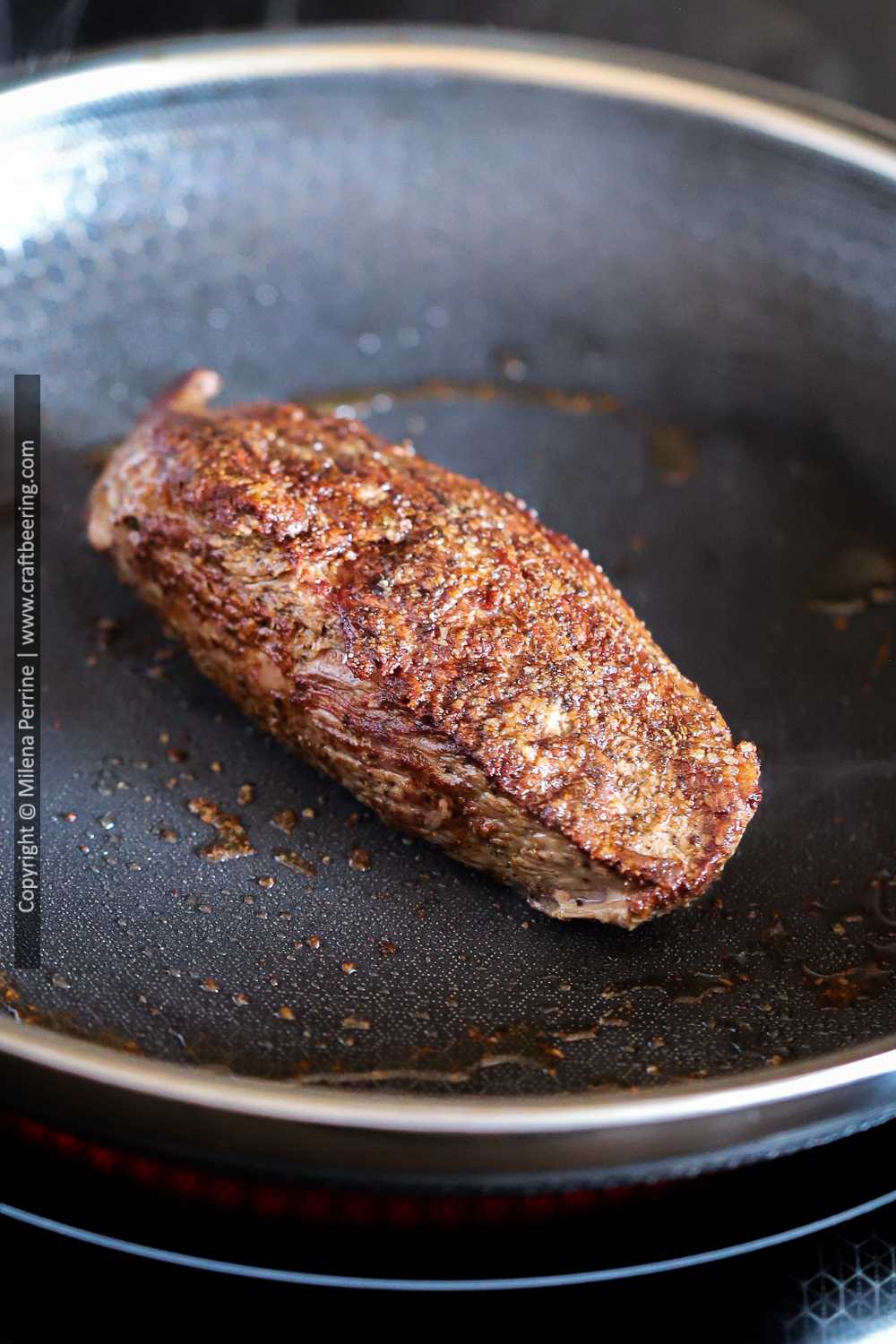
For a perfect pan-seared chuck petit tender follow these steps:
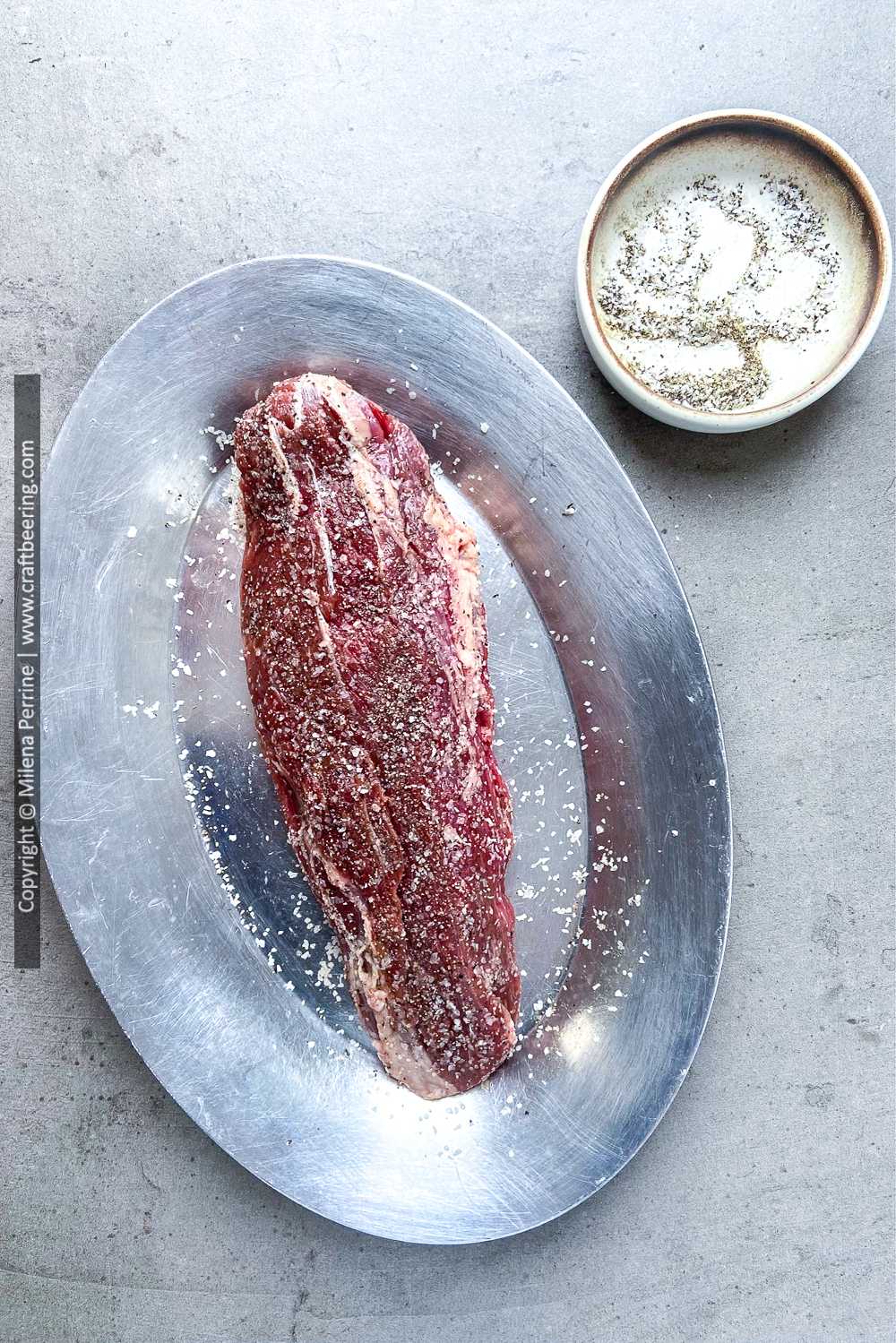
- Season the steak with coarse salt and black pepper and let it come to room temperature for about 20 minutes. Pre-heat oven to 400 F if your petite filet is well over half a pound so you can finish it in the oven as needed.
- In a cast iron skillet or another good heavy skillet (we like the HexClad line) heat oil over medium high heat.
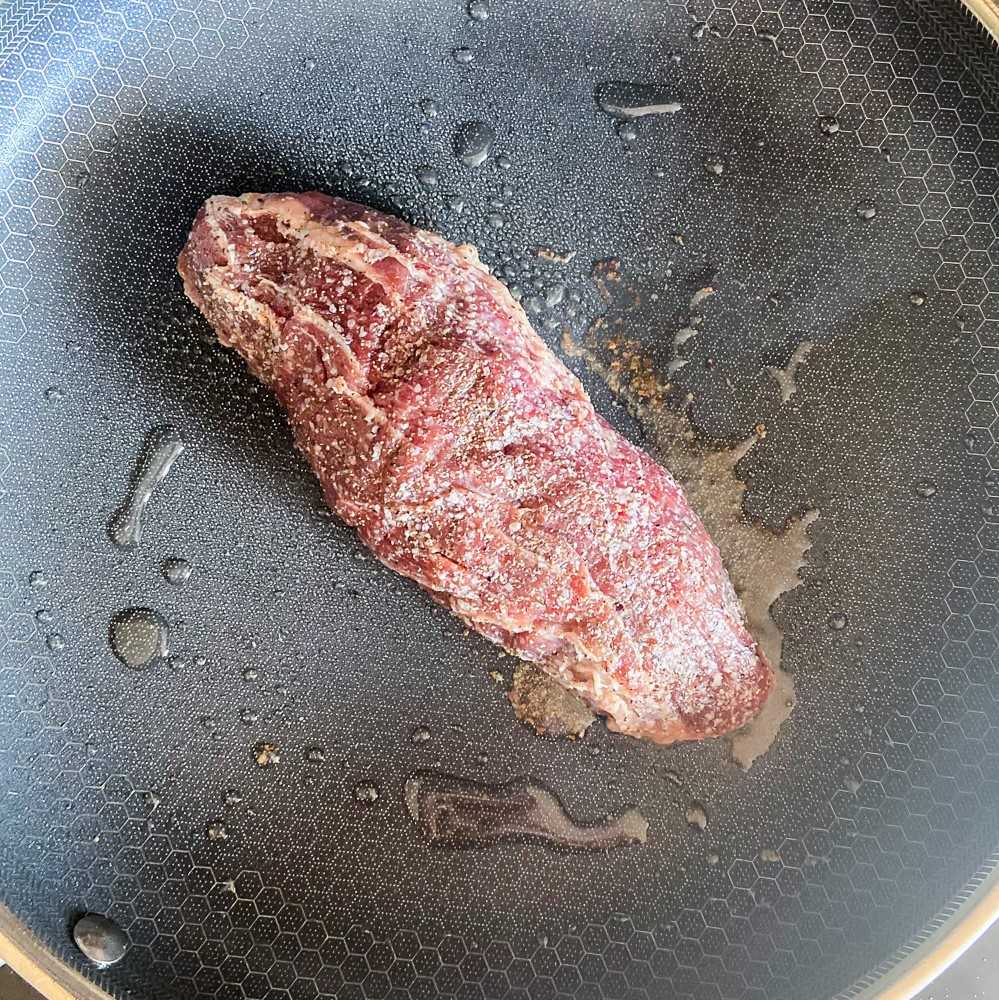
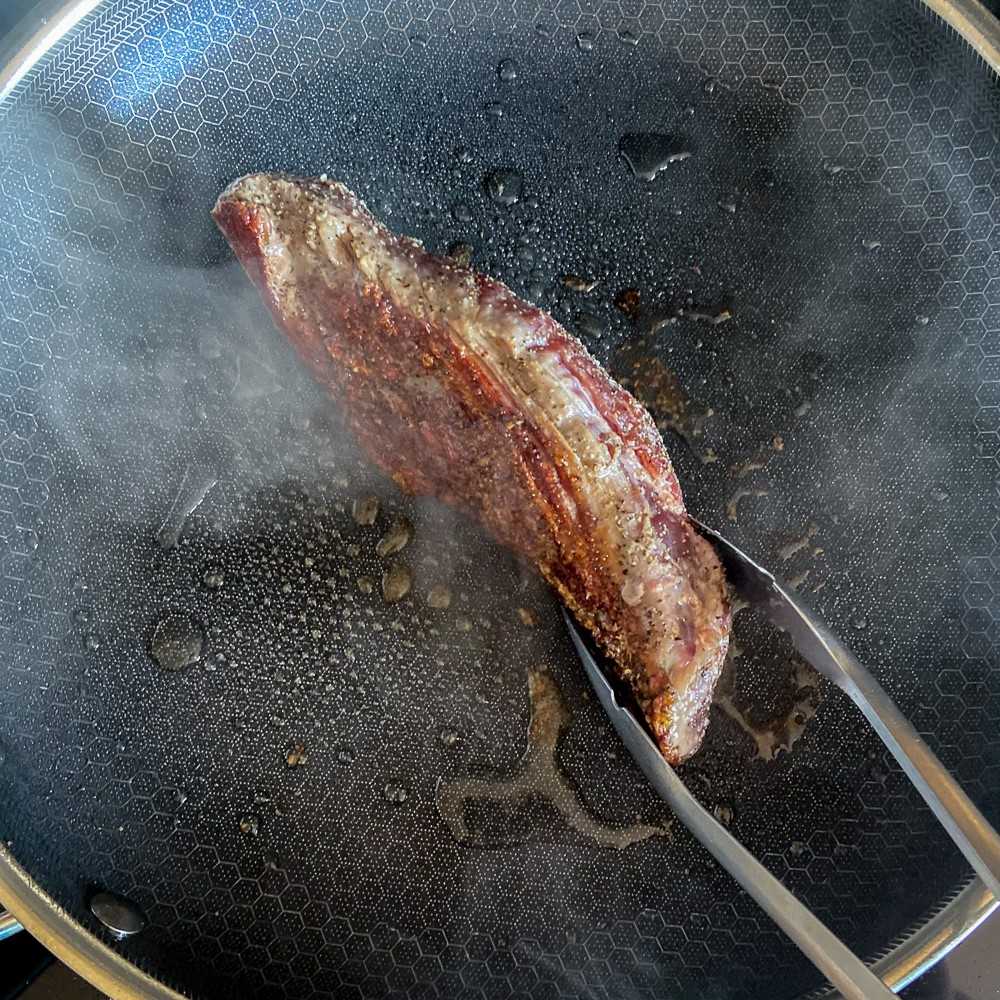
- Once the oil is shimmering sear the filet until it becomes golden brown all over. About 2 minutes per side, for simplicity imagine that there are four sides. Once you see a nice crust all around use a meat thermometer to check the internal temperature.
- If it is already in the stop cooking range proceed to rest the filet, loosely tented with foil. (Consult the temperatures below or in the Recipe Card)
- Otherwise, transfer the skillet to the oven for a couple of minutes until the desired temperature range (for medium-rare 120-125 F) is reached.
- Rest the steak losely tented for just over 5 minutes before you slice it into medallions.
Grilled Teres Major Steak
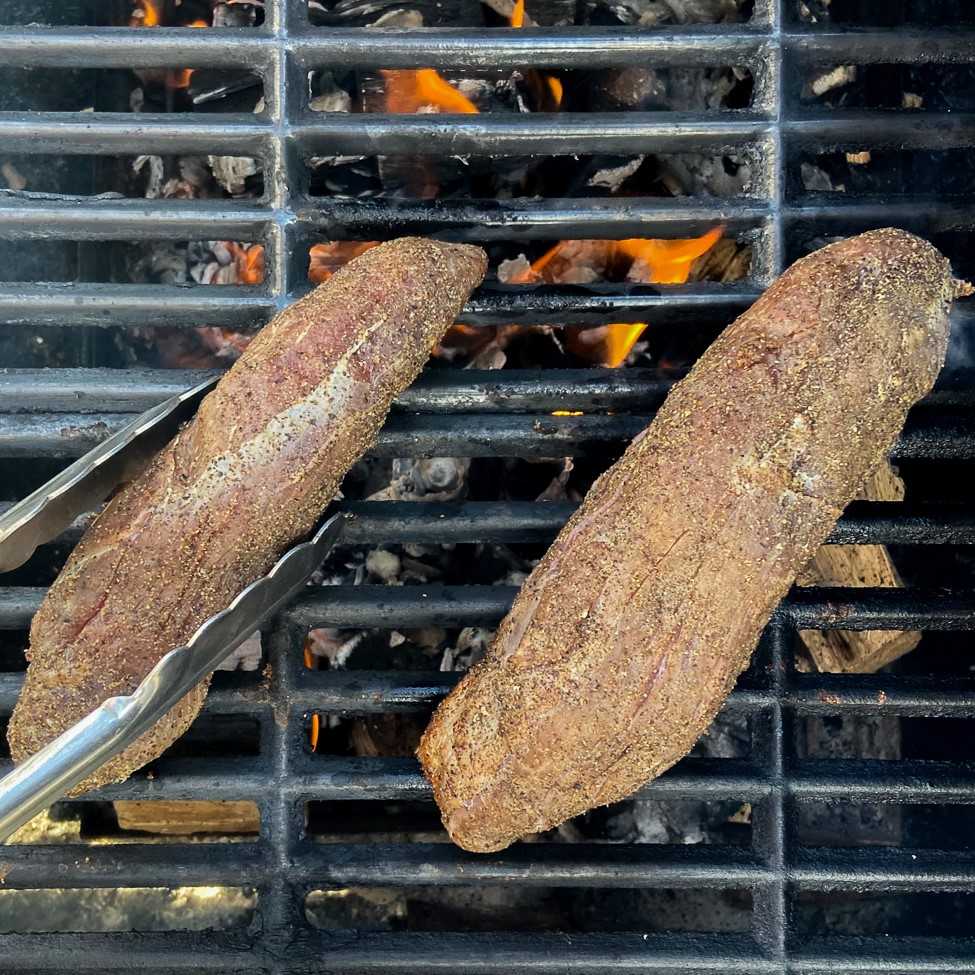
To grill we recommend that you use firewood (best results) or charcoal.
Do not ruin the wonderful flavor of this precious tender cut by subjecting it to the fumes of a gas grill. If your choices are gas grill or pan-searing, opt for the second.
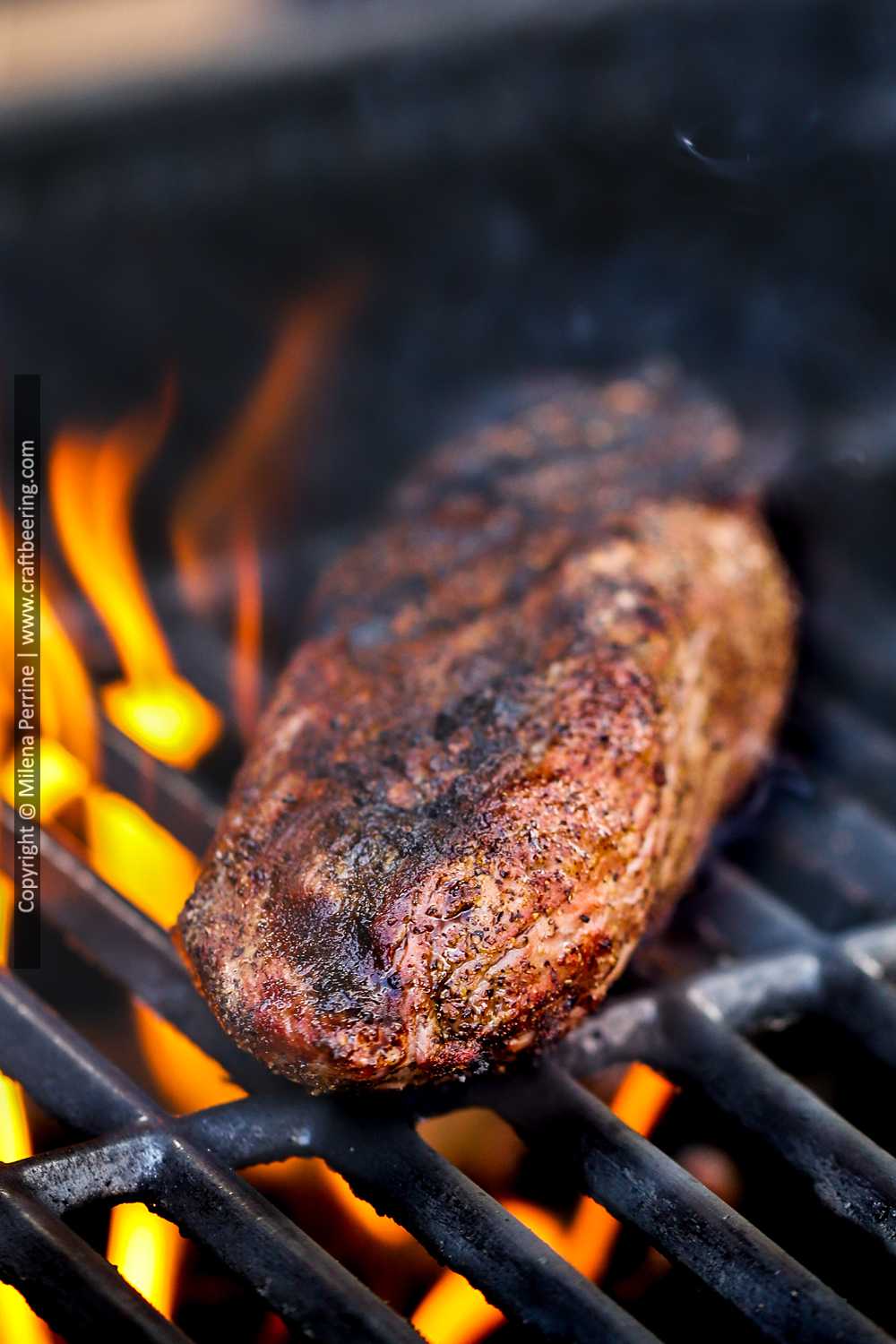
For a perfect grilled chuck petit tender follow these steps:
- Season the steak with coarse salt and black pepper and let it come to room temperature for about 20 minutes. Heat your grill to medium-high using firewood or charcoal, per the manufacturer instructions.
- Create a hot side of the grill (by concentrating the firewood or charcoals on one side) and an indirect heat zone (that would be right next to it).
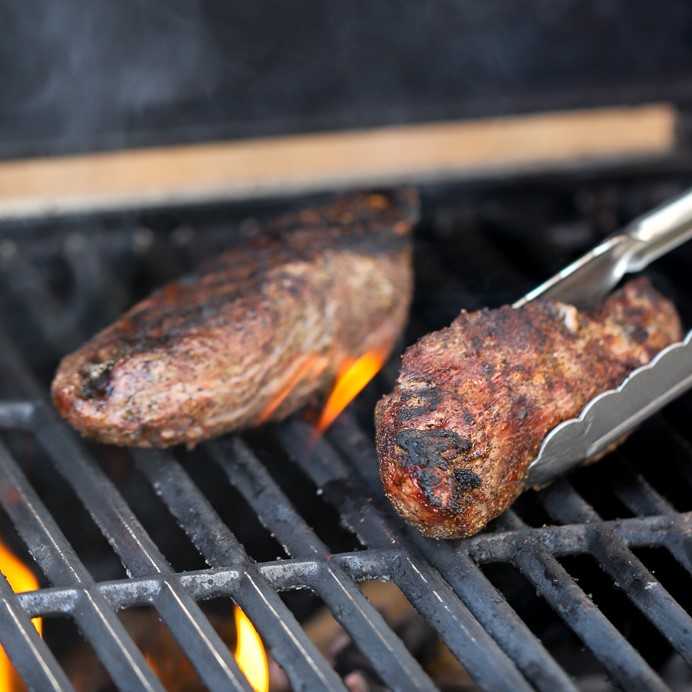
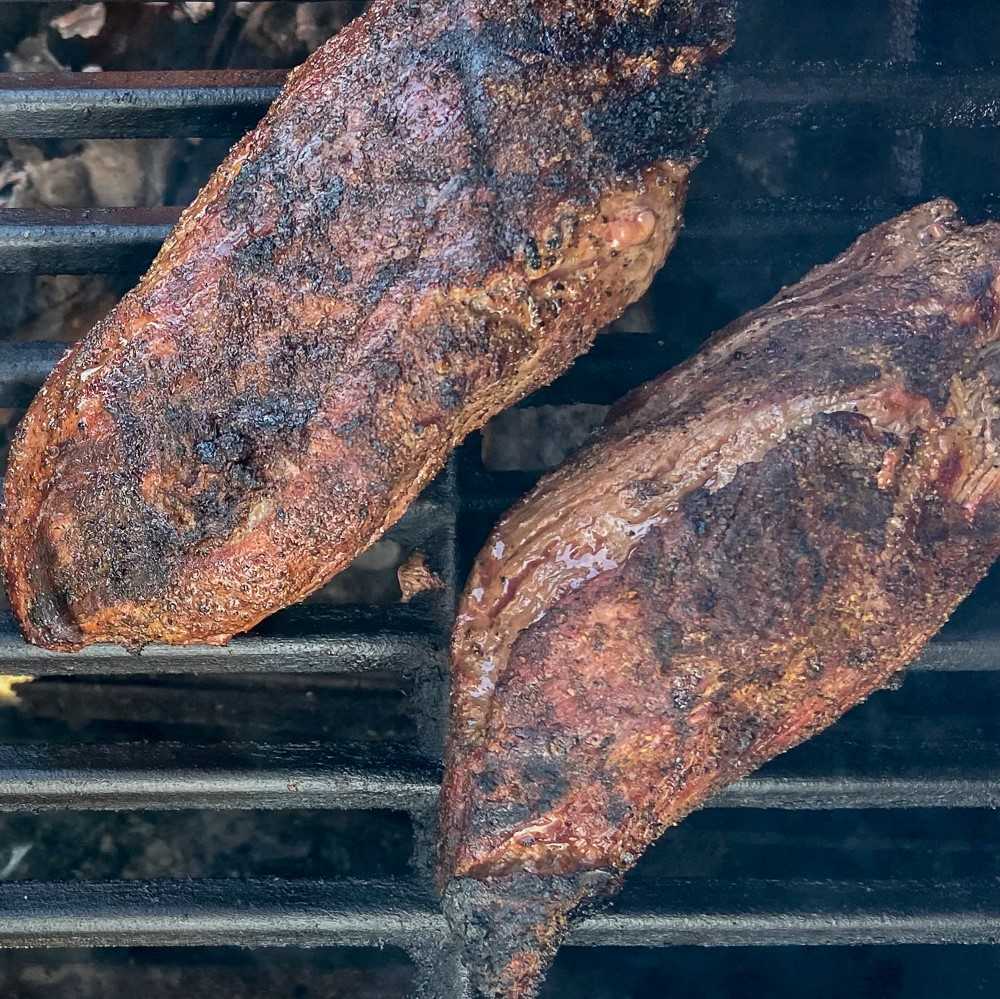
- Place the teres major directly onto the grill grates over the direct heat source and cook for up to 2 minutes per side, pretending there are 4 sides to address its rounded shape. Turn as soon as a nice crust has formed on each side.
- Use a meat thermometer to take the internal temperature. If it has reached the appropriate range for your desired doneness (see chart below) proceed to rest it. If not, place it on the grate in the indirect heat zone until it cooks through enough (120-125F for medium-rare).
Temperature Chart for Petite Filet
Due to its small size teres major steak can easily be overcooked by residual heat while resting. It is important to pull it off the heat as soon as it reaches the 'stop cooking range' for the intended doneness.
Additionally, the smaller the cut, the closer you want to stay to the lower end of the temperature range. Petite filet is best cooked medium-rare but it will still be juicy when medium.
RARE: stop cooking when 115-120 F | final serving temperature reaches 120-125 F
MEDIUM-RARE: stop cooking when 120-125 F | final serving temperature reaches 125-130 F
MEDIUM: stop cooking when 130-135 F | final serving temperature reaches 135-140 F
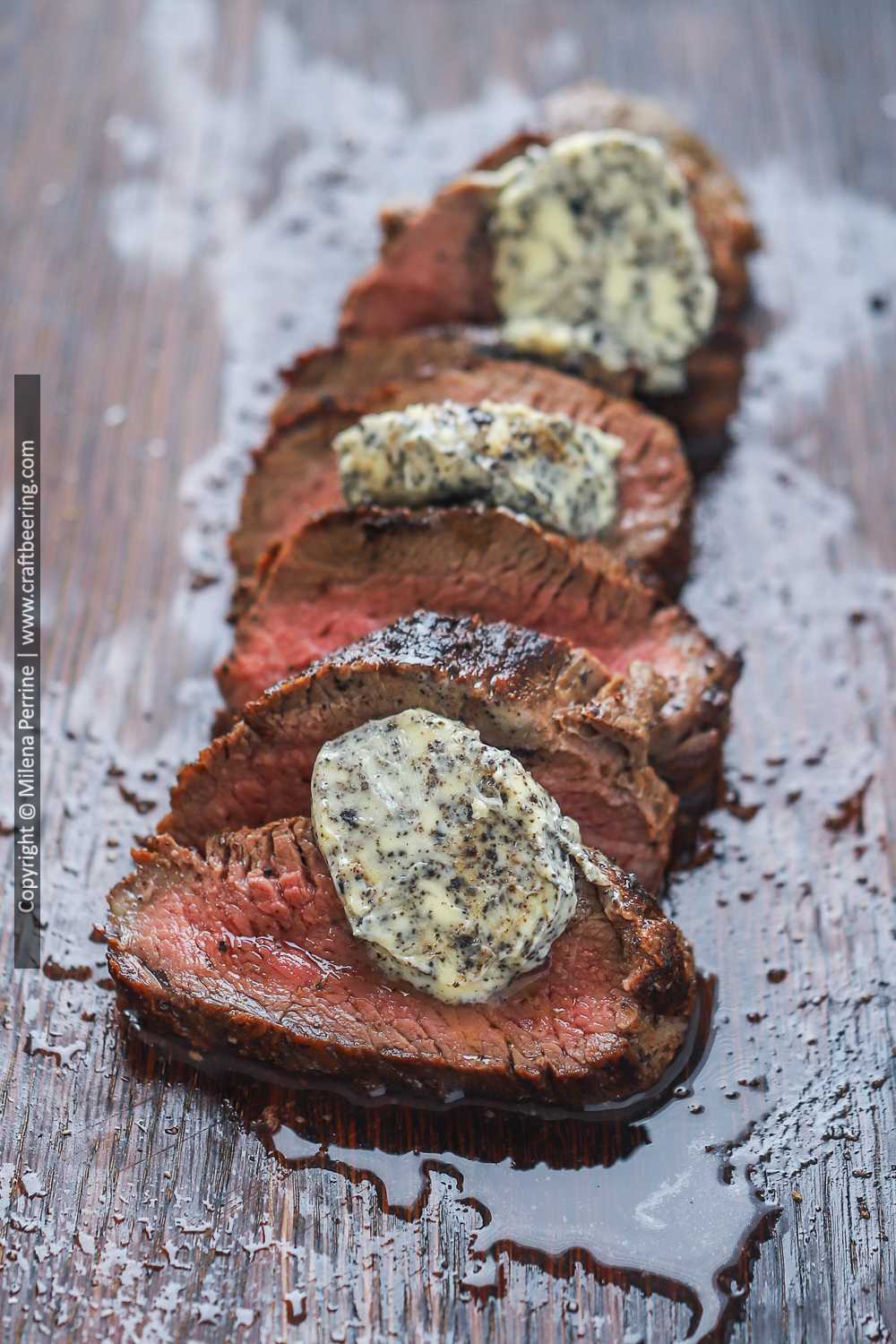
Lean Meat Welcomes Rich Sauces and Compound Butters
Cut into medallions teres major is spectacular on its own with just a bit of sea salt and freshly cracked pepper. Do not waste time to enjoy it once you have sliced it.
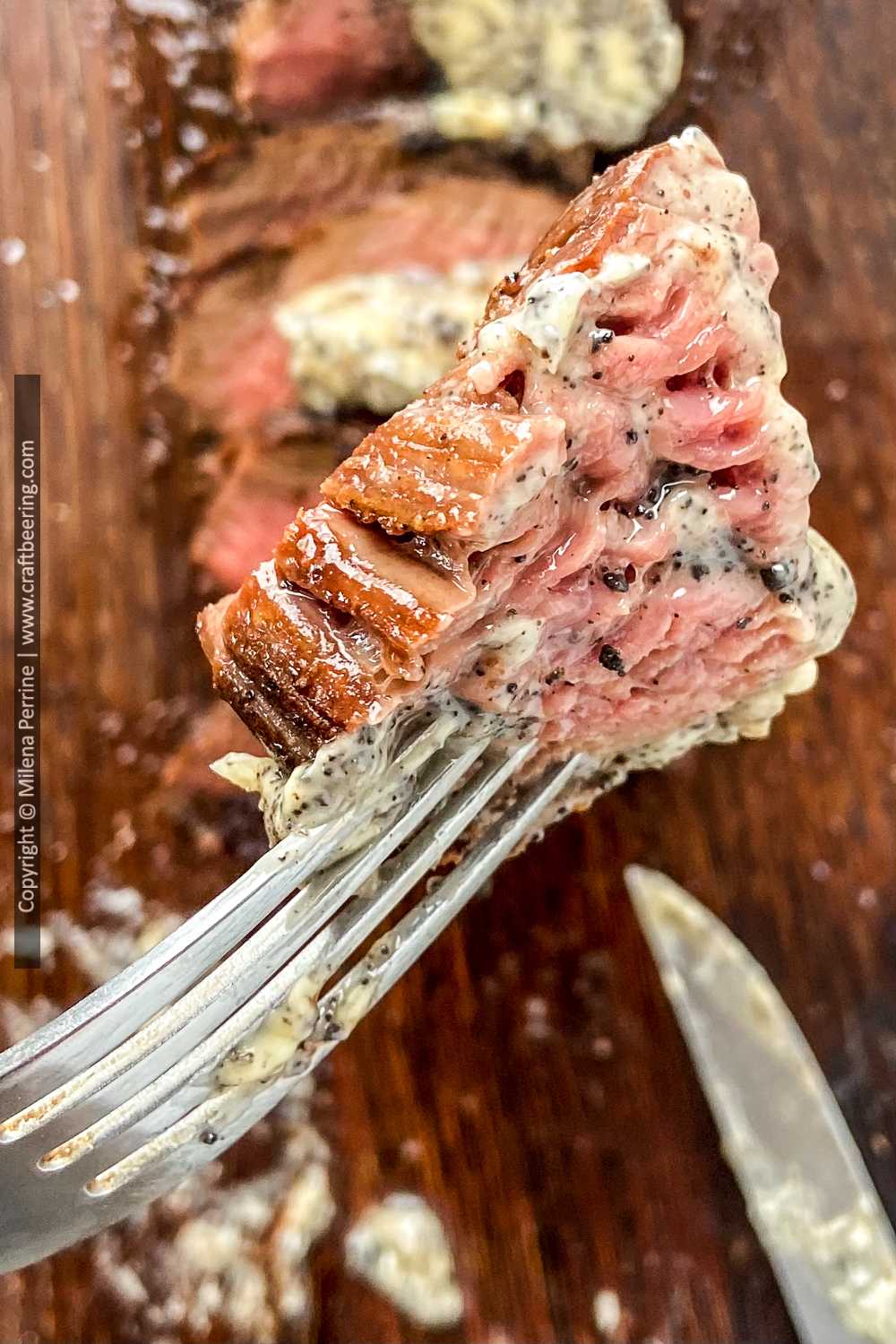
It is a truly memorable melt-in-your-mouth tender beef bite and if you cooked it perfectly medium-rare you will be able to use only your fork to slice the medalions.
But if you wanted to amplify the experience consider using herb compound butter for steak, garlic butter sauce or rich steak sauces. The lack of fat of this filet cut leaves room for additional fat sources and the steak welcomes butter and sauces enthusiastically. Or serve it alongside sauted mushrooms and onions.
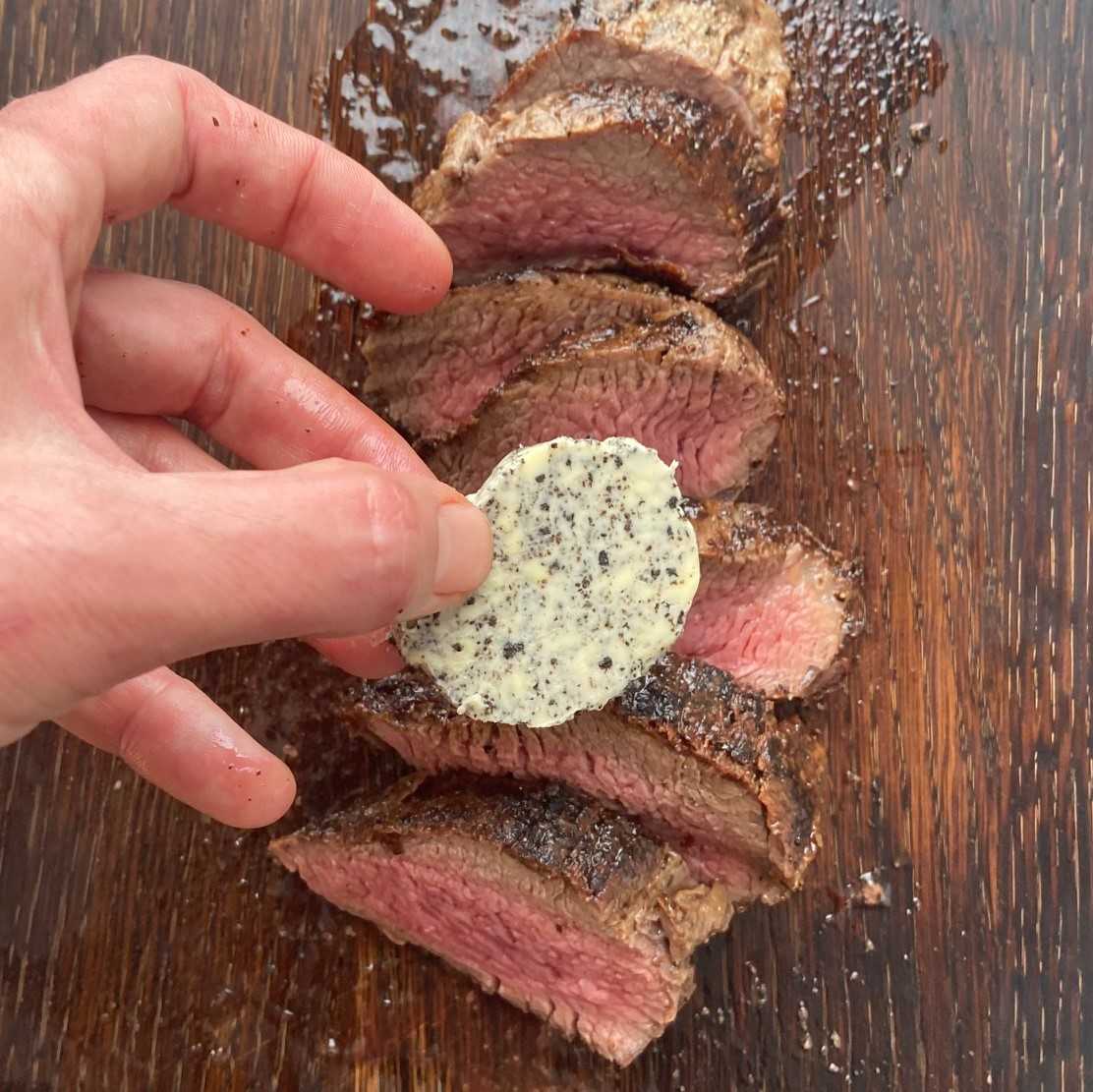
We love to top it with truffle pâté butter - shown above shortly after placed over the steak and below once melted. The combination can take your taste buds right to carnivore heaven!
Storing and Reheating Chuck Petite Tender Filet
In the unlikely event that you have leftover teres major steak you can store the cooled down meat in an airtight container for up to four days in the refrigerator.
To reheat it if it was already sliced in medalions use a skillet with a little bit of olive oil over medium heat.
If reheating a whole or half petite filet then place it over a baking sheet fitted with a wire rack and give it about 5-10 minutes in a preheated 250 F oven.
The reheated steak will never taste as juicy as the just cooked one, but this cut is so exceptionally flavorful that it will easily please your palate.
You Might Enjoy
Mock Tender Steak with Red Wine and Onion | Best Steak Sauce Recipes (a Collection from Around the World) | Garlic Butter Sauce for Steak | Garlic Herb Compound Butter
Creamy Horseradish Sauce for Beef
Recipe
Teres Major Steak (Pan-Seared or Grilled Chuck Petite Tender)
Ingredients
- 1 beef teres major filet*
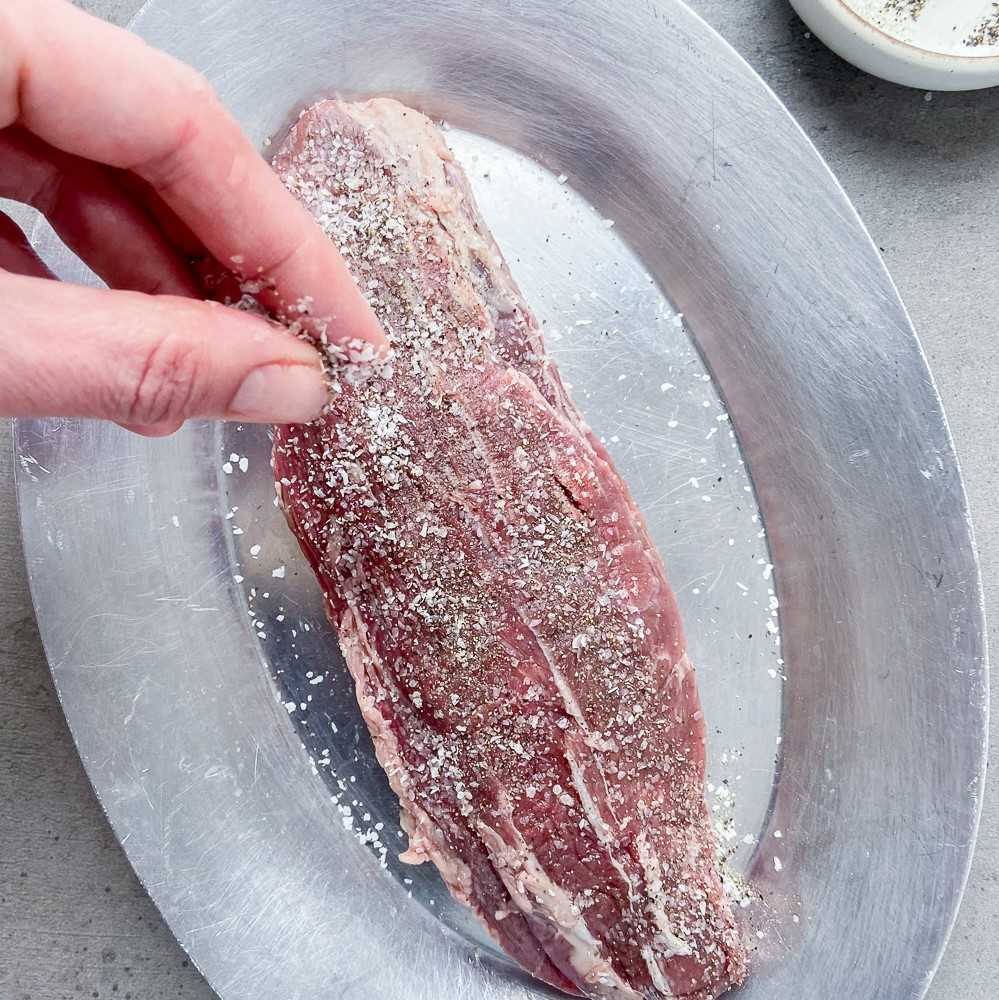
- salt and pepper to taste, for generous seasoning
- 1 tablespoon cooking oil if pan-searing only
Instructions
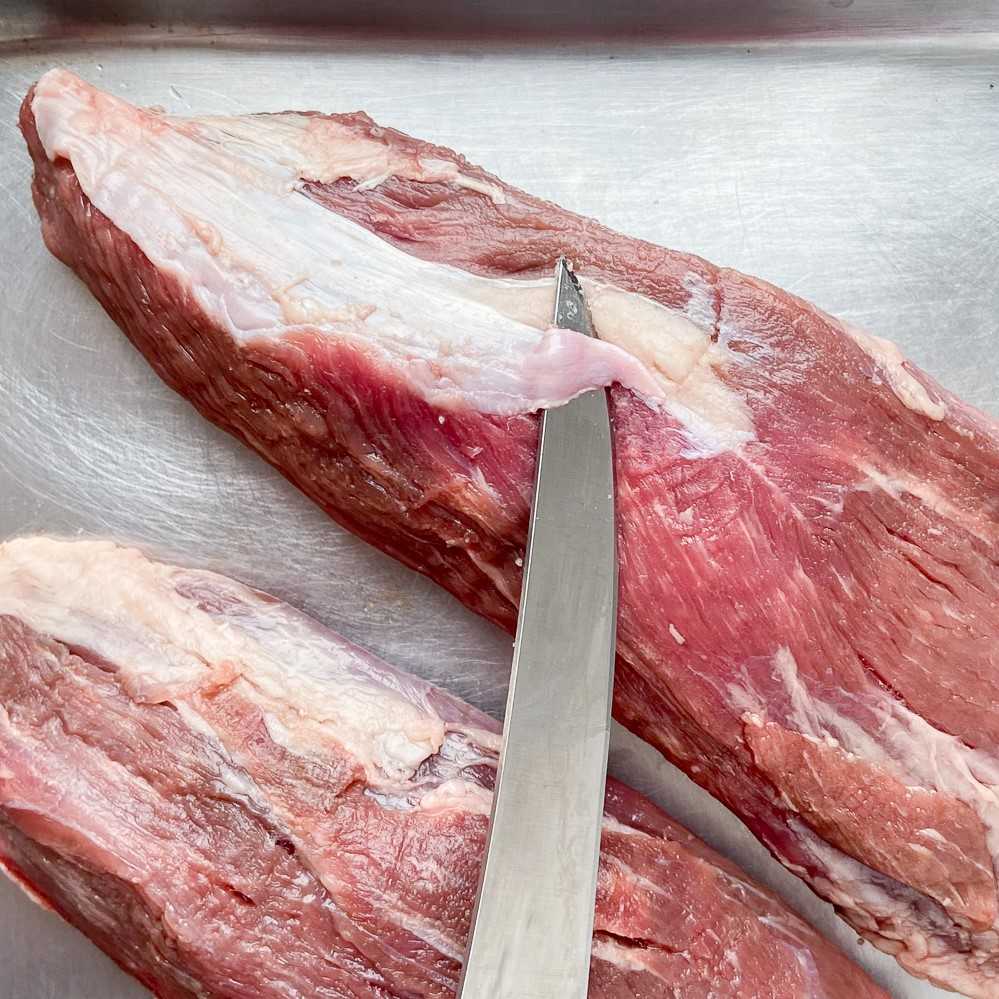
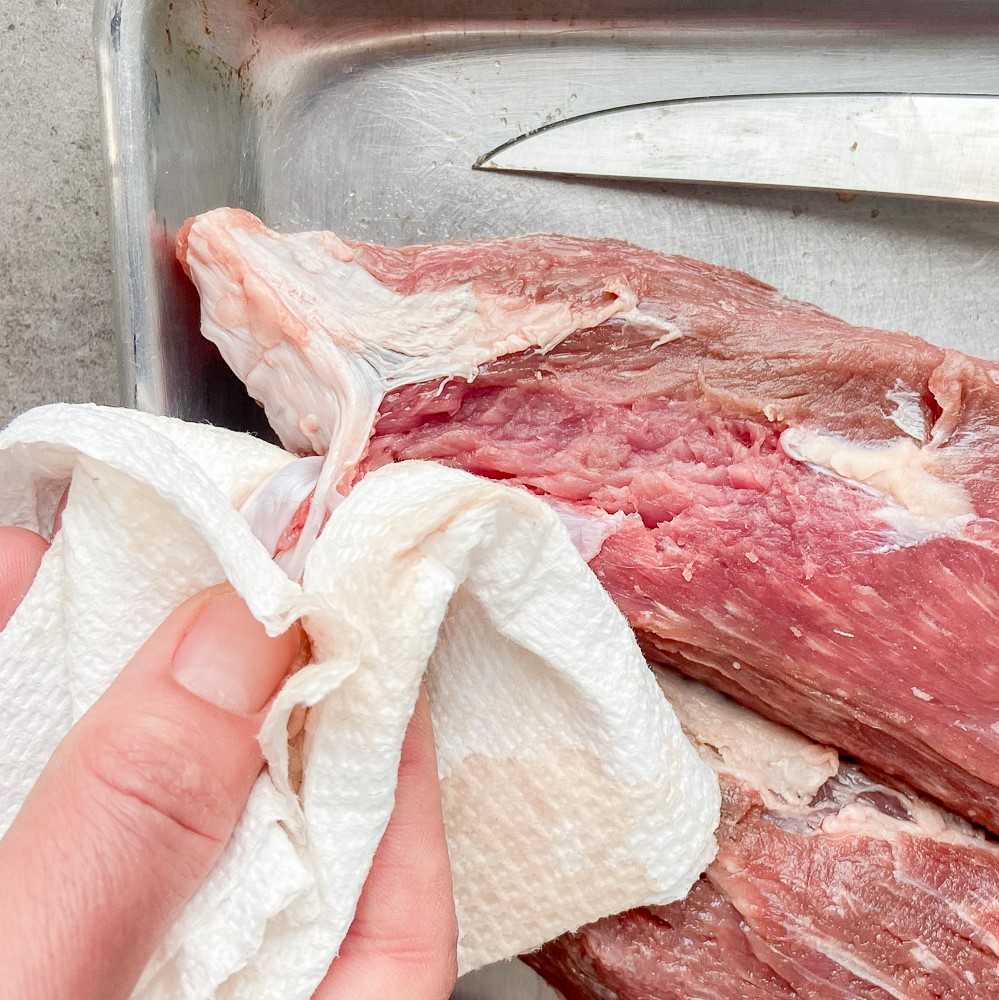
- Prepare the teres major - pat it dry and if needed remove any silver skin on the surface by gently sliding the tip of a sharp knife underneath it

- and pulling it away.

- Season it generously with salt and pepper. Set aside to allow it to get to room temperature.
- Meanwhile heat oven to 400 F (if filet is bigger and you will need to finish it there) OR preheat grill to medium-high creating a direct heat and indirect heat zones.
- Pan Searing. Heat a cast iron skillet or similar over medium-high for 2 minutes. Add oil. Once shimmering begin to sear the steak, turning it every 2 minutes or so to create a nice crust on all sides (imagine there are four, even though it is round).
- Measure the temperature. If it is already in the range or your desired doneness - rest the steak tented with foil. If not then transfer the skillet to the oven and cook until the range of your desired doneness is reached, then rest.

- Grilling. Place the steak directly over the direct heat of your preheated medium-high grill. Cook for up to 2 minutes per side, pretending there are 4 sides to address its rounded shape.

- Turn as soon as a nice crust has formed on each side.

- Use a meat thermometer to take the internal temperature. If it has reached the appropriate range for your desired doneness (see chart below) proceed to rest it. If not, place it on the grate in the indirect heat zone until it cooks through enough (120-125F for medium-rare).

- Slice into medalions once the teres major has rested and enjoy immediately. Consider using compound butter (place room temperature slivers as soon as you slice the steak) for a decadent bite.

Pat
Grilled the steaks with eucalyptus briquettes, rested and used rosemary butter (this cut really is lean). Delicious.
Shosh
Thanks for the instruction. Cooked perfectly in the pan.