


Jump to:
- About This Braised Beef Recipe - Highlights
- What Does It Mean to Braise Beef?
- What Cut of Meat Do You Use for Braised Beef?
- What is Chuck Roast?
- Ingredients for Braised Chuck Roast
- What is the Best Liquid to Braise Beef With?
- Step-by-Step How to Braise Beef
- Ways to Use Braised Beef
- Storing, Freezing and Reheating Leftovers
- You Might Also Like
- Recipe
About This Braised Beef Recipe - Highlights
- You can expect minimal work, concentrated in the beginning of the cooking process and perfectly tender, juicy beef.
- You only need a few simple ingredients to prepare the braising liquid.
- You can enjoy the succulent meat in a number of ways which makes the method of preparation a lucrative way to cover one or two weeknight meals if you prepare it on Sunday.
- While we demonstrate the recipe using beef chuck center roast it can be prepared with a number of other beef cuts (consult the relevant section below).
What Does It Mean to Braise Beef?
To braise beef means that a cut of beef, typically tough, is cooked low and slow with gentle moist heat with the goal of creating fork tender meat.
Using the braising cooking method the beef is first seared and then placed in a suitable cooking vessel such as a cast iron braiser, Dutch oven or slow cooker along with a braising liquid created to provide flavor and moisture.
You can read more about braising as a culinary technique and why it makes meat tender here.
What Cut of Meat Do You Use for Braised Beef?
Braised beef can be prepared with a number of different meat cuts in addition to the boneless center cut chuck roast we demonstrate the method with.
The perfect beef cuts for braising are tough, richly flavored and usually lean, although some may contain a fair amount of fat.
To that end consider heavily used muscles and cuts with a lot of connective tissue and collagen. These are some tried and true choices:
- brisket - here is recipe for Beer Braised Brisket and one for Brisket Stew
- eye of round - a classic beef braise using a very lean cut; try this recipe
- rump - here is a recipe for a classic pot roast with beer prepared with rump
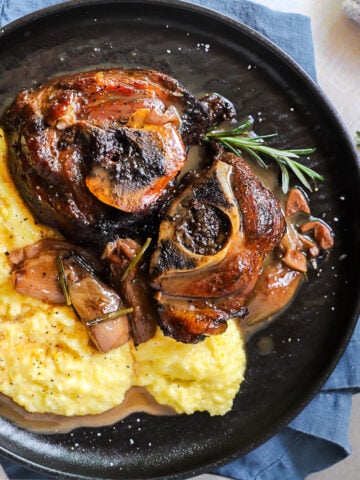
- osso bucco - cross-cut sections of beef shank braised bone-in, try this recipe
- short ribs - here is a recipe for Beer Braised Short Ribs using English style cut ribs
- sirloin tip roast - yes, you can use sirloin tip roast instead of chuck roast, try it braised with mushrooms and red wine like in this recipe
- chuck tender roast - this is not a typo, the chuck tender is an entirely different cut from the chuck roast. Read this post and try the recipe.

What is Chuck Roast?
Chuck roast is a catch-all term for a number of beef cuts derived from the chuck primal, the largest beef primal known for its rich flavor.
The most common meaning of beef chuck roast is a boneless cut of beef, center cut from the larger chuck roll (see the pictures above and below). Other names for chuck roast include chuck pot roast or simply beef pot roast.
Bone-in chuck roasts includes cuts like 7-bone chuck roast, chuck arm roast and blade chuck roast. You can braise any of them, leaving them whole and budgeting for a bit longer time in the braiser to account for the larger sizes.
Ingredients for Braised Chuck Roast

Chuck center roast. Boneless, flavorful and excellent for low and slow cooking.
Cooking oil. Choose a neutral tasting one such as sunflower or vegetable to sear the beef and saute the veggies for the braising liquid.
Aromatics. To form the base of the braising liquid use an onion (yellow or sweet), celery ribs, garlic cloves and fresh thyme sprigs (you can substitute with dried).
Flavorful liquids. You can make this braise using just beef broth or a combination of beer and beef broth or red wine and beef broth. Read the section below for details.
Seasonings. Simply kosher salt and black pepper for seasoning the beef and brown sugar and balsamic vinegar to balance the flavors of the braising liquid and add a bit of acidity.
What is the Best Liquid to Braise Beef With?
The best liquid to braise beef with is one that adds a lot of flavor.
In this example we use a brown ale along with a bit of balsamic vinegar, complemented with beef broth.
Also consider red wine and beef broth OR you can only use beef broth in combination with Worcestershire sauce or liquid Magi seasoning to open up an umami dimension.
Should you want to pursue an Asian flare you can use Shaoxing wine to deglaze and then add beef broth and soy sauce. If you do this eliminate the use of salt altogether.
TIP: WHAT KIND OF WINE FOR BRAISED BEEF? Go with a robust red wine with spice or dark fruit nuances. You can choose anything from shiraz through chianti to merlot.
Step-by-Step How to Braise Beef
To braise beef so that it is tender it is helpful to portion the chuck roast into smaller chunks of more or less similar shape and size.
The smaller pieces have the dual advantage of a larger combined surface area which results in more overall flavor after searing and, of course, a shorter cooking time.
Below are useful tips and process pictures. An easy to follow summary is presented in the Recipe Card.
Sear the beef. As with all meat braises begin by making sure the surface of the beef is dry and at room temperature. To achieve the former - pat dry with paper towels, for the latter - leave the meat out on the counter for about 30 minutes. Season with salt and pepper on all sides and brown over medium-high heat. Do not skip this step. During searing a multitude of flavors are born through the Maillard reaction.
Saute the aromatics. Once you have removed the browned chuck from the braiser lower the heat to medium to saute the aromatics. Prep those as shown below (first rough chop suitable to their size).

Deglaze & prepare the braising liquid. Once the aromatics have softened a bit, deglaze with beer, wine or beef broth. Scrape any brown bits from the bottom of the braiser (pure flavor!). Add the rest of the beer (or wine), follow with beef broth, balsamic vinegar (if using) and brown sugar.
Braise. Return the seared beef to the braising liquid and nestle in the thyme (or just add dried thyme to the liquid). Cover and braise at 300 F until the beef is perfectly fork tender. Start checking after 2 hours.

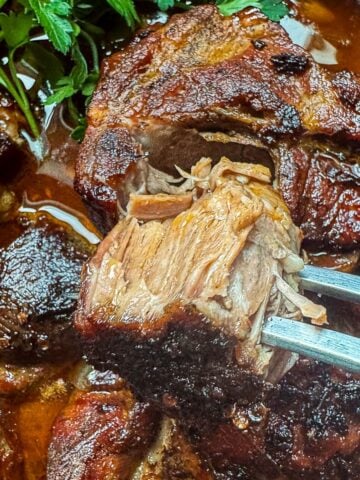
Prepare for serving. Once you are satisfied with the tenderness of the beef, set it aside and strain the braising liquid (discard all solids). Return the beef to the clear braising liquid and break it up with forks.
Once you break up the braised beef it will soak up the aromatic juices and become supremely moist.
TIP: You can of course control how much of the braising liquid you want to use, depending on how much beef you actually cooked.

Ways to Use Braised Beef
You can enjoy the braised beef you just prepared in a number of dishes.
Below we show a picture of it straight from the braising pan, topped with chili garlic sauce and served with Pan-fried Broccolini for a delectable rendition of beef and broccoli.
Also consider it alongside these Garlic Butter Green Beans or this flavorful Buttered Cabbage.

Other easy ways to serve fall-apart tender braised beef include:
- over mashed potatoes - here is where the sauce resulting from the strained braising liquid simply shines. Not only does it moisten and add flavor to the beef, but the mashed potatoes eagerly absorb it.
- creamy polenta
- over rice or as part of rice bowls - sel-explanatory
- as part of ramen bowls - for example this Pork Belly Ramen can be replicated completely with just swapping the protein
- tacos - self-explanatory
- nachos - self-explanatory
- quesadillas - self-explanatory
- alongside Cathead Biscuits or Butter Swim Biscuits and a fresh greens salad
- flatbreads - top a pre-cooked flatbread with caramelized onions, braised beef and a bit of cheese and place it under the broiler for a just a couple of minutes
- sandwiches, sliders, wraps - self-explanatory
- whatever you want - anything you'd like to add tender, melt in your mouth beef to.
Storing, Freezing and Reheating Leftovers
To store your excess braised beef roast place it in an airtight container (along with any of the juices you have leftover) after it has cooled down completely and refrigerate. It will save well for a week.
To freeze it use a freezer bag with all the air expelled, better yet a vacuum sealed bag. It will save well for a couple of months.
To reheat it, place the braised beef in a pan for which you have a lid. Over medium heat allow it to warm up on the stove top, covered so it stays moist. If heating from frozen, first thaw in the refrigerator overnight or use your microwave.
You Might Also Like
Beer Braised Beef Short Ribs | Braised Pork Shank | Braised Pork Ribs | Braised Eye of Round Roast | Beer Pot Roast | Braised Leg of Lamb | Beef Chuck Eye Steak | Top Round Steak
Recipe

Braised Beef Chuck Roast (or Other Suitable Cuts)
Ingredients
- 3 lbs chuck roast boneless, center cut*
- kosher salt and black pepper to taste (to season beef)
- 2 tablespoon neutral cooking oil vegetable, sunflower, olive oil
- 1 large onion yellow or sweet
- 3 celery ribs
- 4 garlic cloves
- 12 oz dark beer brown ale, porter, Munich dunkel**
- 2 tablespoon balsamic vinegar
- 2 tablespoon brown sugar
- 1 cup beef broth
- 1 bunch fresh thyme or 1 tablespoon dried thyme
Instructions
- Preheat oven to 300F.
- Cut the beef chuck into 4 more or less equal pieces, pat them dry with paper towels and season with salt and pepper (to taste, but on the generous side). Rough chop the onion, celery and peeled garlic cloves.
- Heat a braiser over a medium-high heat stove (or a large Dutch oven or a heavy bottomed, large frying pan***). Add 1 ½ tablespoon oil and sear the beef chuck on all sides until nicely browned. Set it aside.
- Lower the heat to medium and saute the onion, celery and garlic until just softened. Deglaze with about 4 oz of the beer and scrape all brown bits off the bottom of the pan. Add the rest of the beer and allow to simmer for a few minutes to reduce. Follow with the balsamic vinegar, brown sugar and beef stock. Return the beef chuck and nestle in the thyme.
- Cover with lid and cook at 300 F for two hours. Check for tenderness and if the braised beef is not perfectly tender continue cooking and check every 20 mins until you are satisfied with the fall-apart factor.
- Remove the beef to a plate and strain the braising liquid. Using two forks break up the beef into smaller chunks or shred it. Douse it with as much strained braising liquid as you deem necessary and enjoy.

Rico
I braised four pounds of chuck and created enough meat for myself and my son for a week! Looking forward to enjoying beef nachos, beef quesadillas and maybe Asian influenced rice bowls with just this one single braise in Sunday afternoon. Thank you for the recipe and tips.
Monicq
Steven
Tender and juicy results. Will make again. The braise went like a breeze and I have a lot of beef to enjoy this week.