

Jump to:
- What is a Malasada?
- A Portuguese Street Food Favorite
- Leonard's Malasadas - The Hawaiian Connection
- Malasada Day
- What Do They Taste Like?
- Ingredients for this Malasadas Recipe
- How to Make Malasadas: Step-by-Step
- Chef's Top Tips
- Toppings & Ideas for Fillings
- Storing, Freezing and Reheating
- You Might Also Like
- Recipe
What is a Malasada?
Malasadas are yeasted Portuguese donuts with origins in the Azores and Madeira islands but popular all over Portugal.
These deep fried pieces of pillowy dough, covered in sugar are enthusiastically enjoyed as a sweet snack. They are very similar to filhos and fraturas and depending on the region can be referred to by one of these names.
The correct spelling, from Portuguese, is malassadas - a combination of the words mal and assada(s), meaning badly cooked or under cooked.
A Portuguese Street Food Favorite
Variations of deep-fried malasadas are enjoyed as a street food confection in various parts of Portugal. They typically do not have a hole in the middle or a filling. It is all about the dough's texture.
Leonard's Malasadas - The Hawaiian Connection
Hawaiian malasadas are based on the Portuguese delicacy. They were first introduced to the island chain by Portuguese immigrants who arrived to work on the sugar cane plantations in the 19th century. They would make huge batches of the donuts for Shrove Tuesday, according to their homeland tradition.
As the popularity of malasadas grew, one family started a business dedicated to the confection. Today Leonard's Bakery is an icon in Honolulu, operates several food trucks, known as Malasadamobiles, and even has a location in Japan. Leonard's malasadas often have a filling or are made with flavored dough.
Malasada Day
Malasada Day in Hawai'i is the day before Lent, in Portuguese Terça-feira Gorda (Fat Tuesday or Mardi Gras). It was introduced by the resident Portuguese.
What Do They Taste Like?
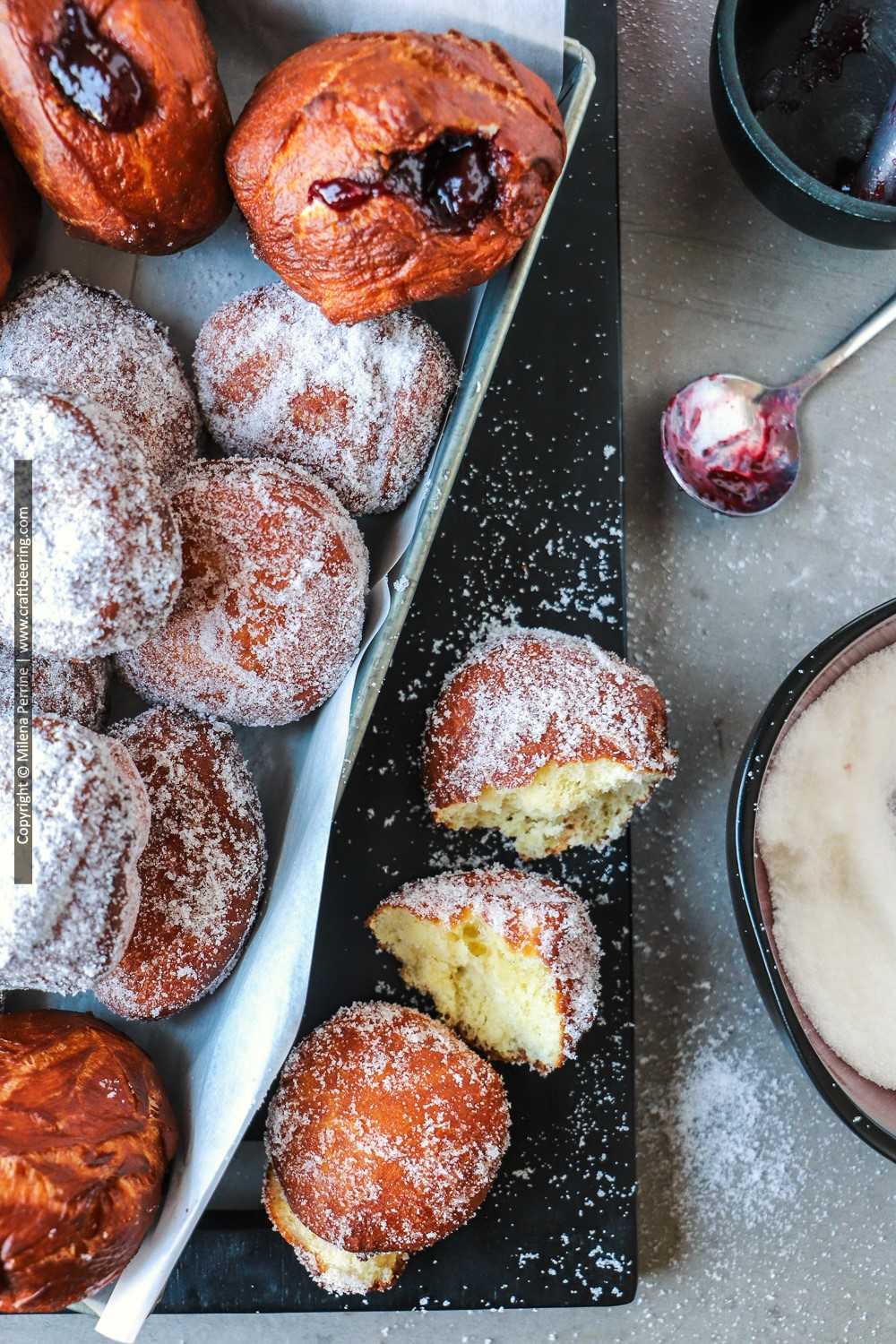
The ideal malasada is light and fluffy on the inside and perfectly golden brown and slightly crispy on the outside. The overall flavor is mildly sweet and provides a welcoming backdrop for the granulated sugar coating or filling of choice.
Ingredients for this Malasadas Recipe
The dough for malasadas is egg based and leavened with yeast. Older recipes use evaporated milk and some even call for the fortified wine of Madeira as an ingredient. Butter is commonly added (in the past people would use up their butter and sugar before the beginning of Lent).
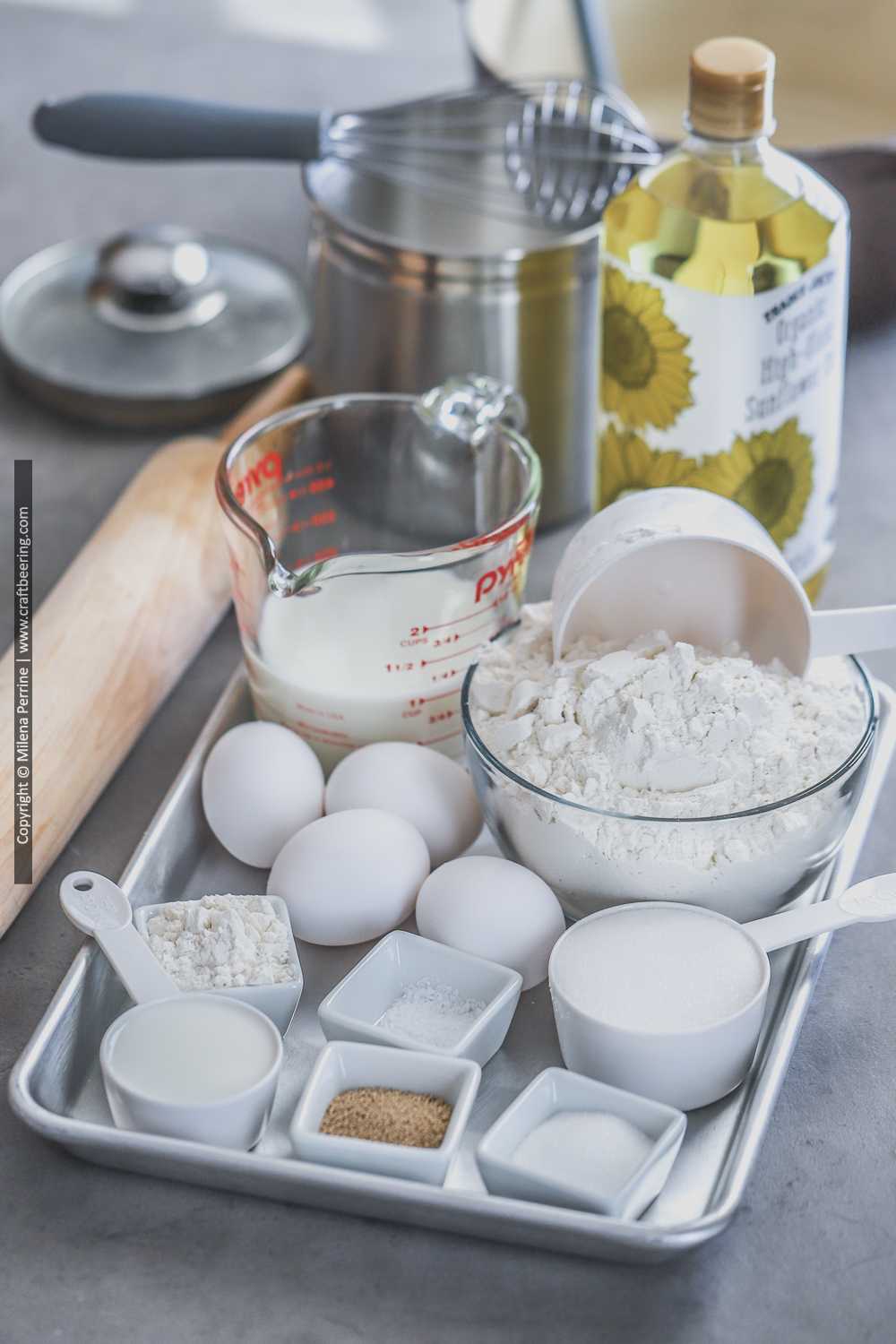
For this recipe you will need only the ingredients shown above - eggs, whole milk, sugar, all purpose flour, dry active yeast, salt and sunflower or vegetable oil for frying.
How to Make Malasadas: Step-by-Step
The key is for the malasada dough to rise really, really well in order for their landmark light texture to be created. Therefore you need to have a strong yeast and allow adequate time for it to work its magic.
1. Make a Strong Starter
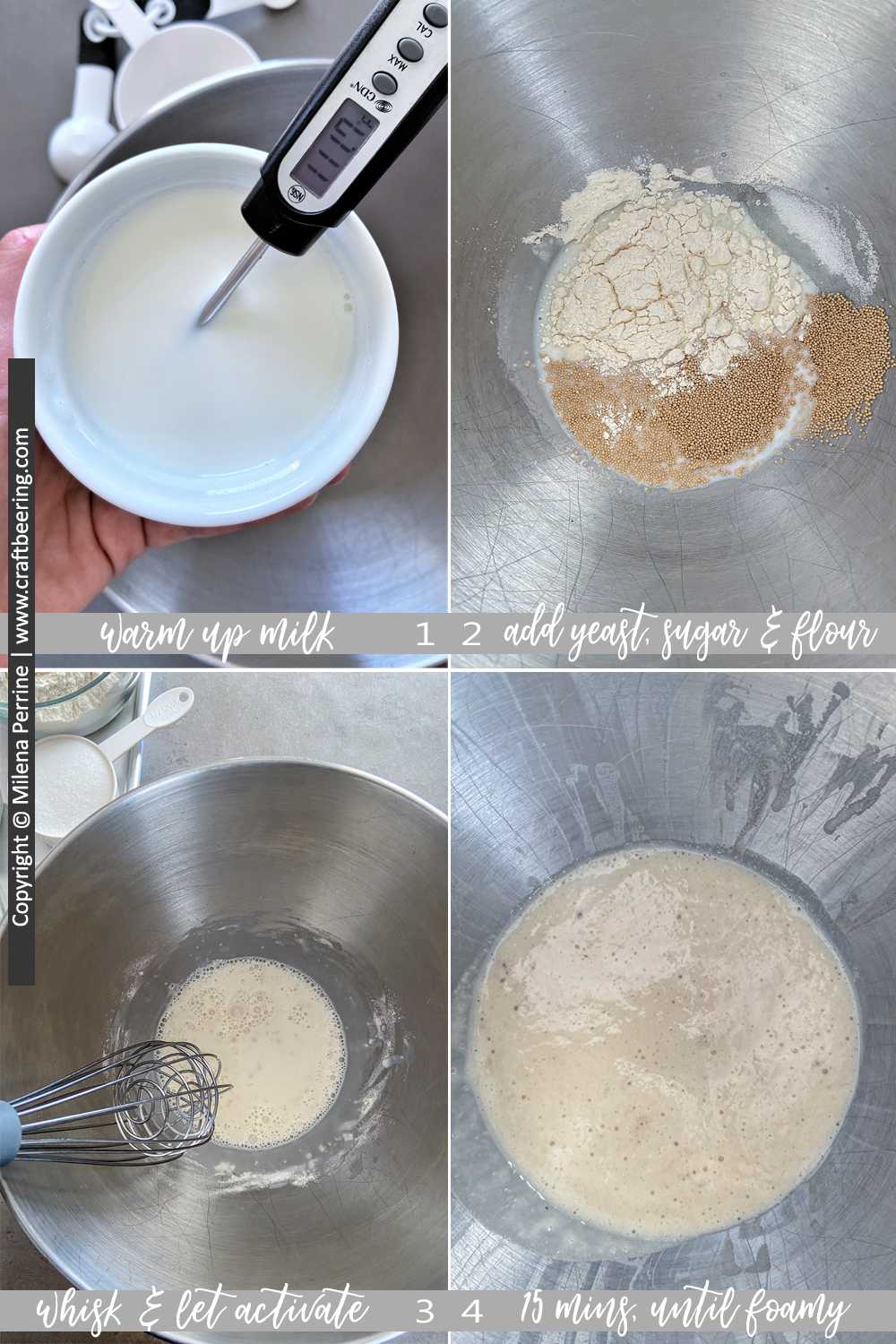
The process begins with proofing the yeast and we recommend making a starter with warm milk and a little bit of flour as shown below. This activates the yeast and prepares it to go to work with the dough later on.
Yeast thrives in a warm liquid, remains more or less dormant in a cold one and dies in a hot one. The 105 -115 F temperature range is considered ideal for proofing dry yeast, whether you will be working with water or milk. Stay within the range.
To make the starter warm up milk to about 110 F and whisk it with the dry yeast, a little bit of sugar and some flour. Once it becomes foamy and dotted with bubbles, the yeast has been activated. (Image sequence below).
(Use a large bowl such as the bowl of a stand mixer to contain the yeast mixture so you can simply add the rest of the ingredients to it.)
2. Prepare the malasadas dough
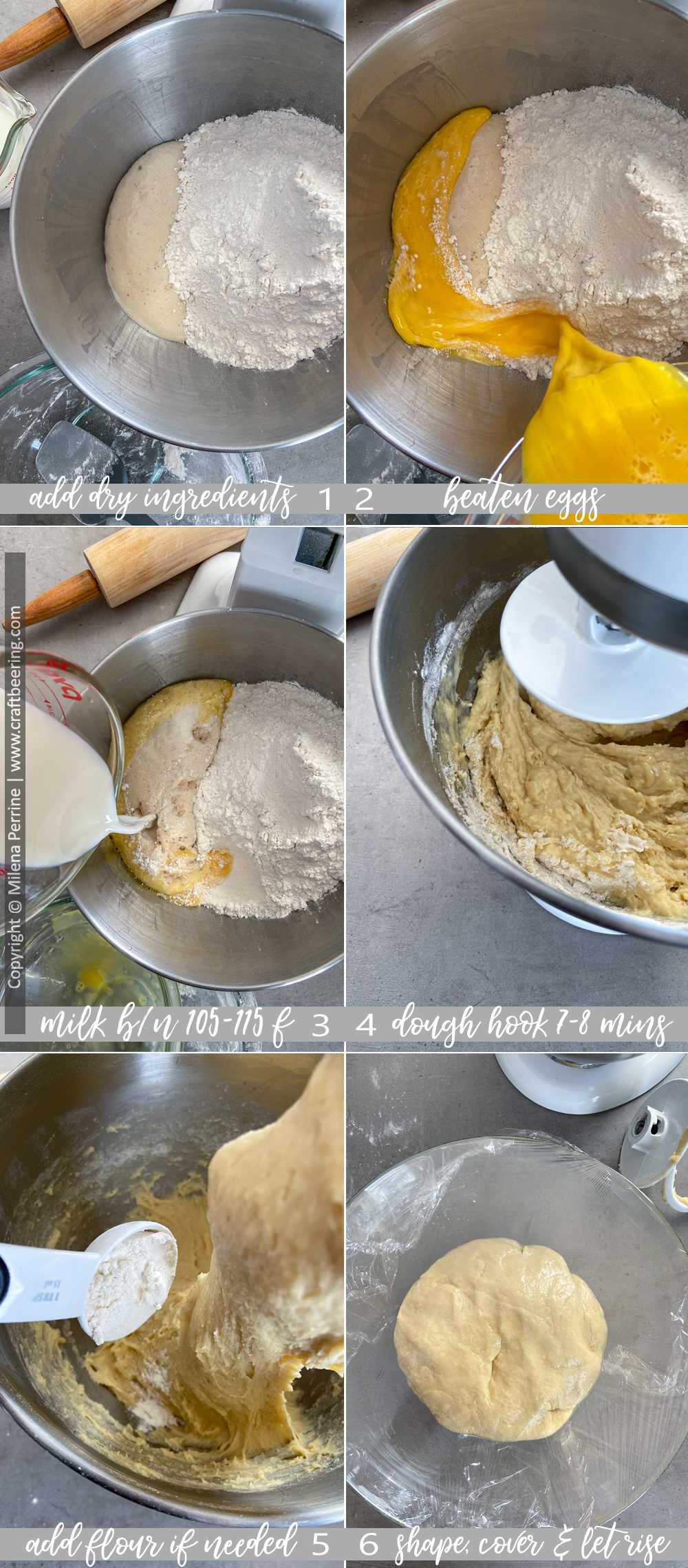
Add the rest of the ingredients to the starter as shown below. Use the dough hook attachment of a stand up mixer or the equivalents for a hand mixer to mix the ingredients for about 8 minutes. This will help with gluten formation.
- The dough should easily pull away from the sides of the bowl, be soft but not sticky.
- If too wet, add flour a tablespoon at a time to reach the needed consistency.
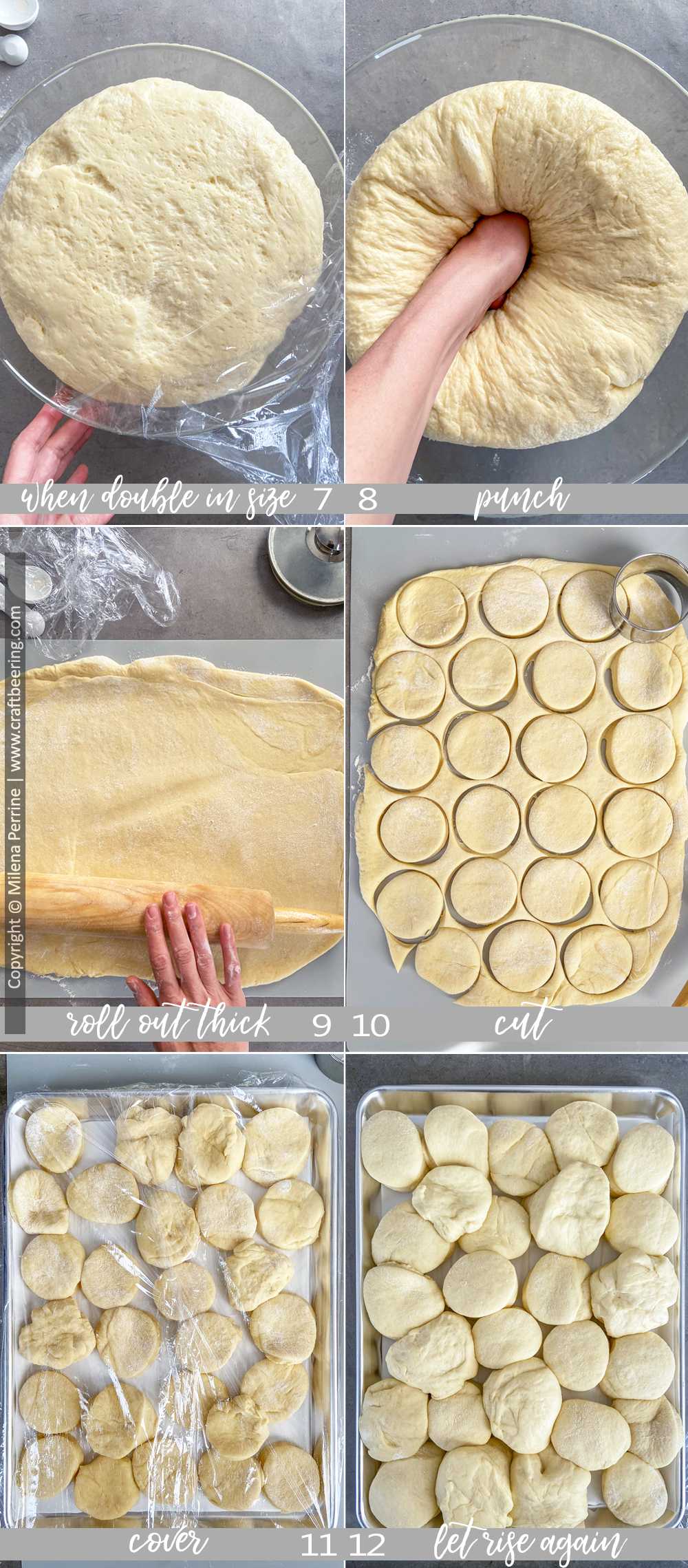
Place the soft dough in a greased bowl, cover with plastic wrap and let rise in a warm place for about one and a half hours or until doubled in size. Then punch it and roll it out to shape the malasadas.
3. Shape and do a second rise
You can use a pastry ring (as shown) to cut uniform donuts. Alternatively you can simply form balls of more or less equal size and flatten them a bit or pull them into shape (all by hand).
NOTE: Authentic Portuguese malassadas tend to be flatter and more irregular in shape (simply dough pieces dropped in the oil), whereas the Hawaiian look is distinctly round.
For the second rise, place the shaped dough balls onto parchment paper and cover. Once doubled in size they are ready for the hot oil!
4. Fry and finish
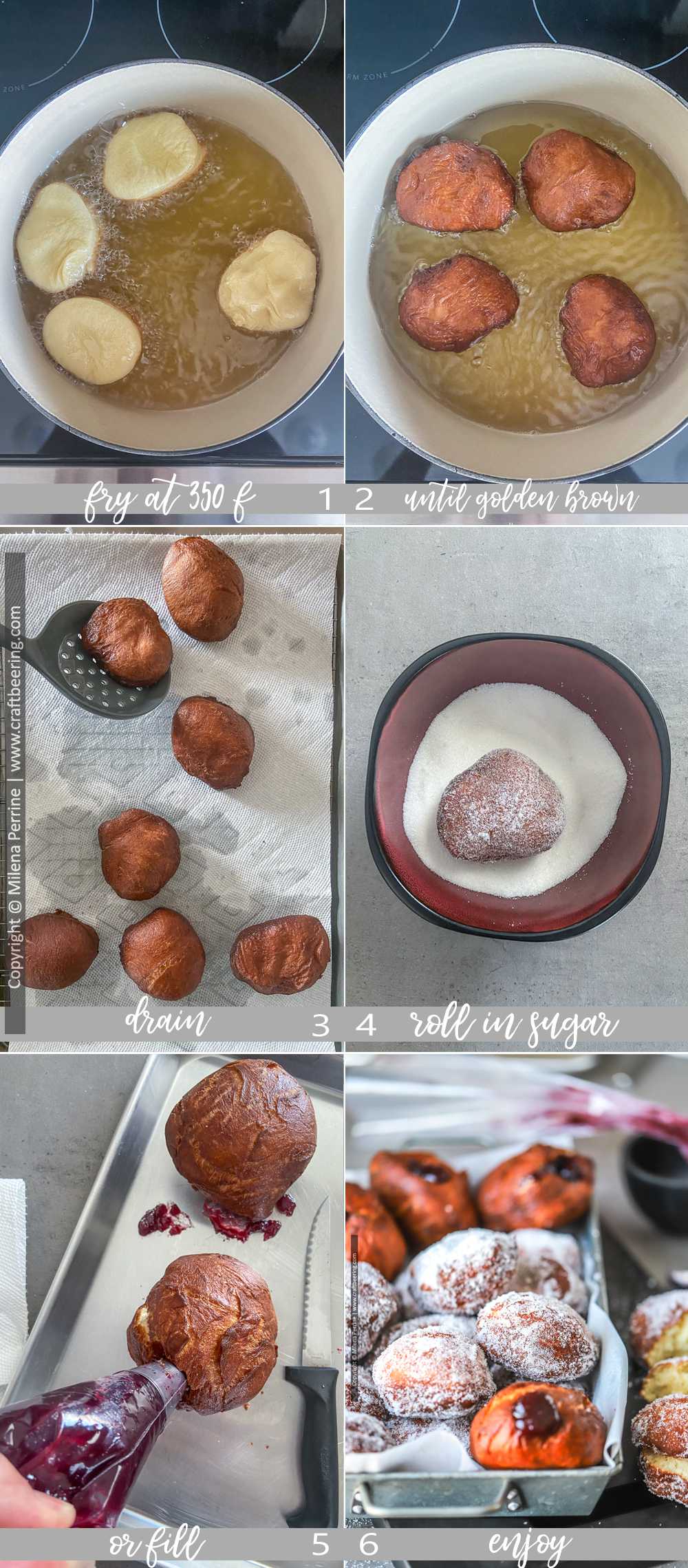
It is important to maintain a uniform temperature of 350 F to properly fry the malasadas. (If you own a deep fryer use it).
- On average you would need to fry them for 2 minutes on each side, it depends on their size.
- Look for a deep golden brown on each side and use a deep-fry thermometer to make sure the oil does not exceed 350 F.
Remove from the oil using a slotted spoon and place onto paper towels lined wire rack fitted over a baking sheet. Once they drain from the excess oil roll the malasadas in granulated sugar or pipe filling inside them (see below).
Chef's Top Tips
- You can substitute ¼ cup of the milk with two tablespoons of melted butter. The butter is supposed to tame the formation of gluten and contribute to a softer texture initially, but will eventually cause the donuts to harden faster. We find that using whole milk, properly warmed up works beautifully.
- Do not rush the rise time - allow both the bulk dough and the individually shaped pieces to double in size before you handle them.
- Fry in batches of four malasadas.
- As soon as you can touch the just fried malasadas roll them in sugar - it will stick to their surface much easier than if you allow them to cool down.
Toppings & Ideas for Fillings
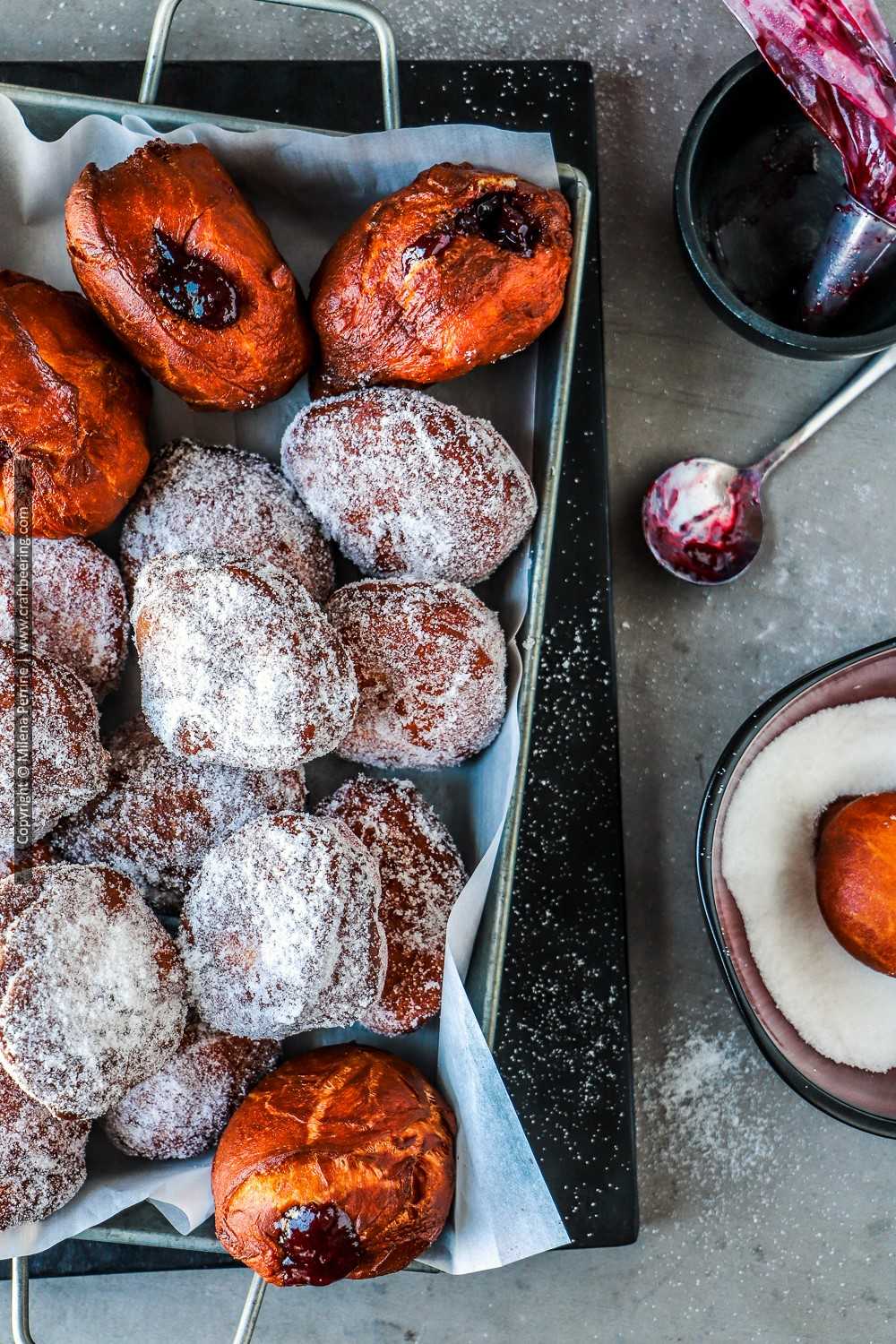
Typically malasadas are rolled in plain or cinnamon sugar (cinnamon is a highly regarded spice in Portugal). In the past they were often dipped in molasses.
The modern Hawaiian versions are often piped full of custard, fruit purees such as guava or haupia (coconut flavored) and dobash (chocolate flavored) fillings.
Storing, Freezing and Reheating
Malasadas are best enjoyed fresh, preferably still warm, similarly to beignets. They tend to harden significantly as time goes by and lose their lightness.
If you do have some left over, then store them in an air-tight container, refrigerated, for up to two days.
To reheat malasadas place them onto a plate, cover them with moist paper towel and microwave for about 20-30 seconds. Keep in mind that reheated they will not taste as good as when they were just recently fried.
We don't recommend freezing these donuts - you will be dissapointed. Simply focus on creating a freshly fried new batch!
You Might Also Like
German Donuts (Bavarian Ausgezogene) | Mango IPA Fritters | Apple Fritters | Hawaiian Poke Bowl
Recipe

Malasadas (Hawaii Style Portuguese Donuts)
Ingredients
Yeast Starter
- 1 packet 2 ¼ teaspoon dry active yeast
- ¼ cup whole milk warmed to 110 F*
- 1 tablespoon granulated cane sugar
- 2 tablespoon all purpose flour
Malasadas
- 4 ½ cups all purpose flour
- ½ cup granulated cane sugar
- ½ teaspoon salt
- 1 cup whole milk warmed to 110F
- 4 large eggs beaten
FRYING & FINISHING
- 4 cups of oil sunflower or vegetable for frying the malasadas
- 1 cup sugar to roll the malasadas in
Instructions
- In the bowl of a stand up mixer** make the starter by whisking together the yeast, warm milk, sugar and flour. Allow the yeast to proof for about 15 minutes. Once the concoction is foaming and bubbly, the yeast has activated.
- Mix together the flour, sugar and salt for the malasada dough. Add them to the yeast starter. Add the beaten eggs and the warm milk. Mix for about 8 minutes with the dough hook to activate the gluten. The dough should be soft, not sticky and pull away from the sides of the bowl with ease. If wet, add extra flour by the tablespoon (continuing to mix with hook attachment) until the called for consistency is reached.
- Shape the dough into a ball, place it in a clean, greased bowl, cover it with plastic or a clean kitchen towel and let it rise for 1 ½ hours (or as long as needed) in a warm place. When the dough has doubled in size, punch it to release the carbon dioxide and rolled it out over a clean, llightly floured surface.
- Roll out the dough in about ¾ inch layer and use a pastry ring (or a glass) to cut out the malasadas. Alternatively, you can simply form small balls by hand and slightly flatten them. Place the shaped malasadas onto parchment paper lined baking sheet(s), cover them and let them rise until they double in size.
- Heat a deep pan (Dutch oven works nicely too) with the oil to 350F. Be sure to maintain this temperature for even frying. Drop three to four risen malasadas at a time and fry for about 2 minutes per side, until each side is a deep golden brown color. Drain on a paper towel lined baking rack.
- Roll the still warm donuts in granulated sugar or pipe in your choice of filling. Enjoy while they are still warm.


Leave a Comment