

Jump to:
- What is Langoustine?
- Where Do Langoustines Come From?
- How to Cook Langoustines?
- Ingredients for This Langoustine Recipe
- Most Langoustine Are Flash Frozen
- How to Thaw Frozen Langoustine
- Workflow
- How to Prepare Langoustine
- Step-by-Step Broiled Langoustine (Norway Lobster)
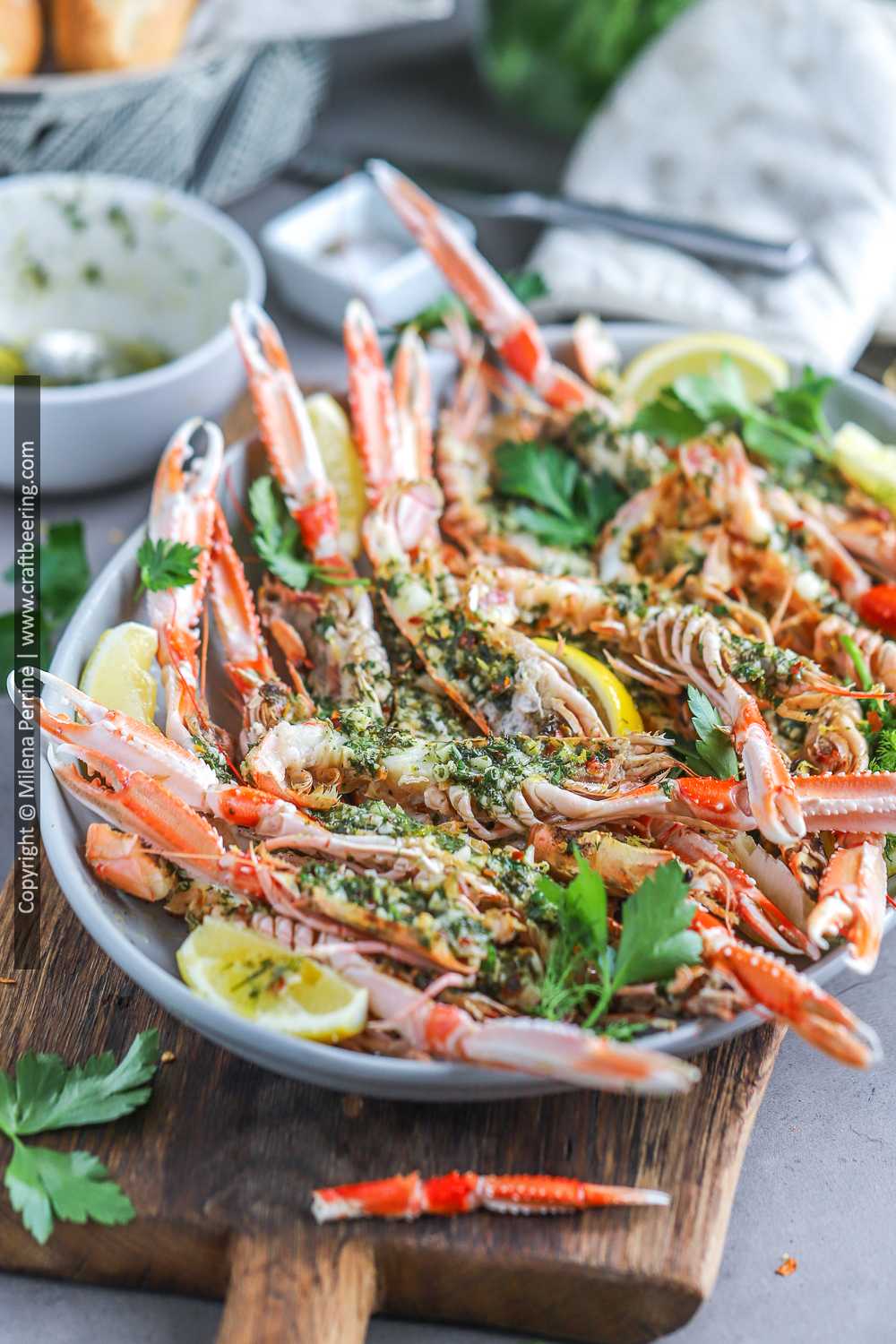
- Grilled Langoustine on the Half Shell
- Serve the Langoustine
- There is More to Eat Than Just the Tail Meat
- Save the Heads and Shells of the Langoustines
- You Might Like
- Recipe
What is Langoustine?
A langoustine is a decapod crustacean of the lobster family scientifically known as Nephrops norvegicus.
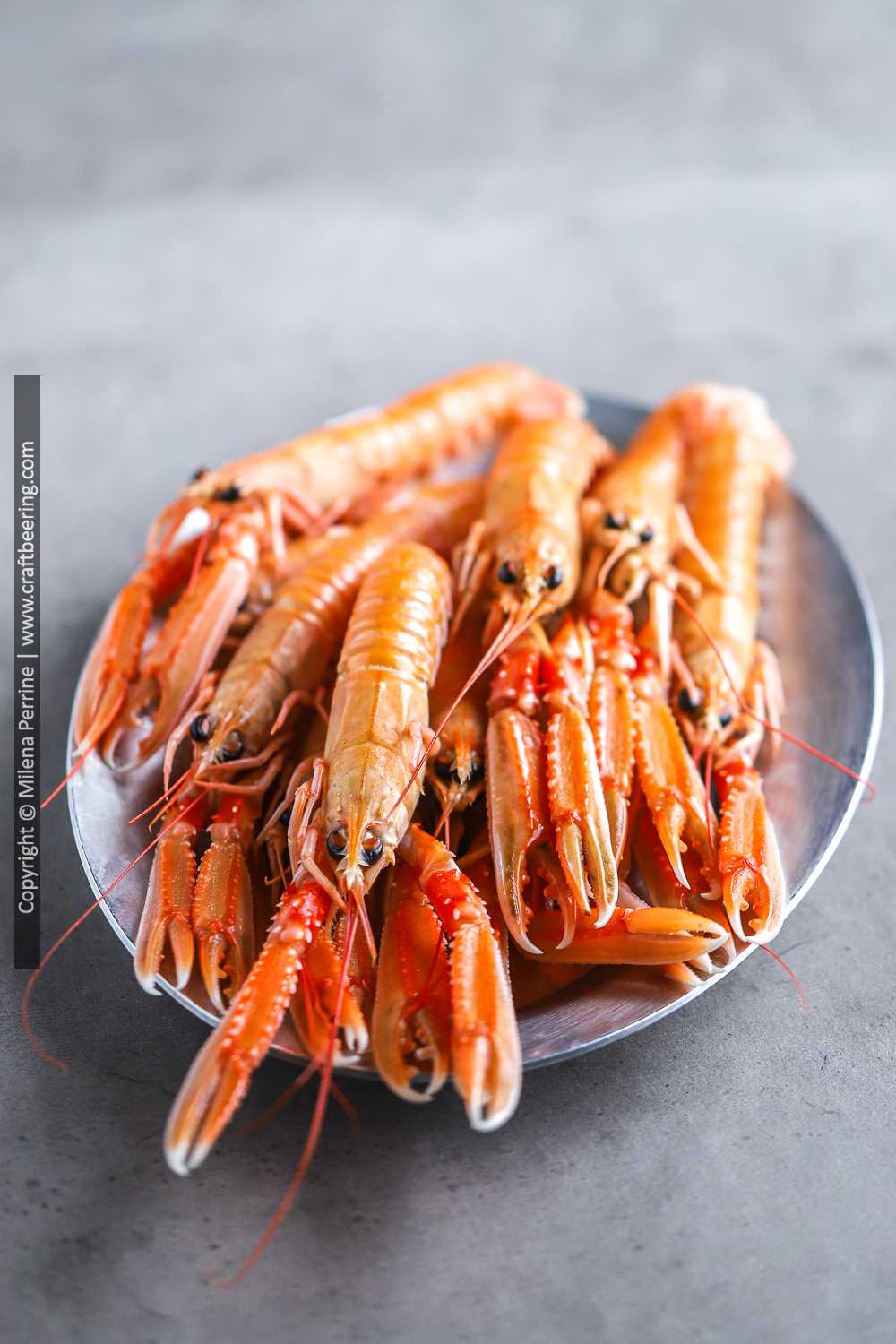
Langoustines share visual similarities with both lobster and shrimp but are smaller than the former and larger than the latter. Their shell is naturally colored a faint orange and does not change color during cooking.
Other names for langoustine include Norway Lobster, Dublin Bay Prawns and in Italy - Scampi (not to be confused with the American-Italian sauce for shrimp).
Where Do Langoustines Come From?
Langoustines inhabit the northeastern Atlantic (plentiful off the coasts of Scotland, it is said that half the world's supply is caught in Scottish waters), adjacent continental waters (Norway and as even up to Iceland) and as far south as Portugal.
They have been so heavily overfished in the Mediterranean that currently almost none are caught there. According to Irish food chronicler Theodora Fitzgibbon the crustaceans were brought to Ireland's shores by Norwegian boats moored in Dublin Bay.
The frozen langoustines we procured for this recipe (below) were caught wild in Irish waters - true Dublin Bay prawns. They were on the small side, about 7 per pound. Smaller than spiny lobster and larger than jumbo shrimp or crayfish.
How to Cook Langoustines?
Langoustine can be prepared in multiple ways.
They can be cooked whole, the tail meat only can be harvested and cooked or they can be butterflied or split in half lengthwise and cooked on the shell as we do here.
Some of the most popular ways to cook langoustines are:
- briefly boiling them whole in salted water
- sauteing the shelled tail meat
- poaching the shelled tail meat in butter or stock etc.
- simmering the shelled tail meat or halved langoustine pieces in flavorful sauces
- broiling or grilling the butterflied or halved crustaceans
TOP TIP: Do not overcook langoustines. As soon as their translucent flesh turns opaque and white they are done. Cooking them past that point will cause the meat to become tough and dry.
Ingredients for This Langoustine Recipe
This recipe is based on how you would see langoustine cooked and presented in many Irish restaurants that offer Dublin Bay prawns.
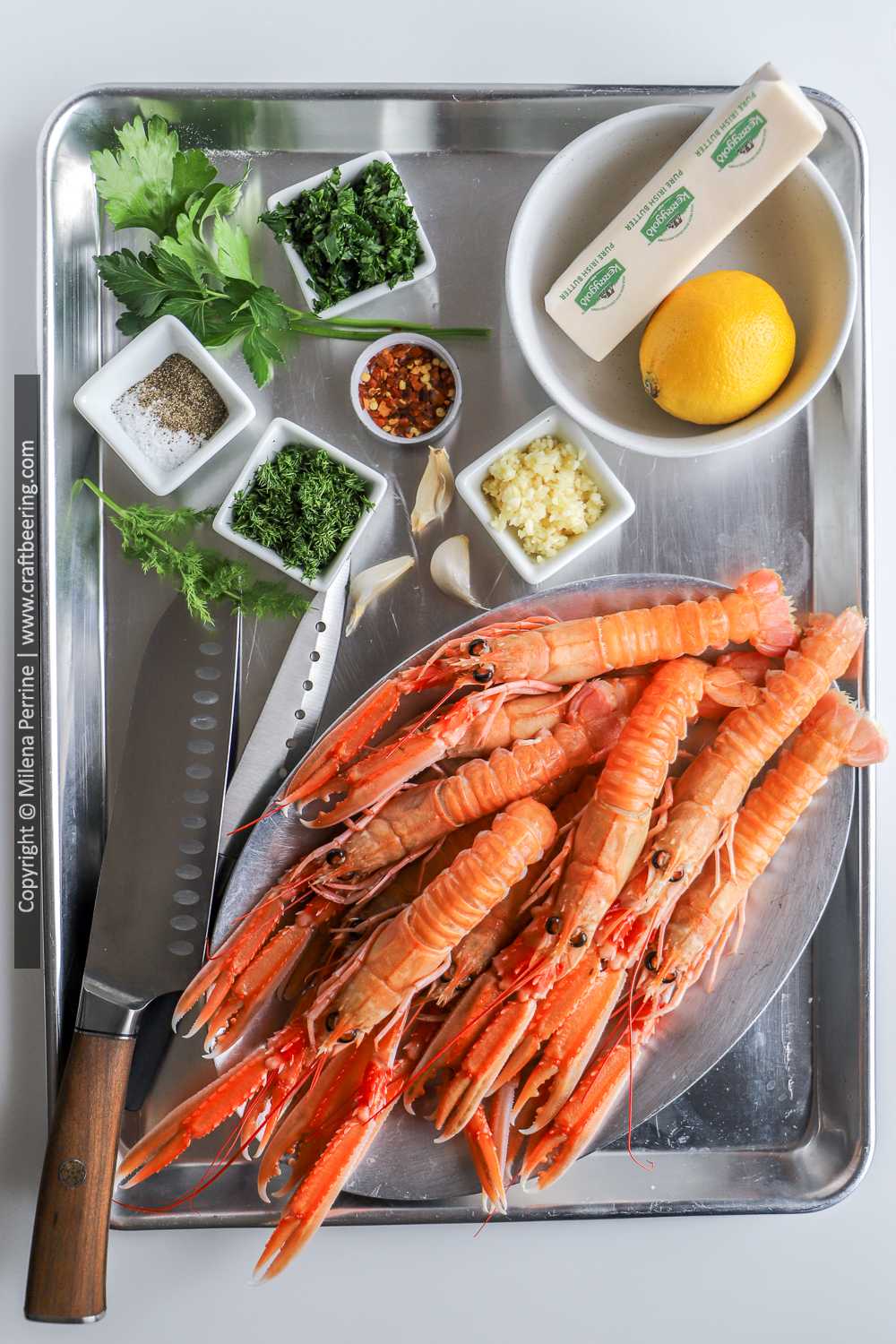
Frozen langoustine. The larger the better for this recipe, so for the two pounds called for you are generally better off with ten langoustines versus fourteen like we have in this example. Larger ones do cost more per pound and are harder to come by. You also have the consideration of how many people you are serving.
Compound butter. We like to use salted Irish butter that has been softened. Fresh parsley and dill, chopped finely; minced garlic; red pepper flakes and lemon juice to taste. Salt and black pepper to further season the butter as needed.
Most Langoustine Are Flash Frozen
Langoustines are notoriously difficult to keep alive and fresh once caught. While being transported they are known to attack each other fighting for space and overall tend to deteriorate quickly due to rapid post-harvest bacterial growth.
Therefore the overwhelming majority of langoustines is flash frozen on fishing boats shortly after caught. Arguably, just defrosted langoustines are the freshest you can get.
How to Thaw Frozen Langoustine
To defrost langoustines the best method is to leave them in the refrigerator overnight so that the flesh can slowly thaw while remaining chilled. This is also considered best practice food safety wise.
If they are not quite defrosted by the time you would like to start cooking then you can run very cold water over them for a few minutes. Do not leave them in the water once they are defrosted, the flesh should remain firm. Remove them from the water as soon as they have thawed and pat them dry.
NOTE: Because langoustines are highly perishable they should be cooked and consumed as soon as possible after defrosted. Once defrosted they should not be frozen again.
Workflow
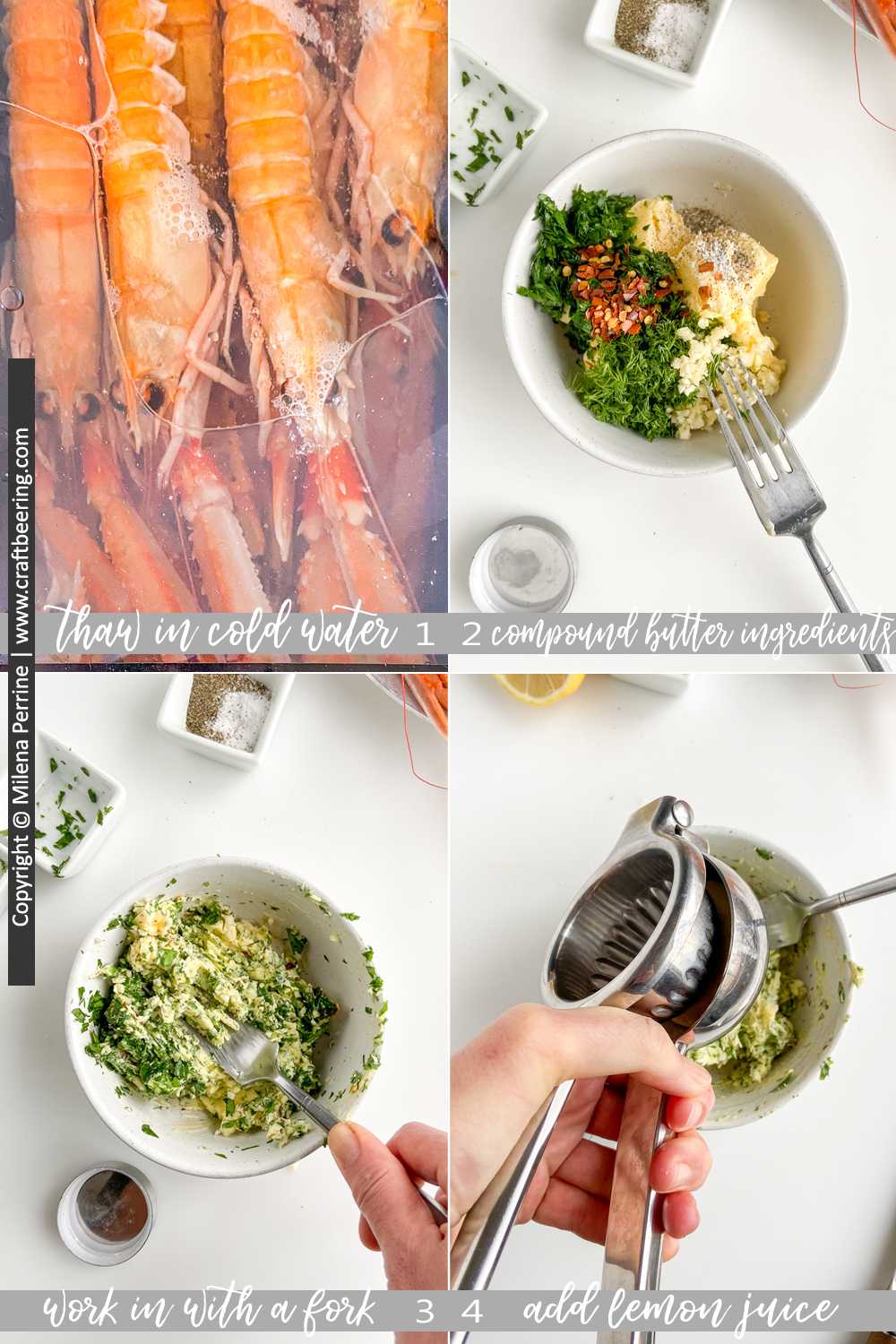
- First thaw the langoustine and prepare the garlic herb butter as shown below. You simply need to work in the ingredients with a fork.
- Set the compound butter aside and prepare the defrosted langoustine for broiling (see next picture sequence).
How to Prepare Langoustine
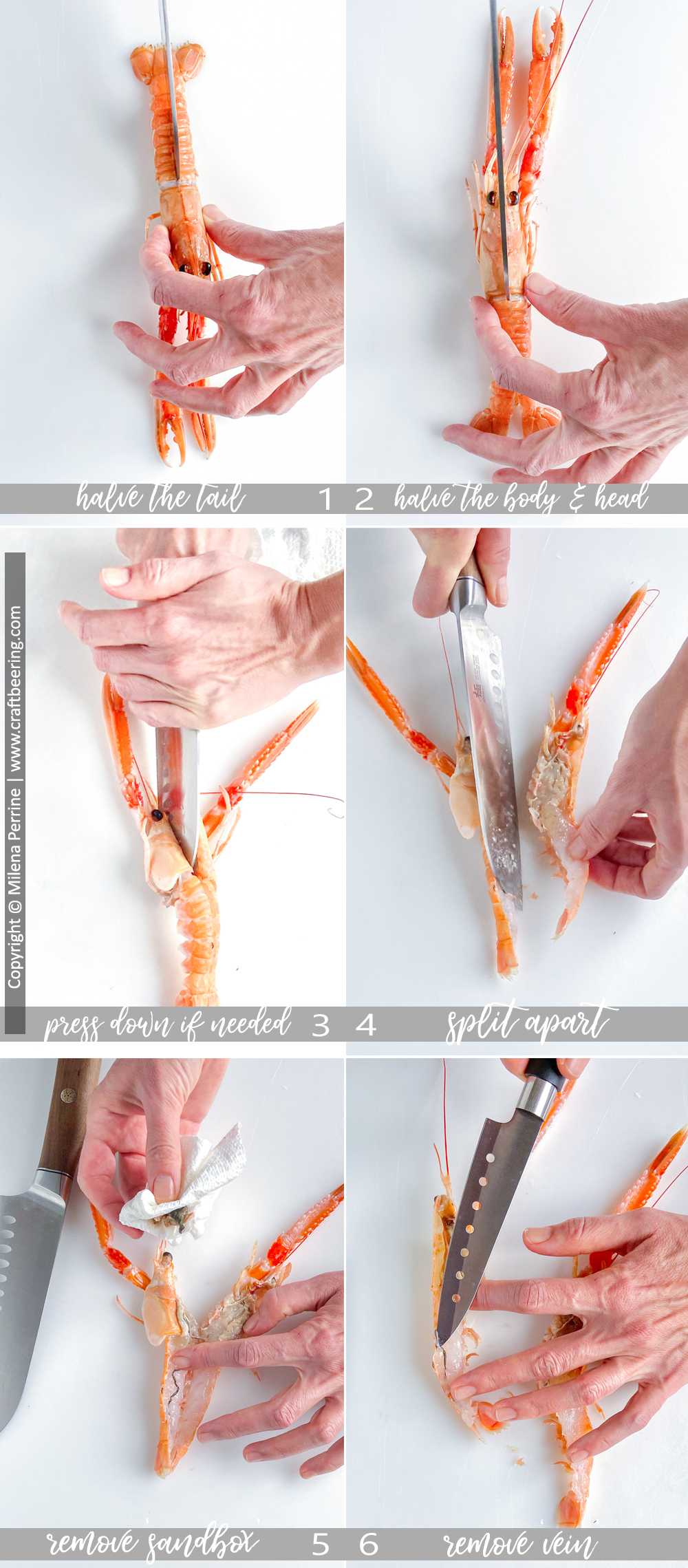
The digestive tract of langoustine has two components that can be removed when preparing them to be grilled or broiled on the half shell.
- The first digestive tract component is known as the 'sandbox' and is essentially the gut of the crustacean. It is sac-like and is located just behind the eyes - very easy to identify and lift straight out with the help of a paper towel.
- The second one, known as the vein is located in the tail and is also easy to identify. You can lift it with the tip of a sharp knife and remove it.
The overall process of preparing fresh langoustine is illustrated step-by-step below:
- Hold the langoustine body with two fingers and drive a chef's knife down the middle of the tail.
- Turn it around and drive the knife down the body and head. Press if necessary and then split the langoustine in two halves.
- Remove the 'sandbox' and vein.
Step-by-Step Broiled Langoustine (Norway Lobster)
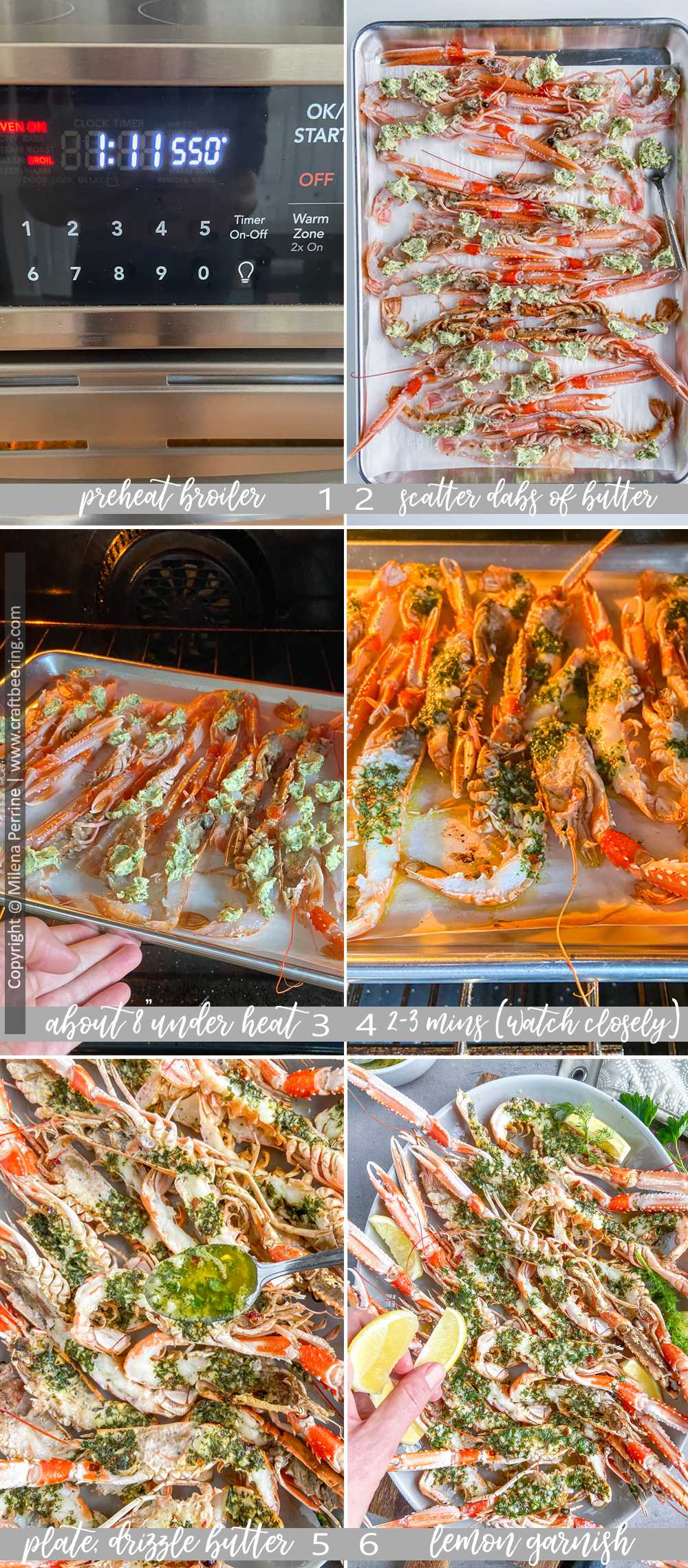
Once you have prepared all the langoustines proceed as shown below. The printable recipe card is at the end of the post.
- Preheat the broiler of your oven to high and make sure the rack into which you will place the langoustines is about 8 inches underneath, not too close.
- Arrange the halves and generously (or to taste) apply dabs of compound butter. You will have some butter left which you can quickly melt and use as finishing sauce.
- Broil the buttered langoustines while watching them closely. It will take no time at all for their flesh to cook. Pull them out as soon as you see it become whitish and opaque. Plate, drizzle with the melted butter and add a few lemon wedges. Enjoy immediately.
Grilled Langoustine on the Half Shell
You can use the exact same preparation as shown above and place the langoustine over a hot (we recommend charcoal) grill for just long enough to have the butter melt. The flesh will cook super fast.
Serve the Langoustine
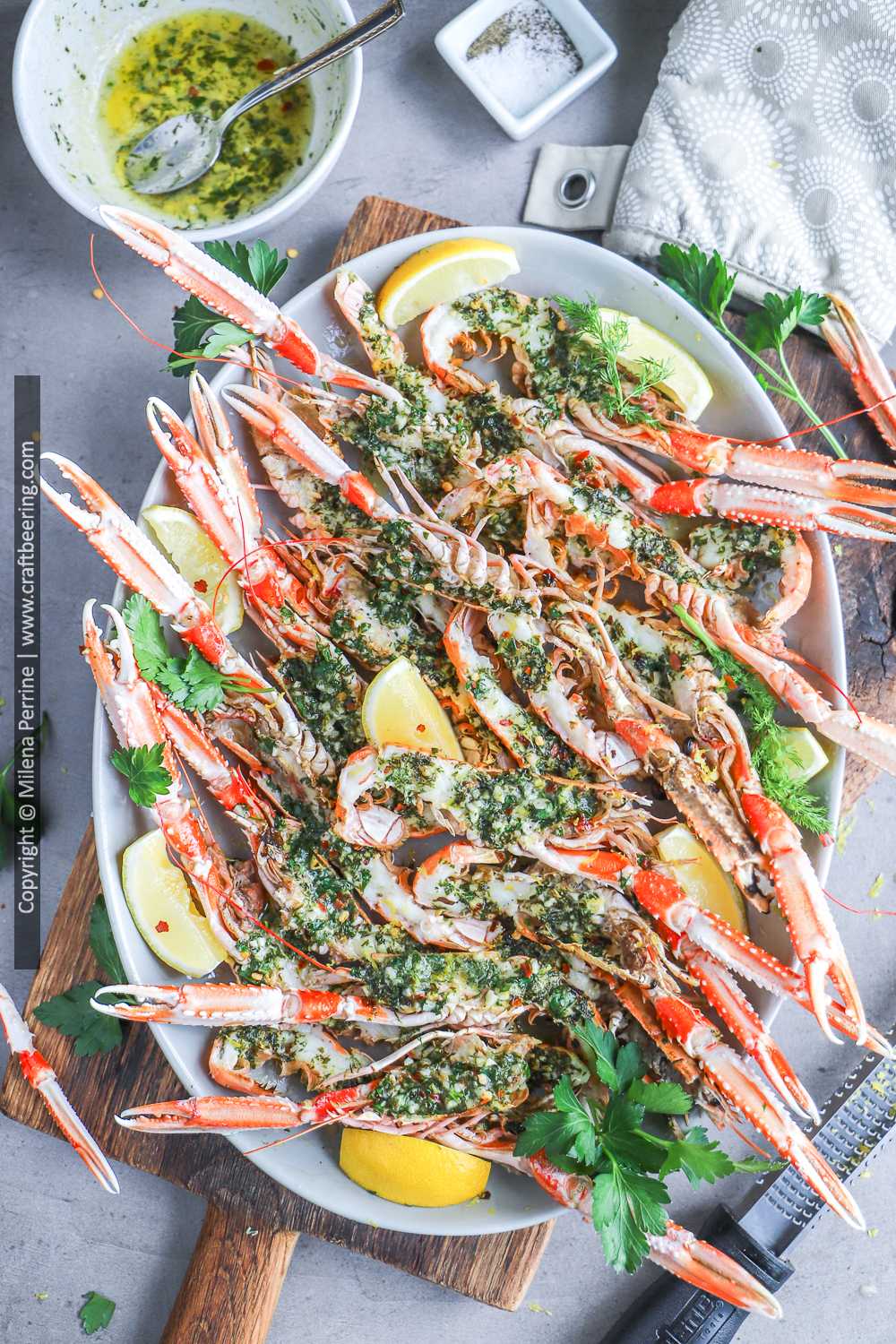
You can serve the garlic herb butter langoustines family style as shown above along with fresh, crusty bread.
Alternatively, plate them individually for dinner party guests with perhaps a bit of lemon and olive oil dressed greens on the side.
There is More to Eat Than Just the Tail Meat
Smallish as they may appear langousitne have more to offer than only the tail meat.
For starters the claws do contain delicious meat, just as lobster's claws do. The larger the langoustine, the more meat you will find. You can snap the claws and suck it out or use a seafood fork to do so.
In Europe often times the head meat is scraped off and mixed with a bit of mayo and then enjoyed with bread - definitely worth trying.
Save the Heads and Shells of the Langoustines
The discarded shells and claws and any uneaten heads and body of the langoustines are a prime flavor source for tasty seafood stock or bisque.
Do not throw them away, either boil them immediately or freeze them until you are ready to prepare a stock.
You Might Like
Beer Shrimp Scampi | Cajun Seafood Butter Sauce | Shrimp Remoulade | Spicy Shrimp in Clamato Sauce | Peel and Eat Shrimp | No Mess Seafood Boil in Bag
Recipe

Langoustine Broiled with Compound Butter
Ingredients
- 2 lbs frozen langoustines*
- ½ cup 1 stick butter, salted Irish or European style, softened
- 3 cloves garlic minced (or to taste)
- 1 tablespoon chopped fresh parsley more to garnish
- 1 tablespoon chopped fresh dill or to taste, more to garnish
- ½ teaspoon red pepper flakes otional
- 1 tablespoon lemon juice
- salt and pepper as needed to season butter
- 5-6 lemon wedges for serving
Instructions
- Defrost the langoustines by leaving them in the refrigerator overnight. Quickly rinse, pat dry and set aside to prepare (keep chilled).
- Make the compound butter by working the garlic, parsley, dill, red pepper flakes and lemon juice with a fork in the softened butter. Taste and season with salt and pepper as needed. Set aside.
- Prepare the langoustines. Take each one and place it onto a cutting board. Hold the langoustine body with two fingers and drive a chef’s knife down the middle of the tail. Turn it around and drive the knife down the body and head. Press if necessary and then split the langoustine in two halves. Remove the ‘sandbox’ and vein. See pictures in post.
- Preheat broiler to high, make sure oven rack is about 8 inches underneath. Arrange langoustine halves onto a baking sheet and place dabs of the herb butter all over (use half the butter prepared).
- Broil while watching them carefully. The flesh only needs about 2-3 minutes to cook through and become opaque. Do not overcook.
- Plate and drizzle with the melted leftover butter, garnish with lemon wedges and serve immediately with crusty bread.
Nicolecooks2
These were excellent! Tedious to prepare but worth it. Broiled for 3 minutes exactly, they were tender and sweet and perfect with the compound butter.
Milena Perrine
Thank you so much for sharing, Nicole!